MIKE NESBIT
Seoul, Korea
2026
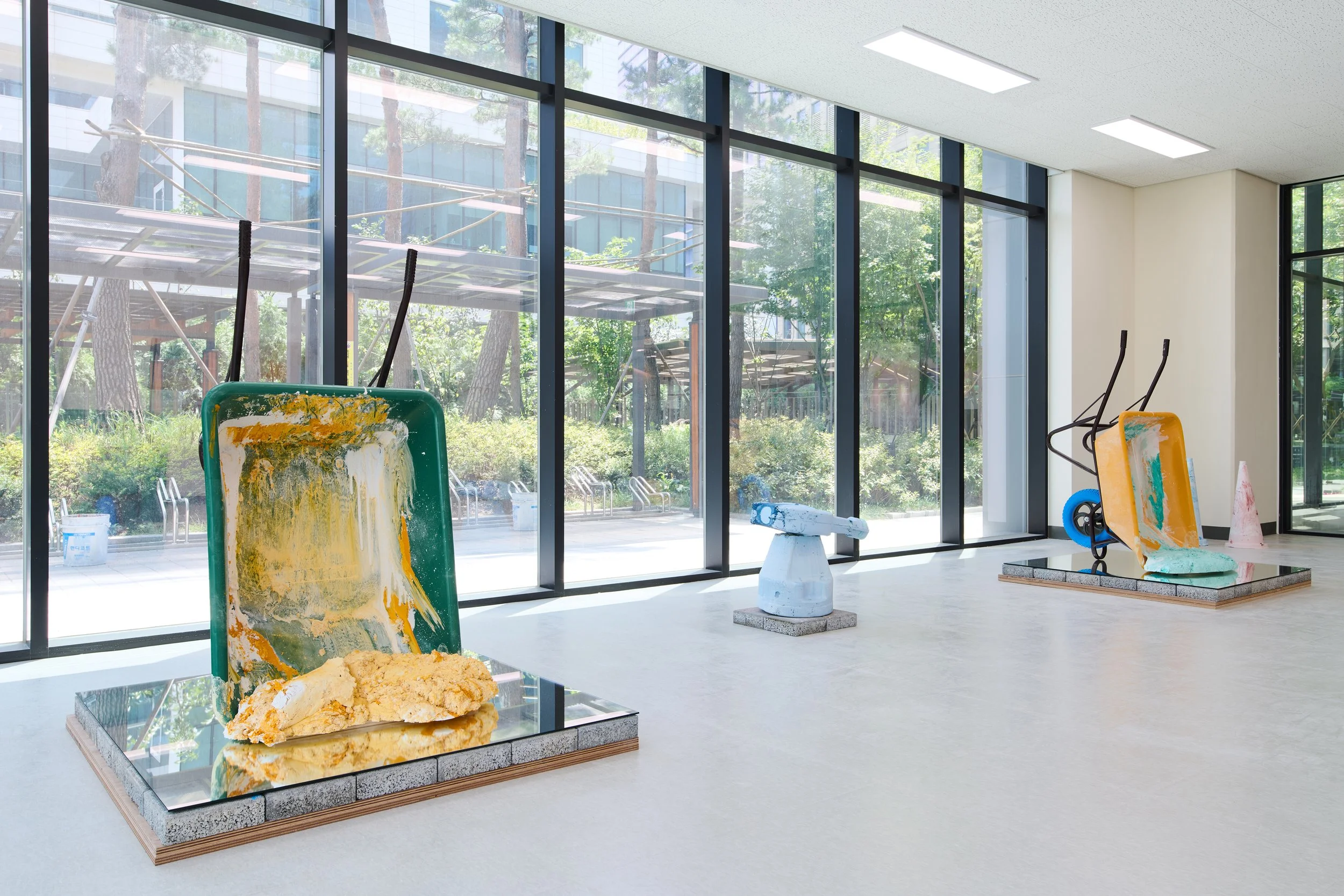
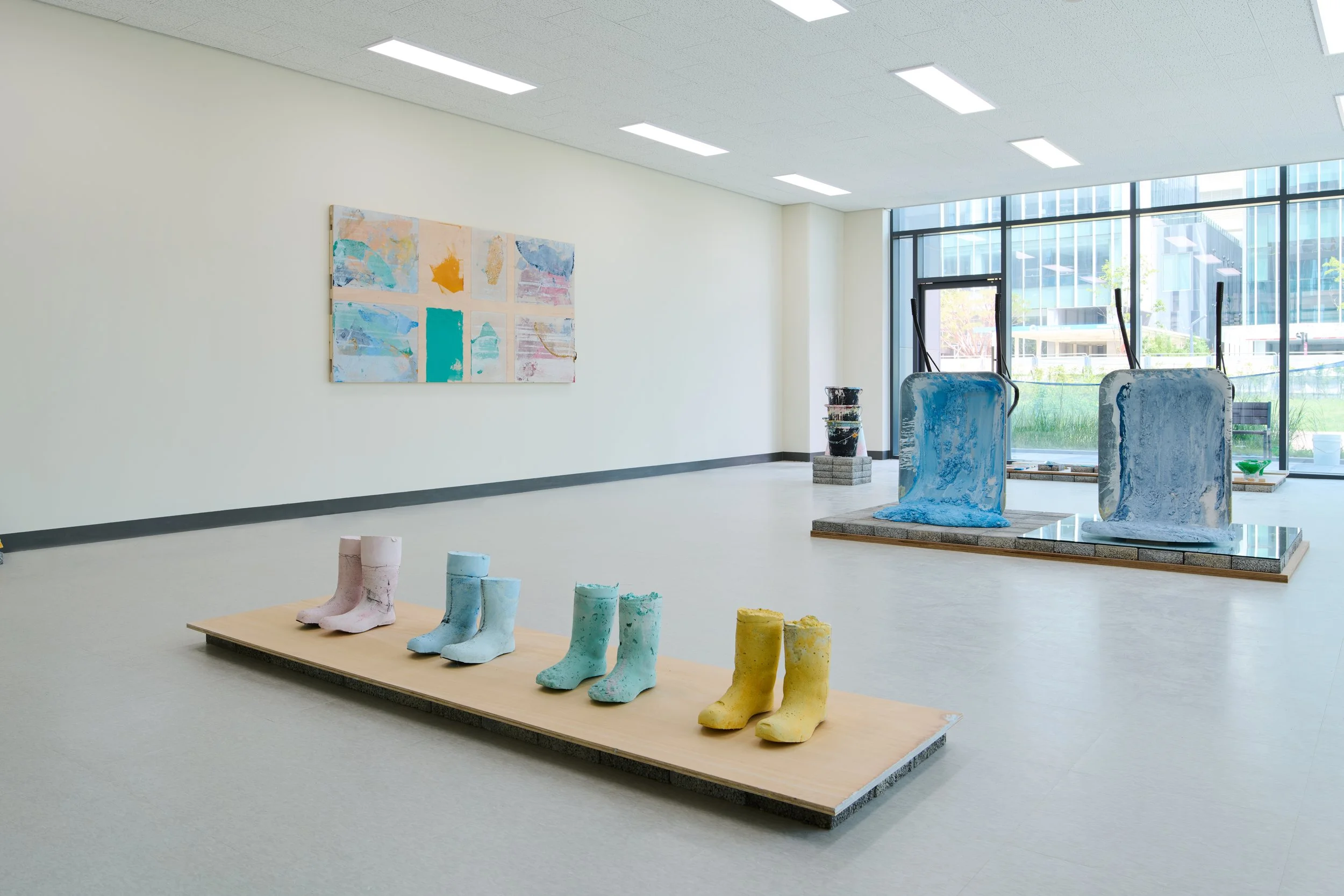
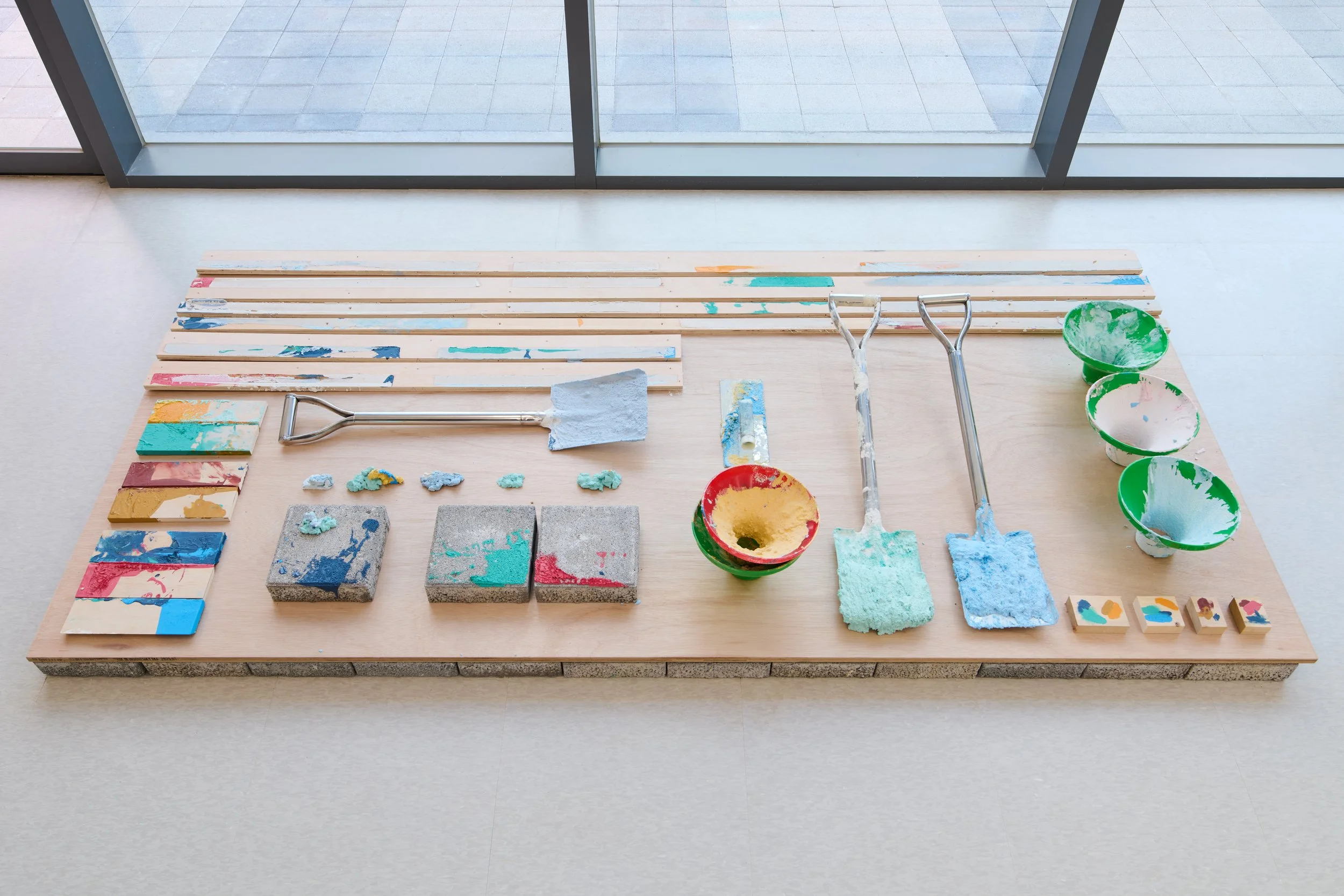
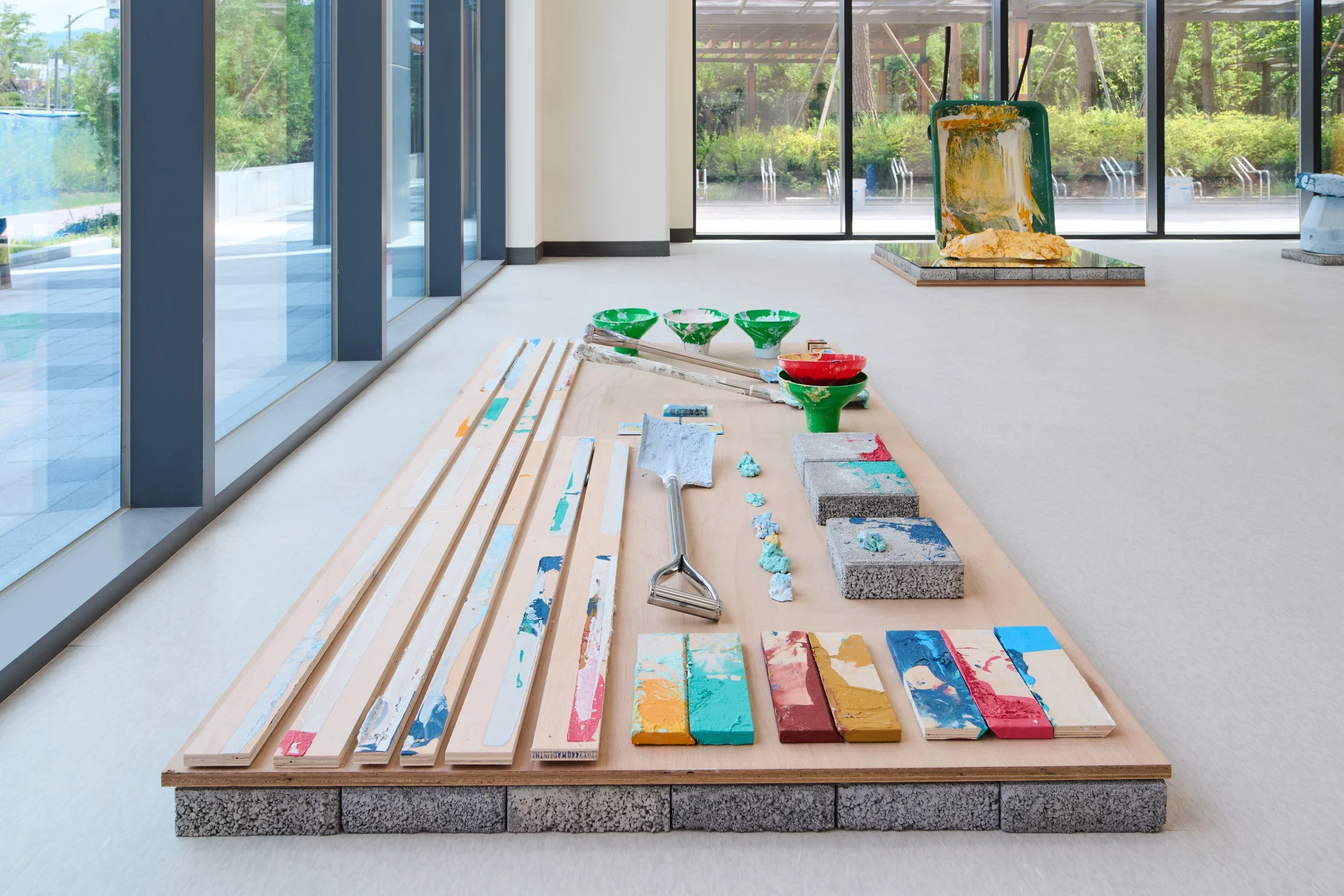
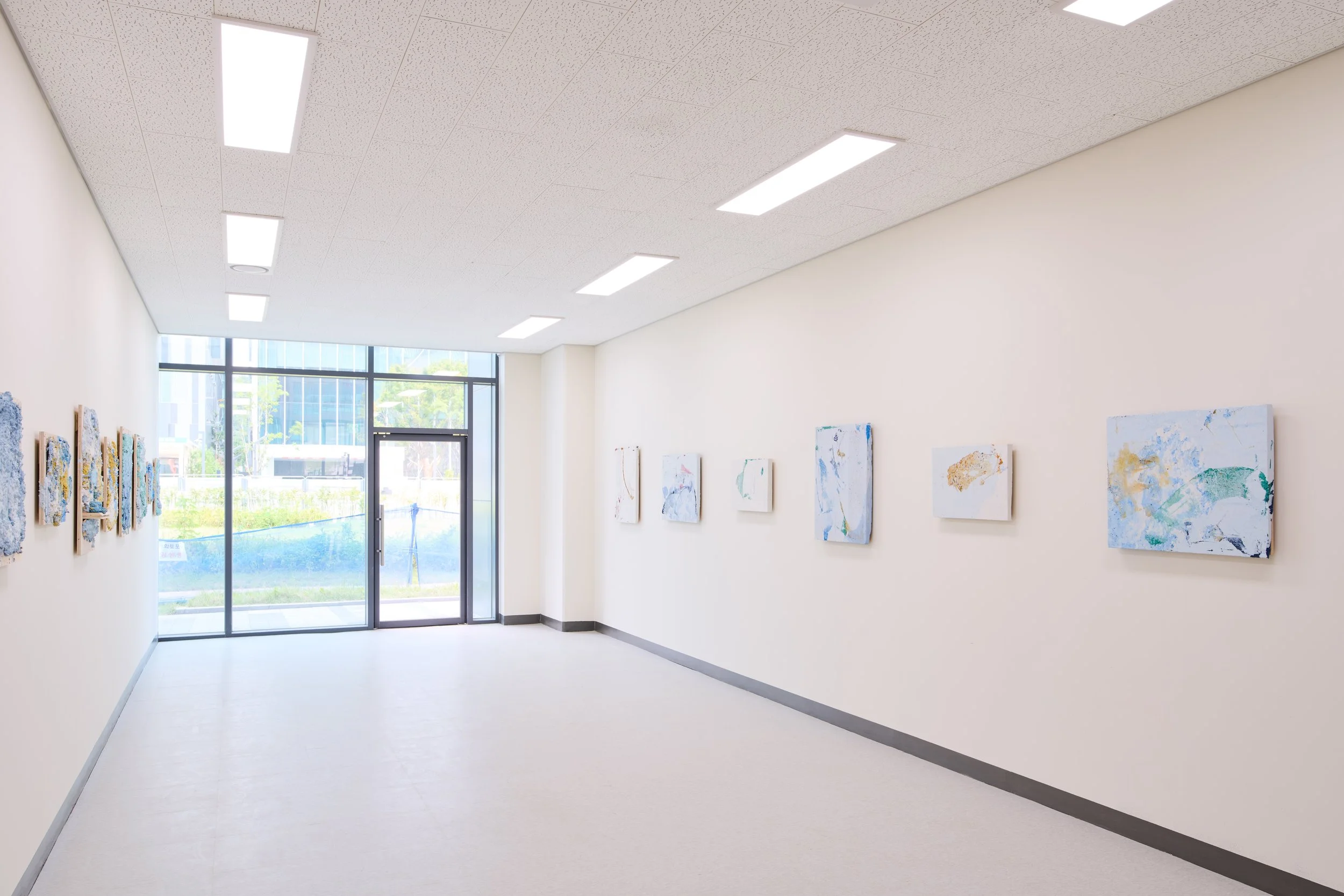
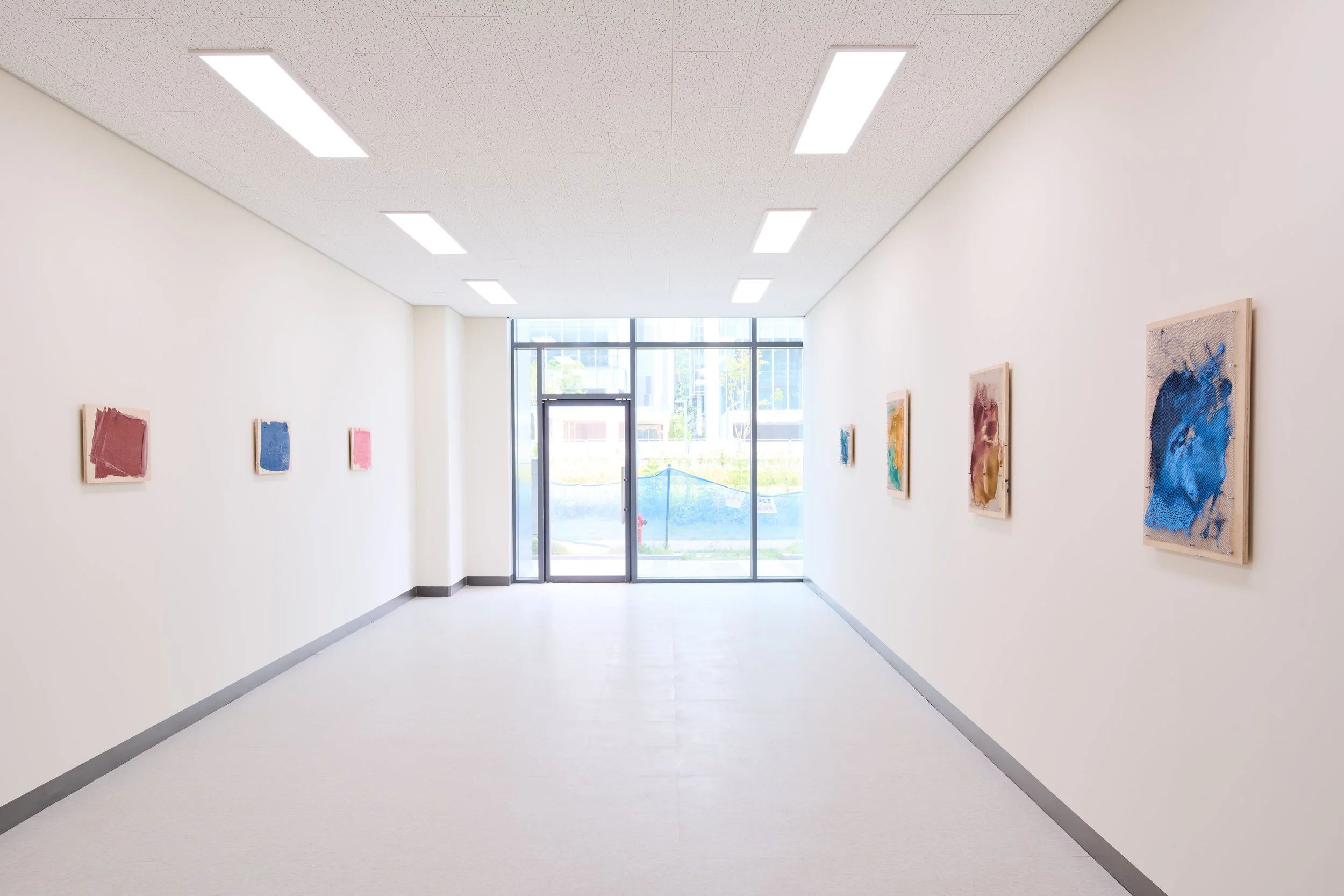
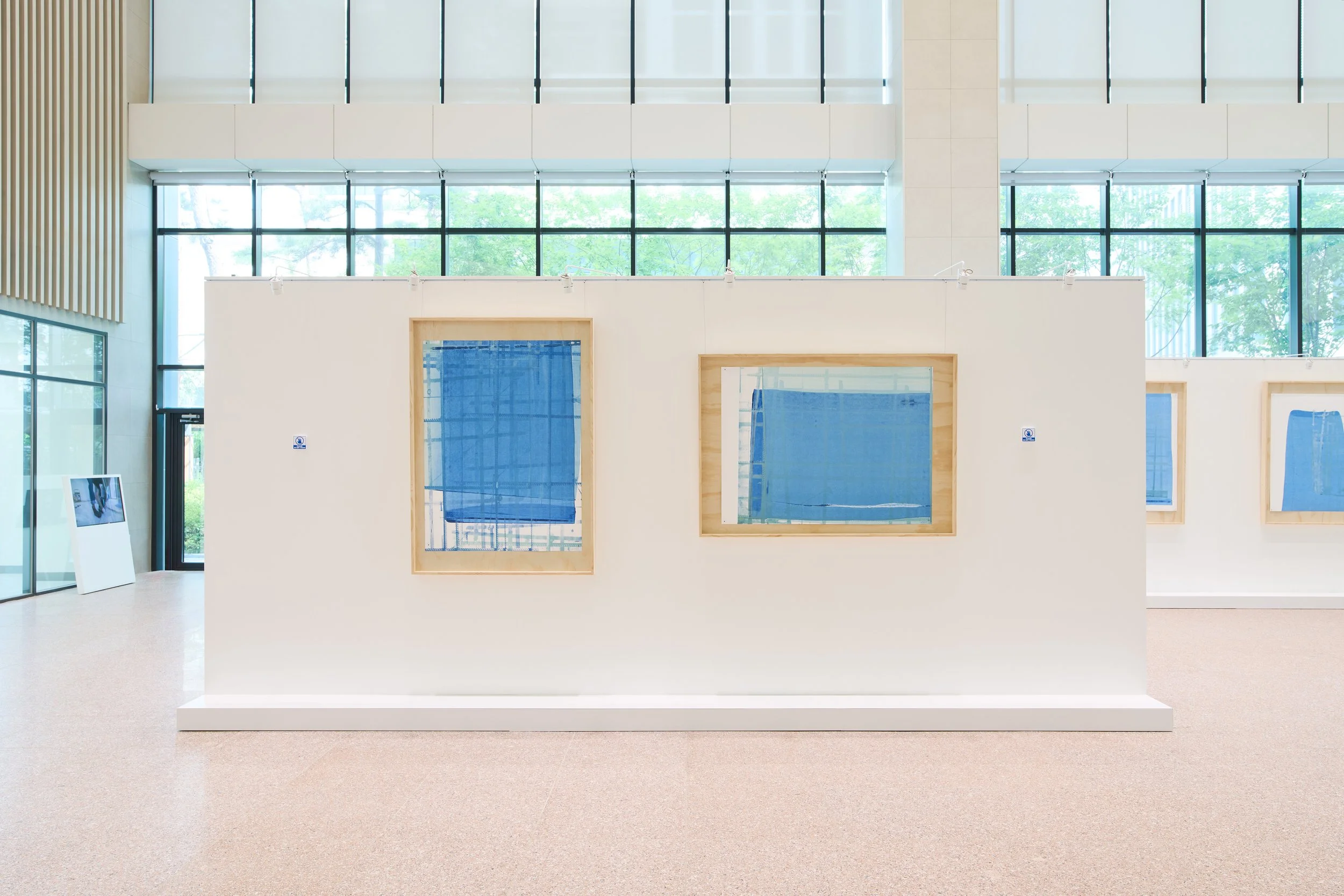
The site responds to sculpture. Sculpture generates painting. Process becomes finish, and finish becomes process.
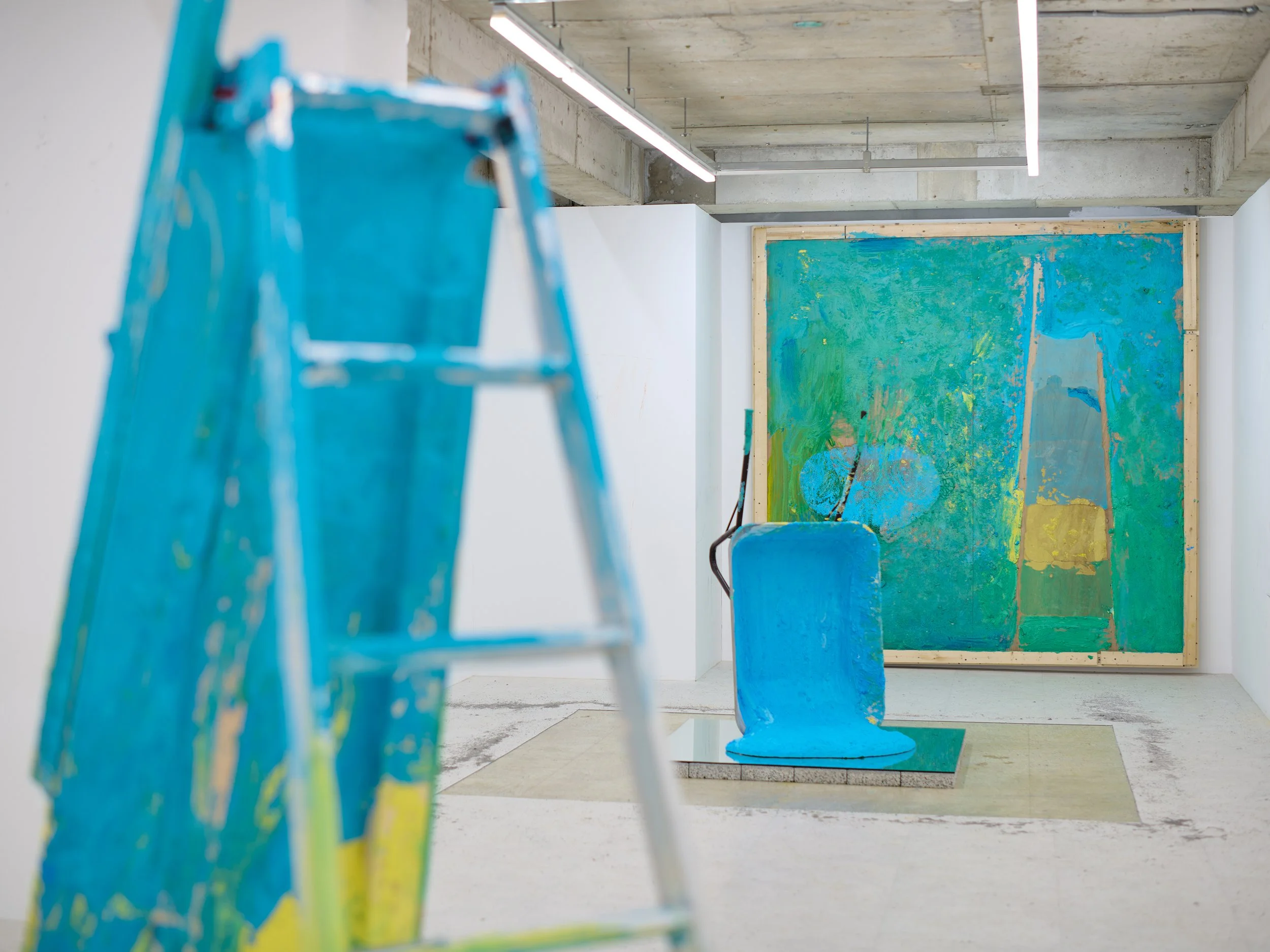
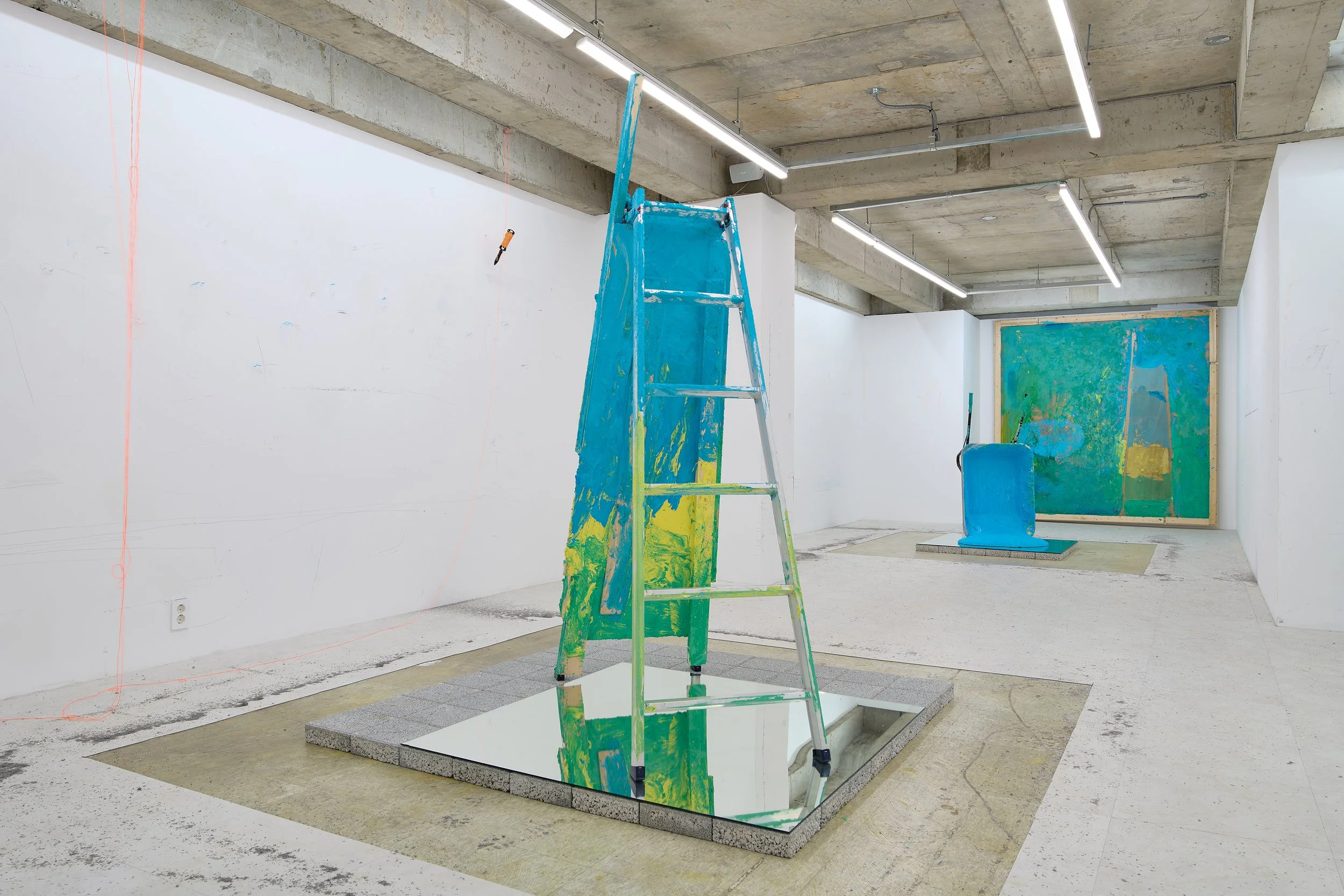
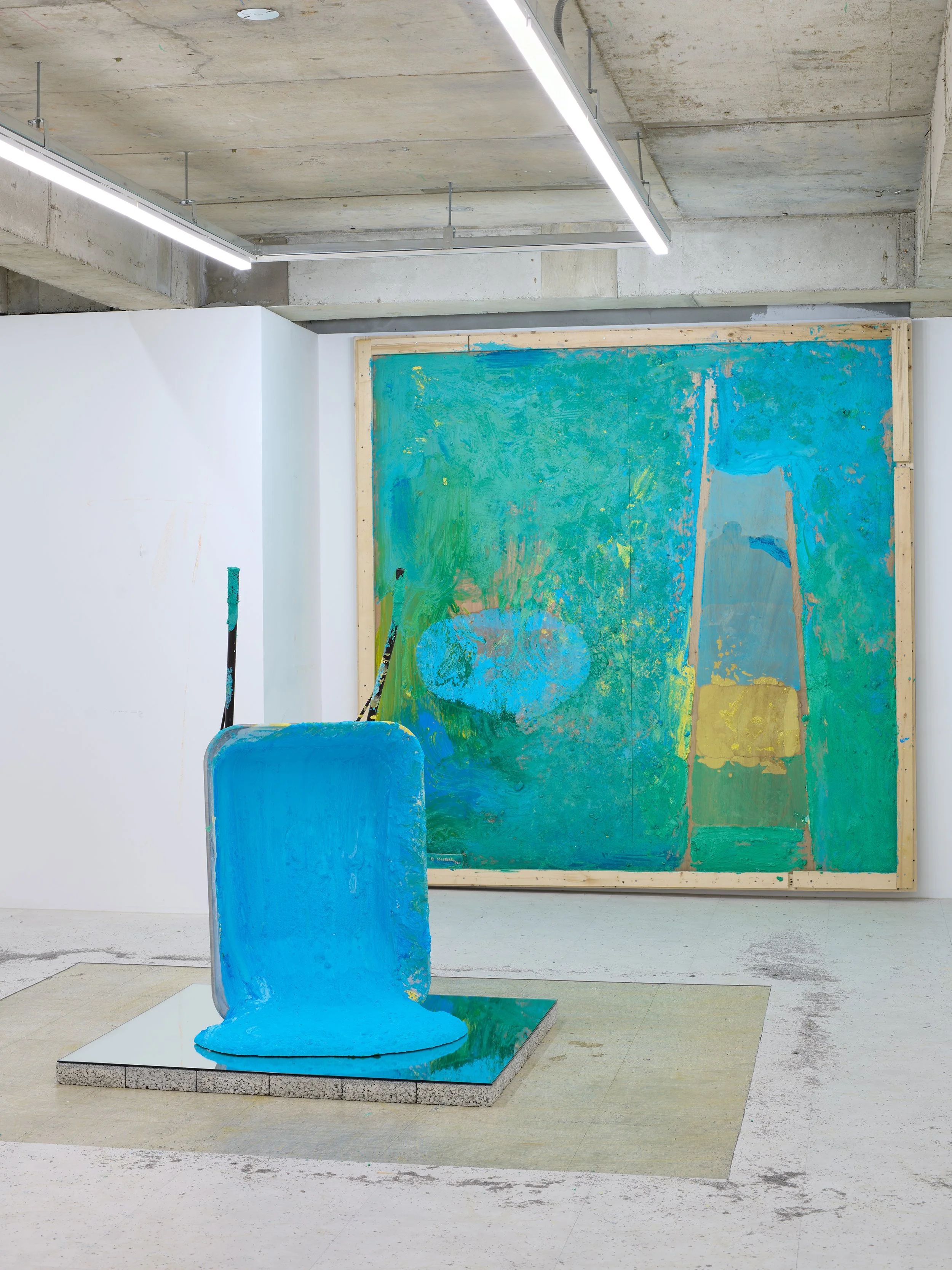
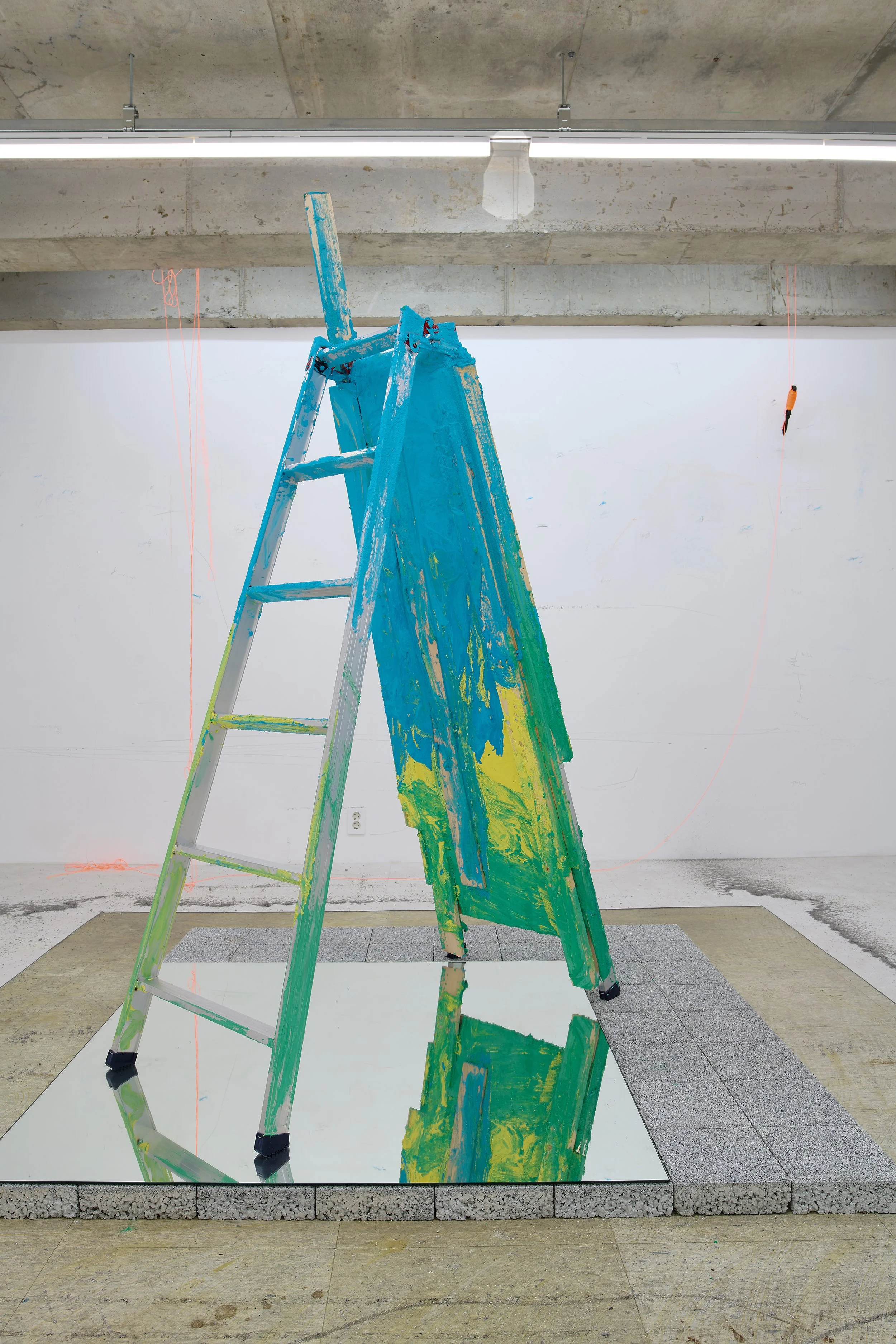
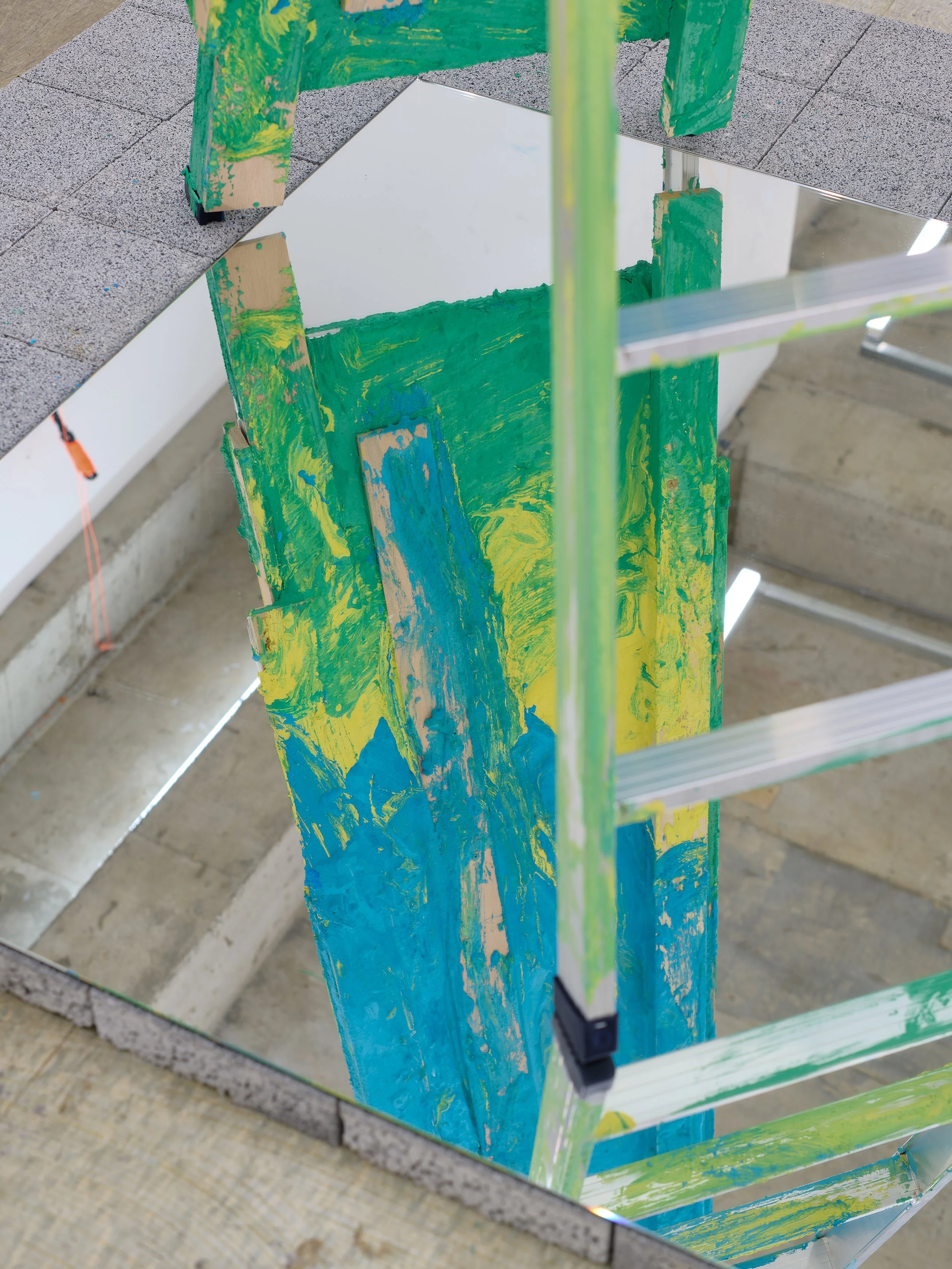
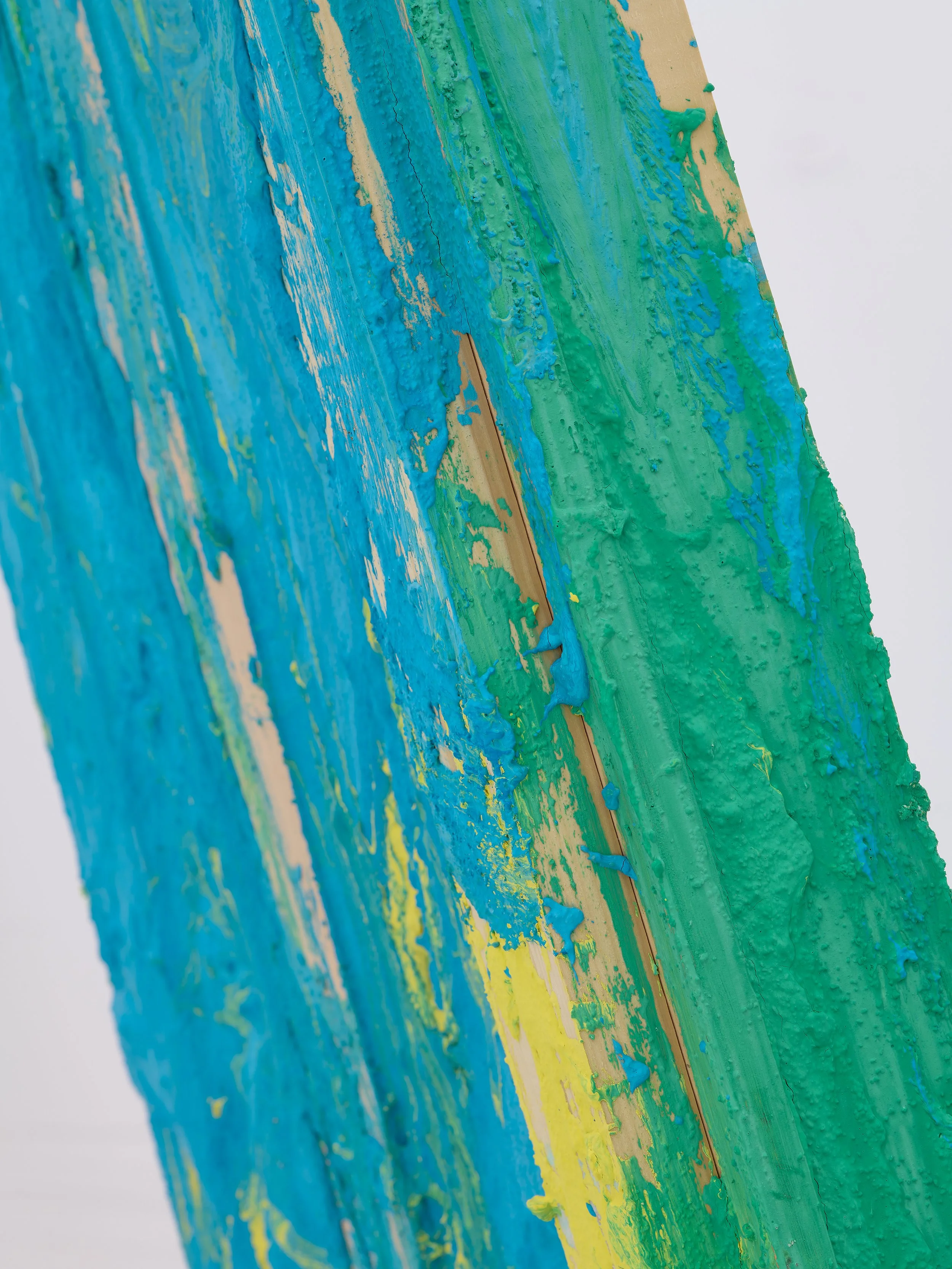
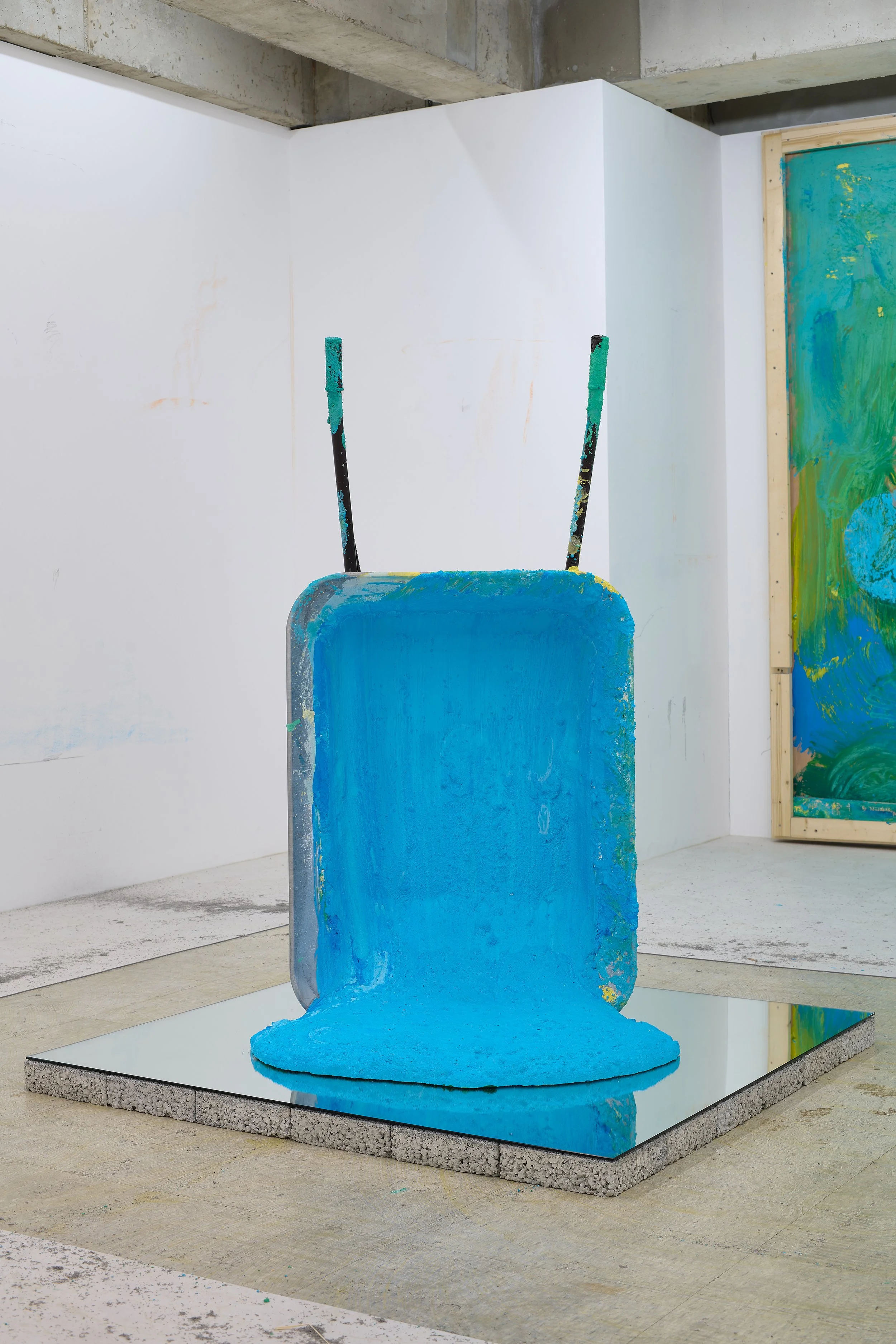
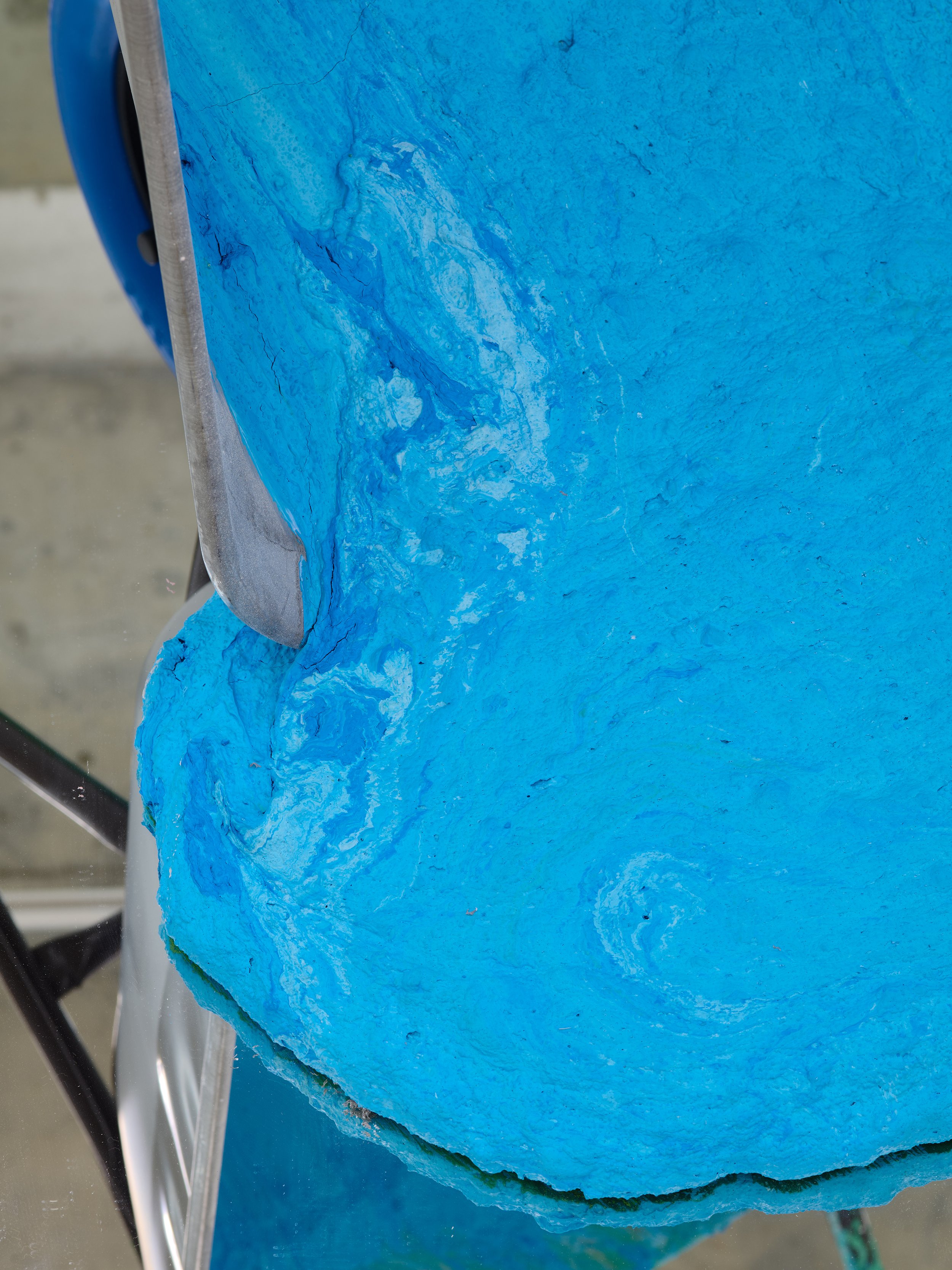
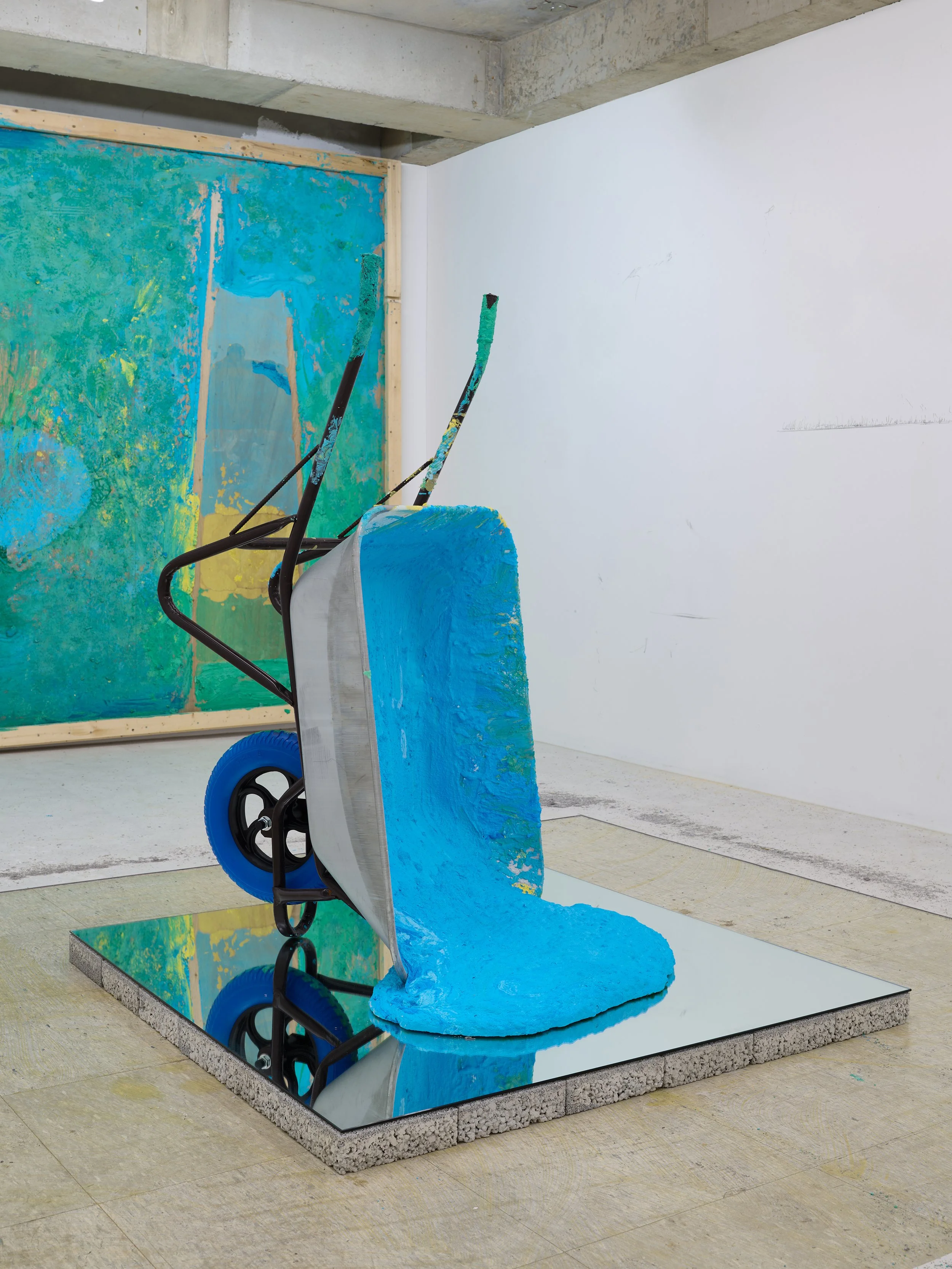
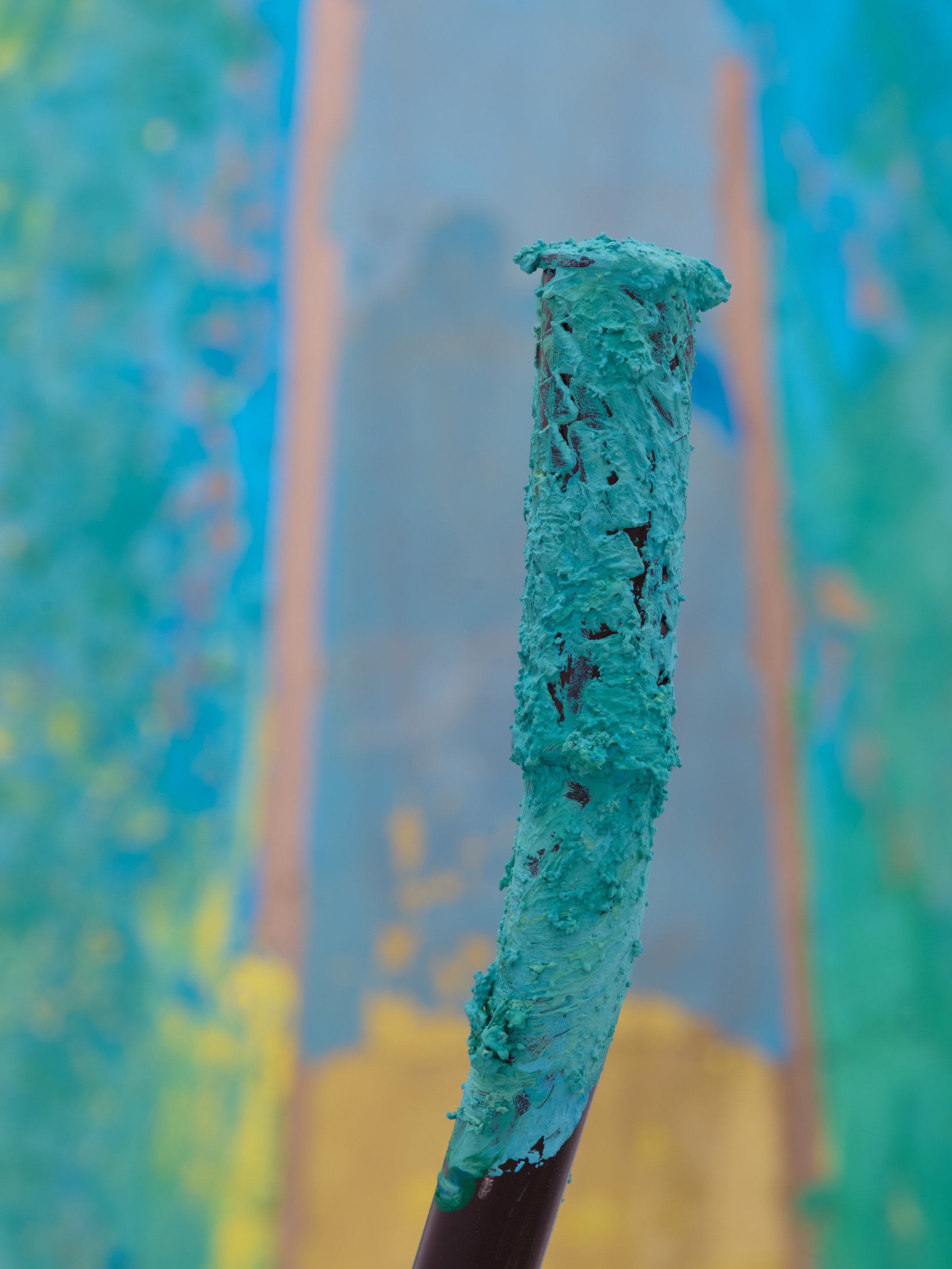
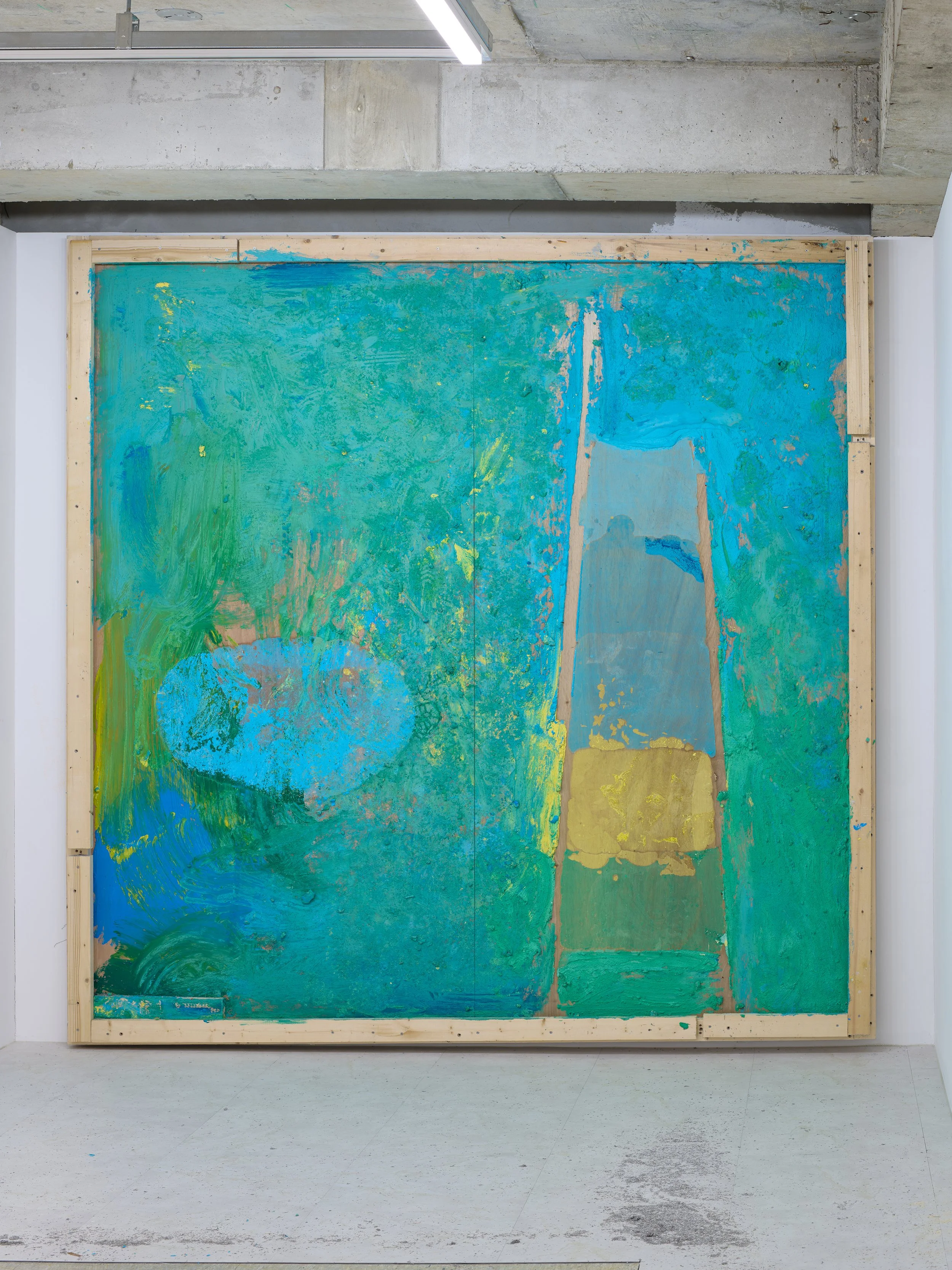
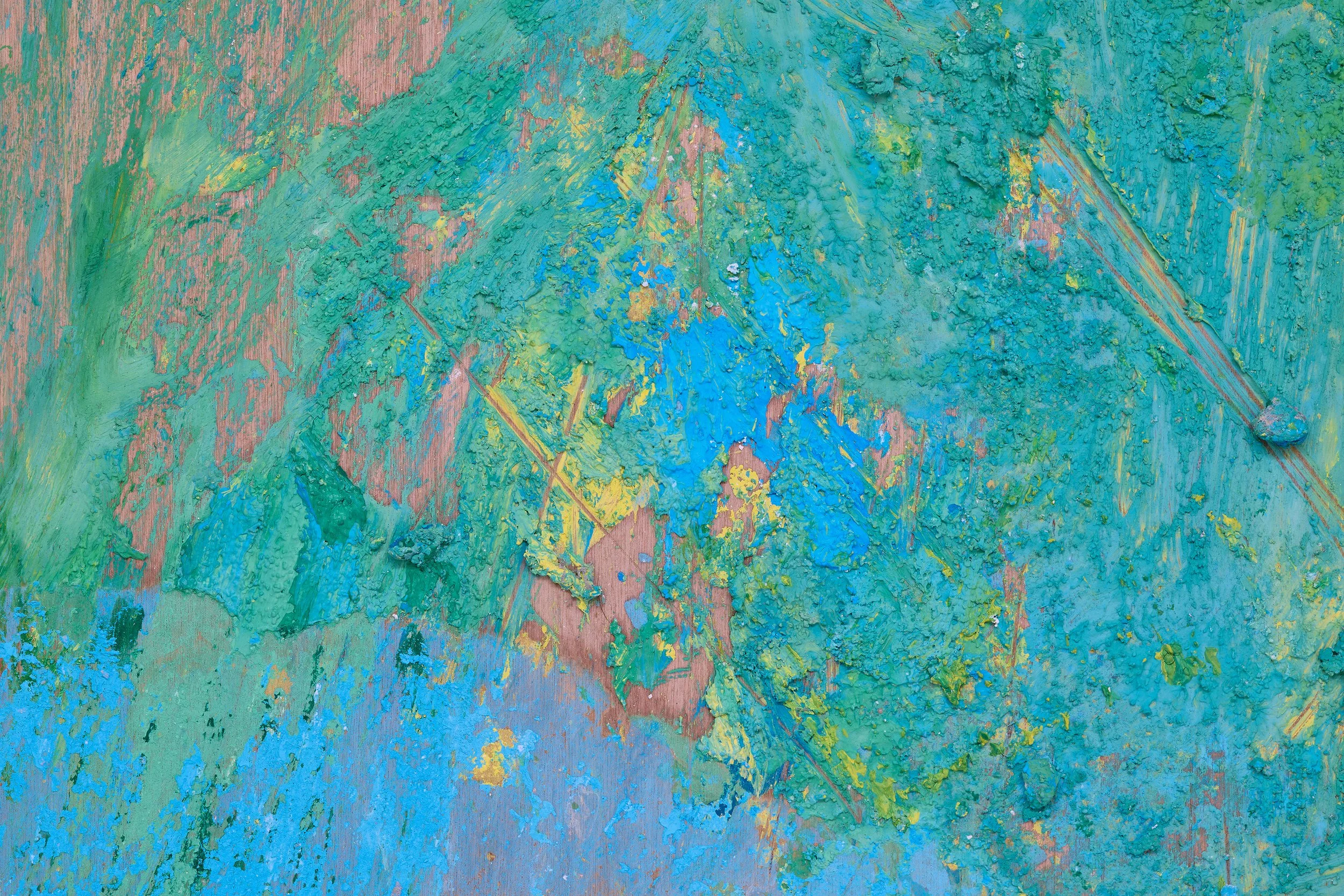
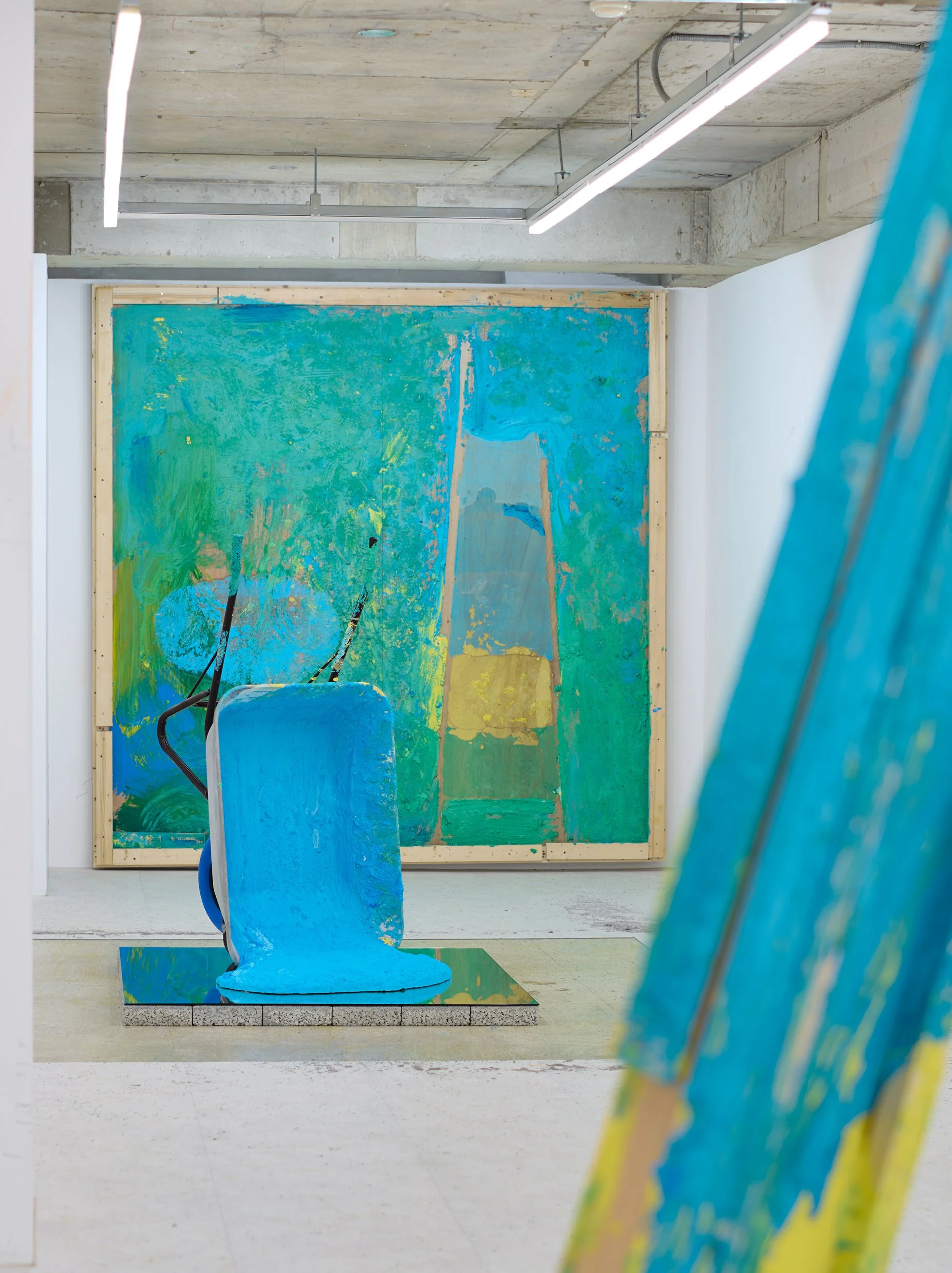
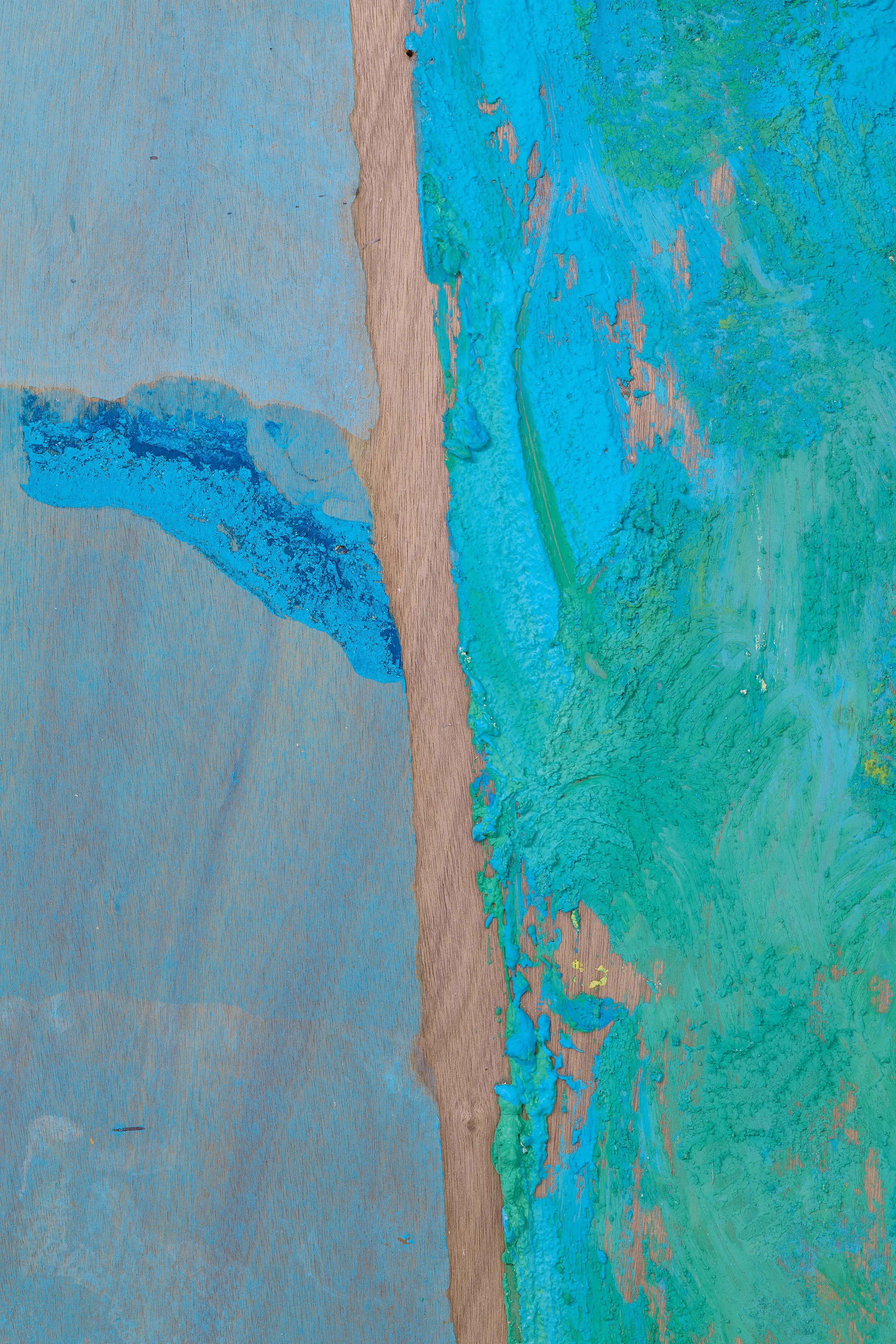
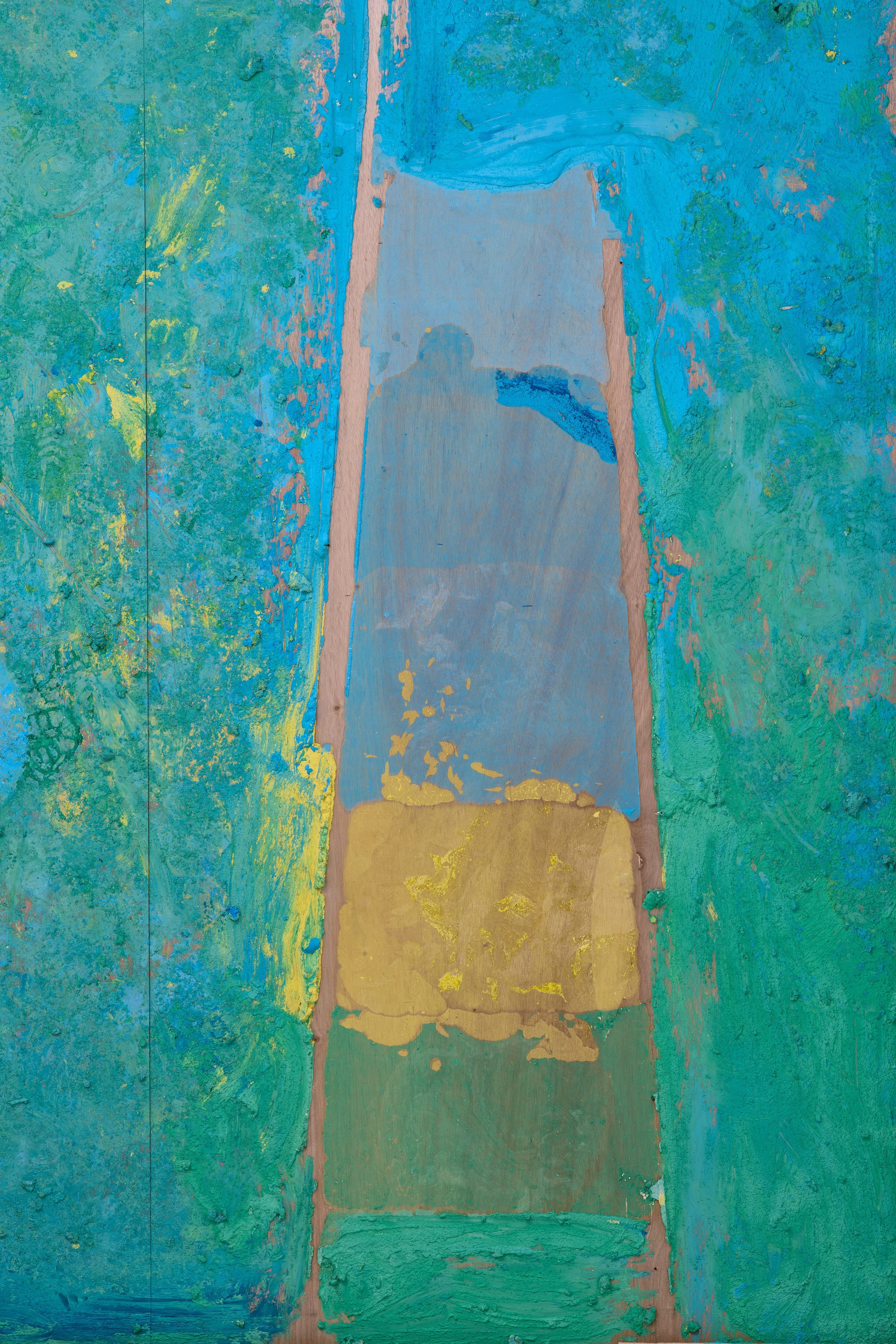
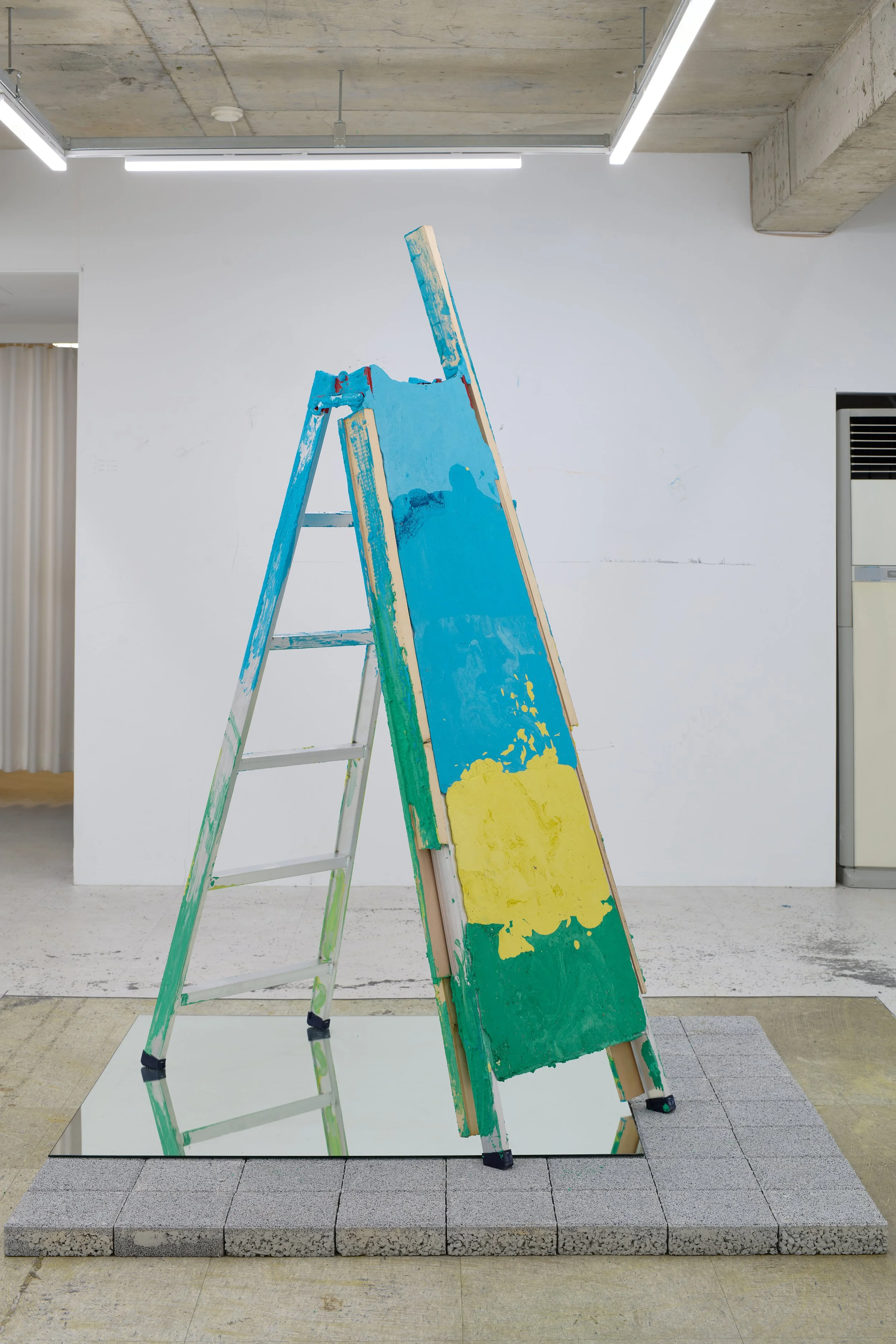
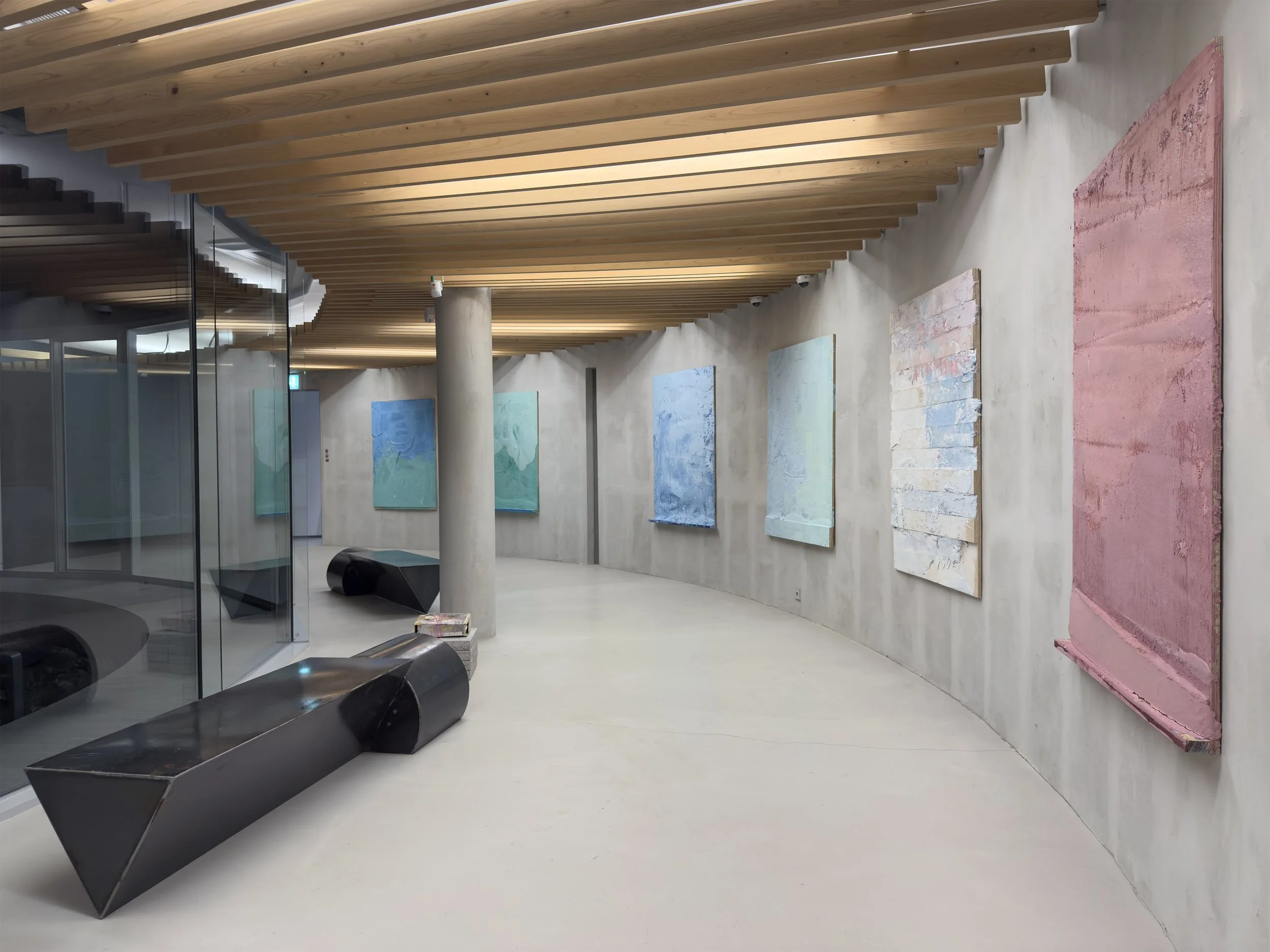
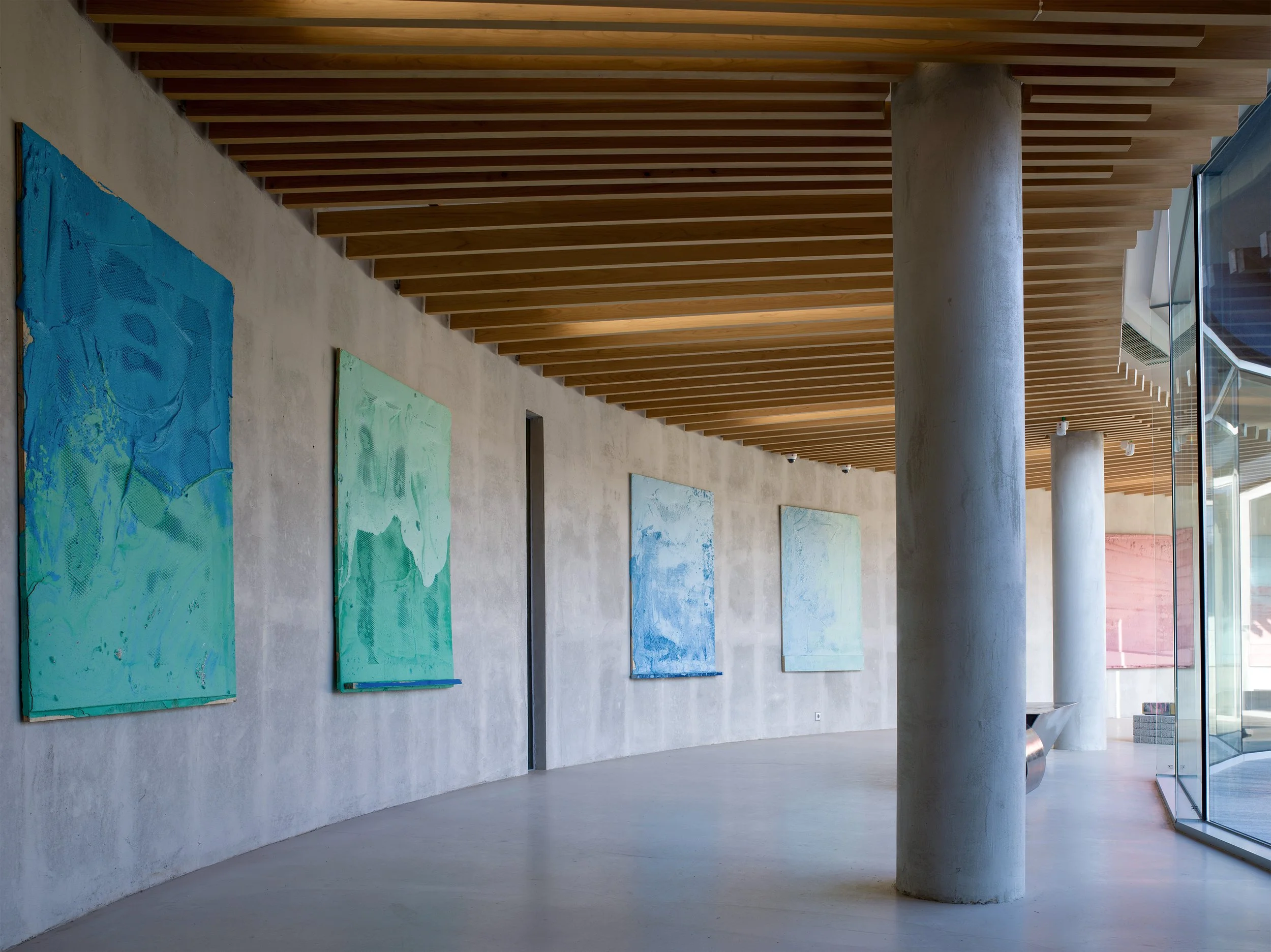
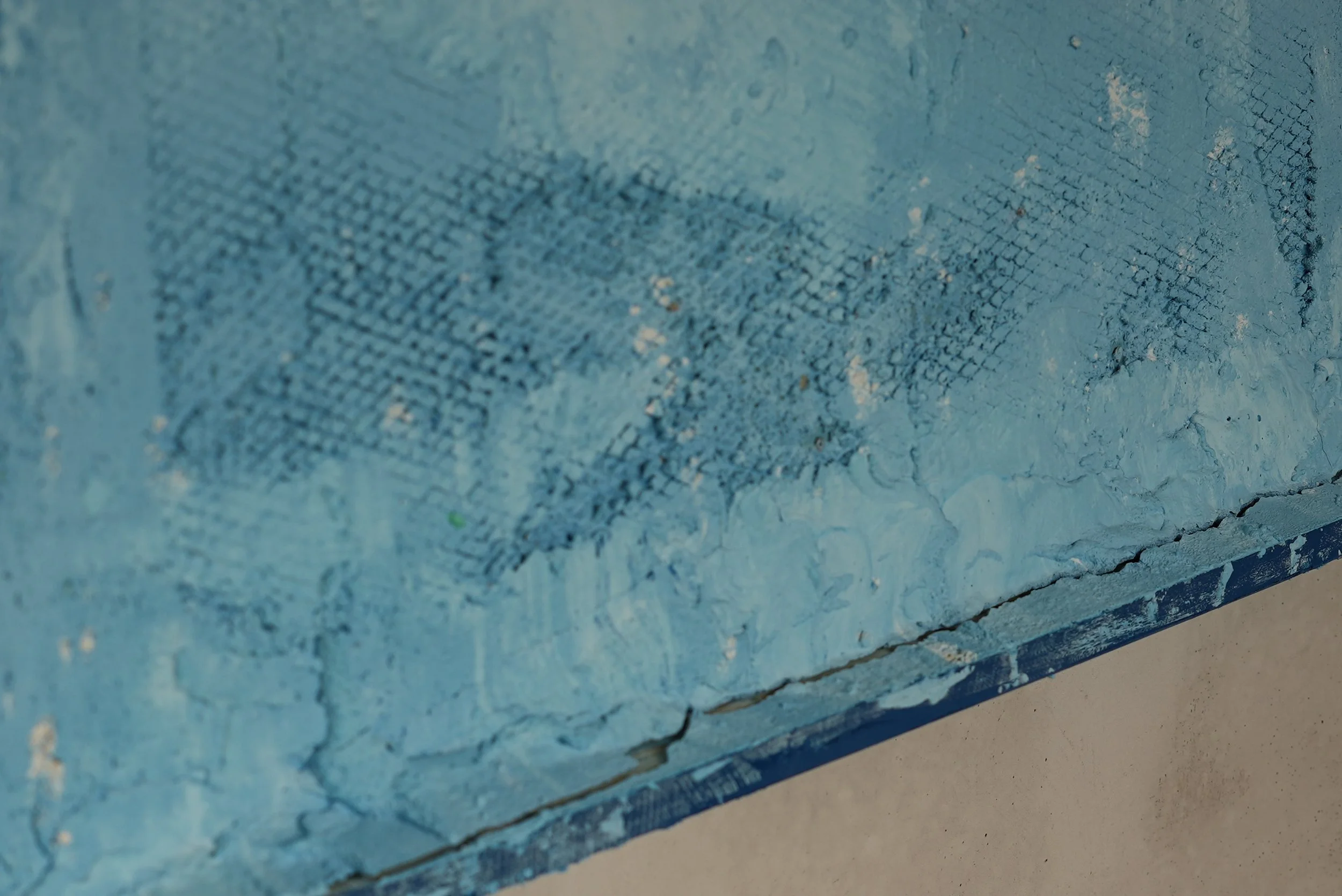
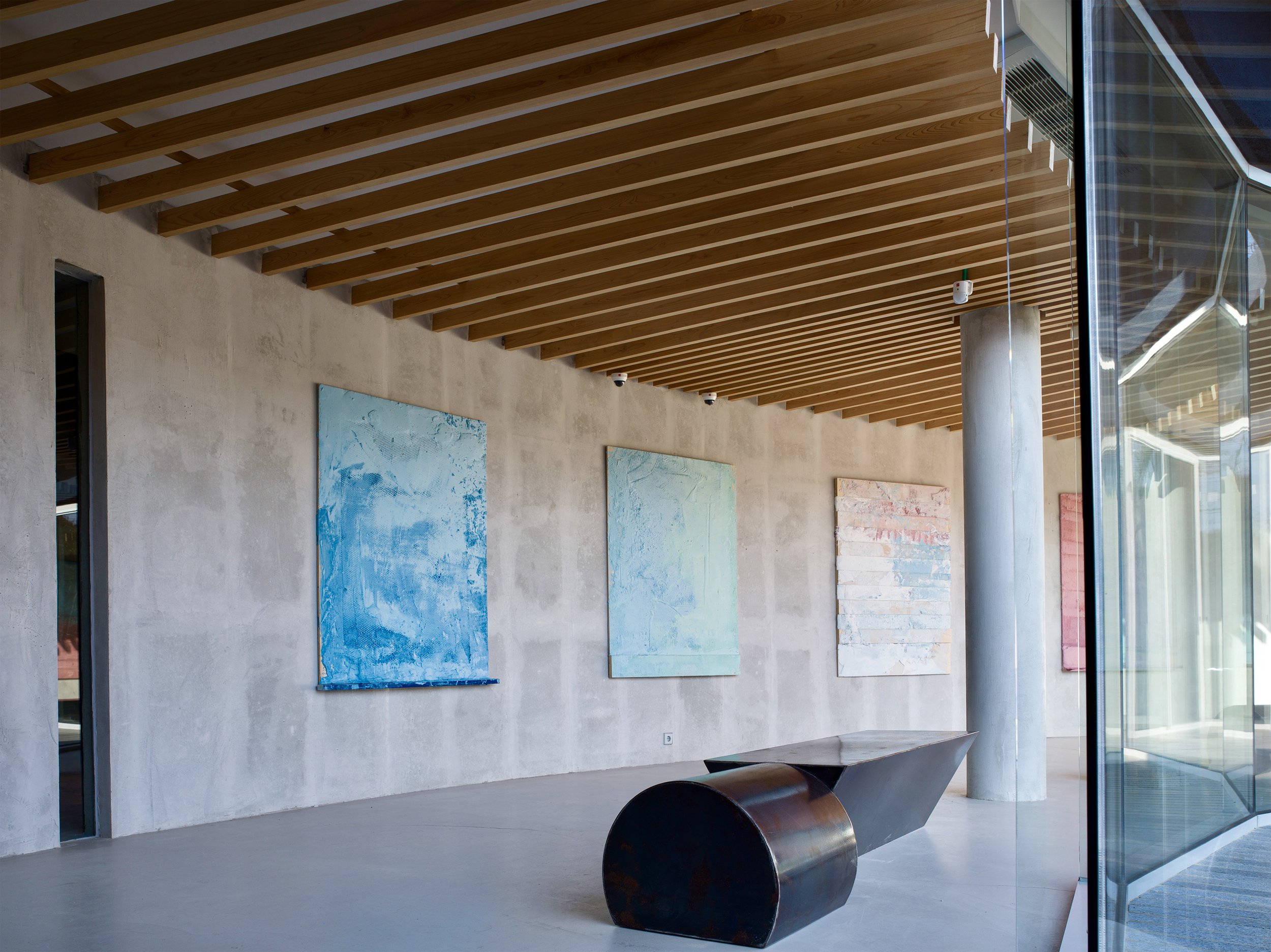
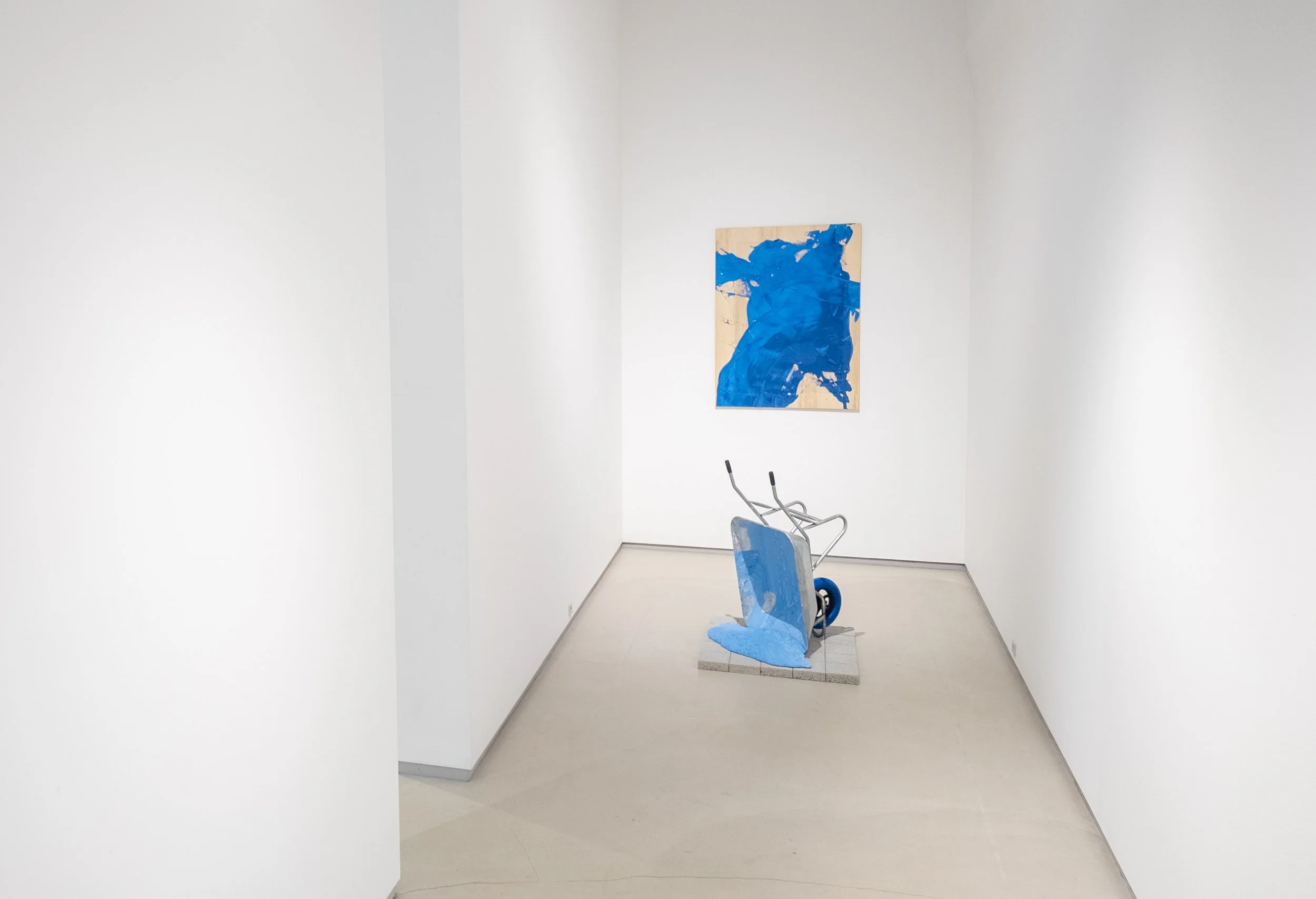
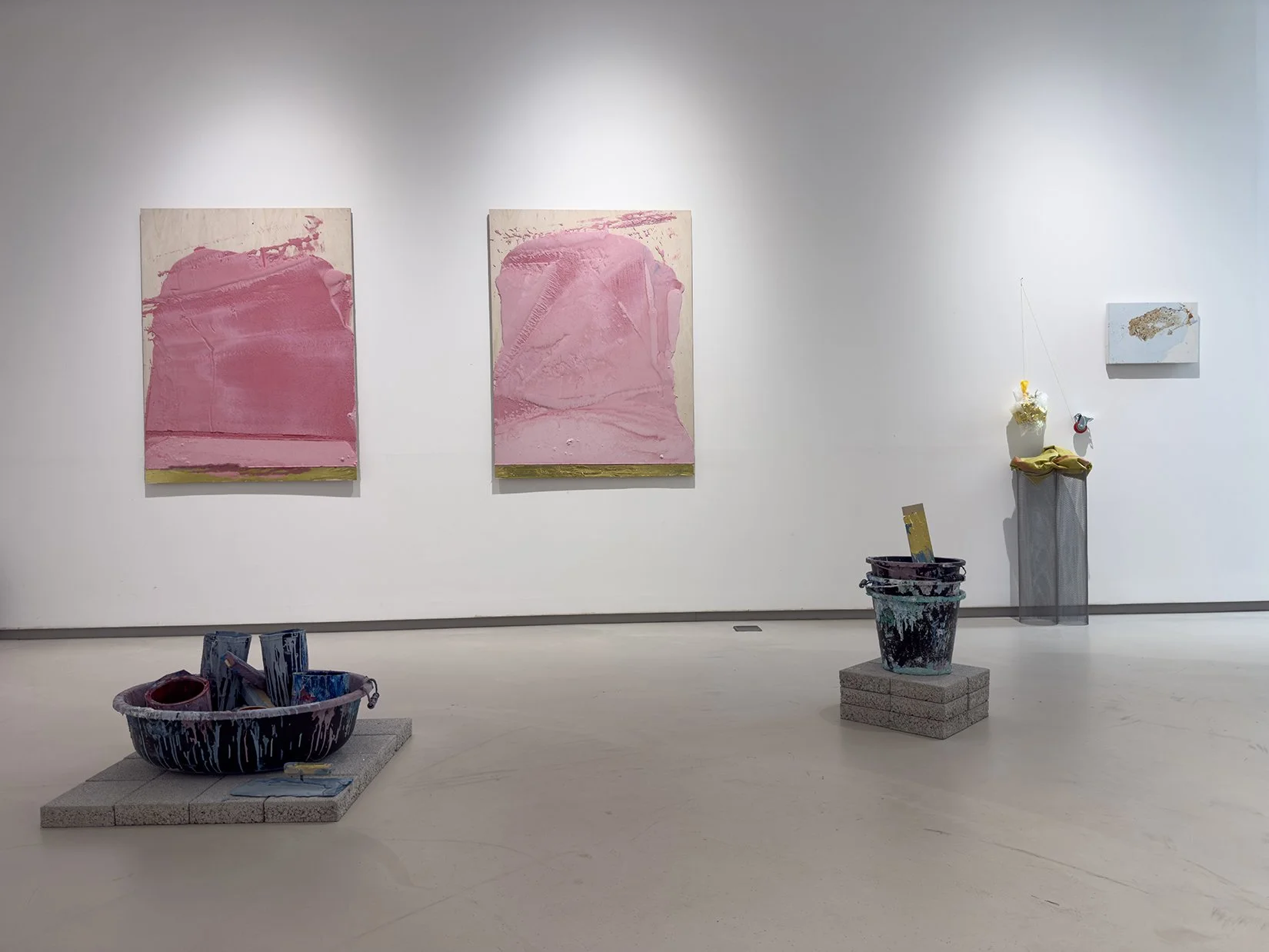
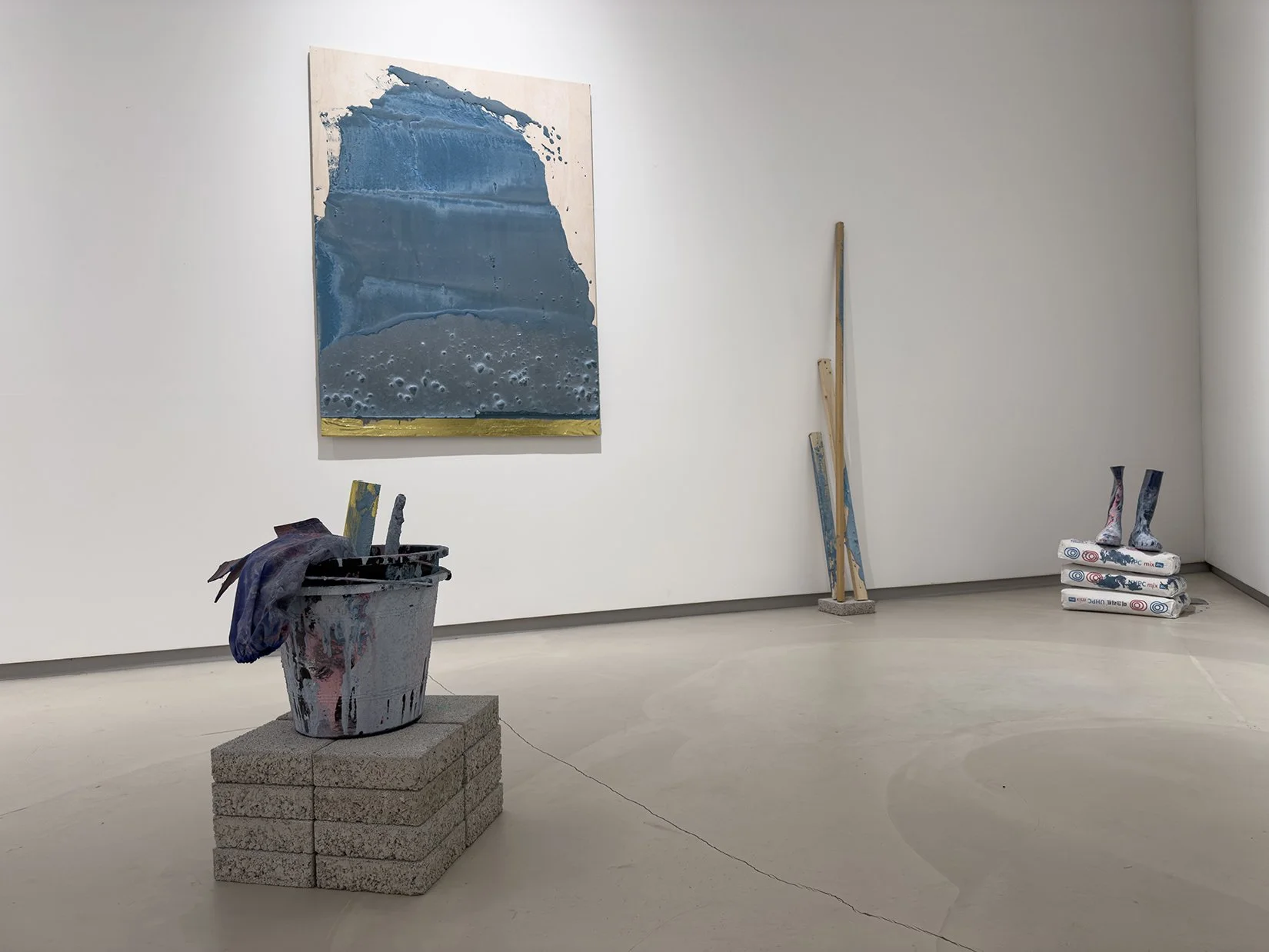
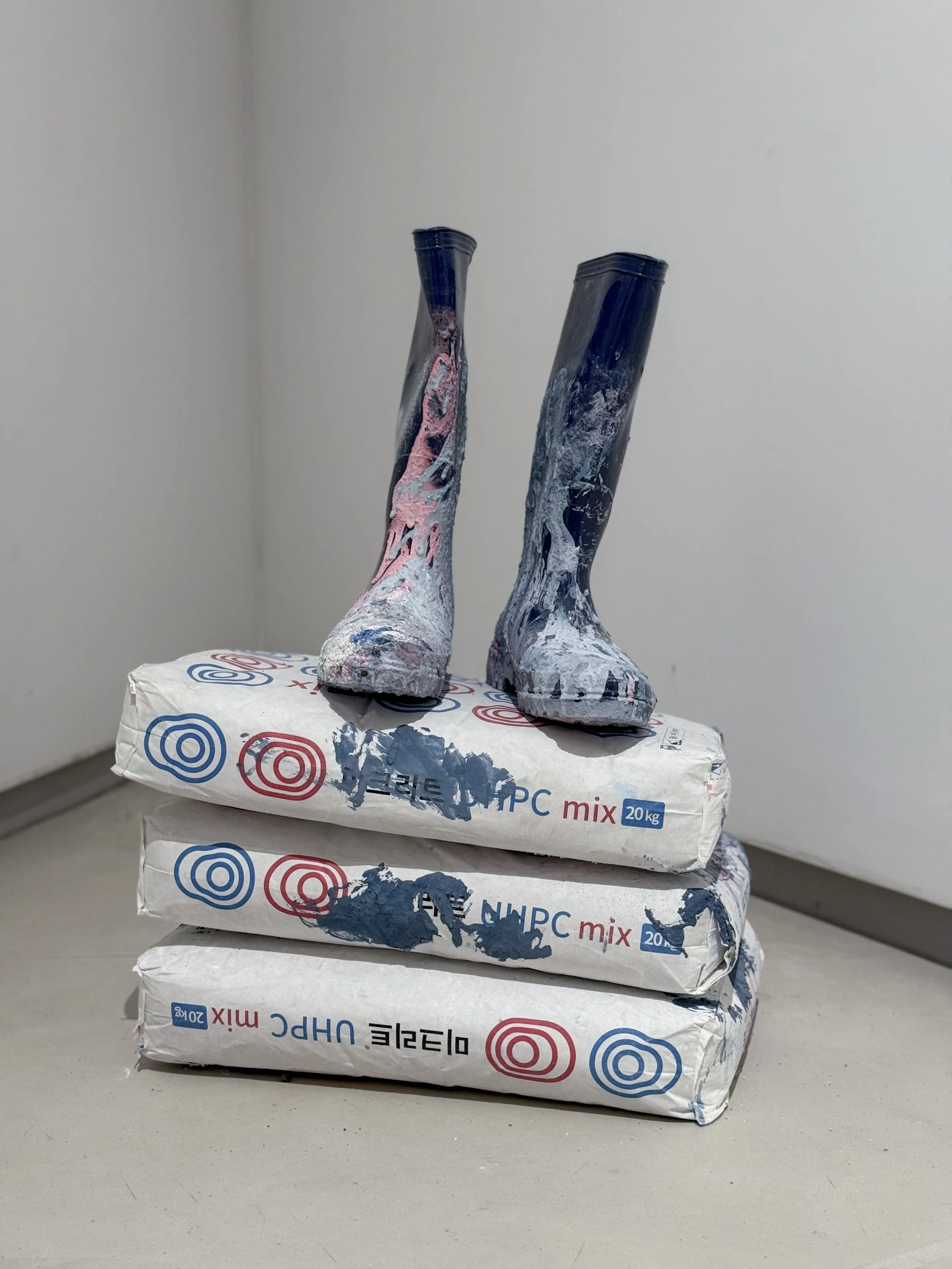
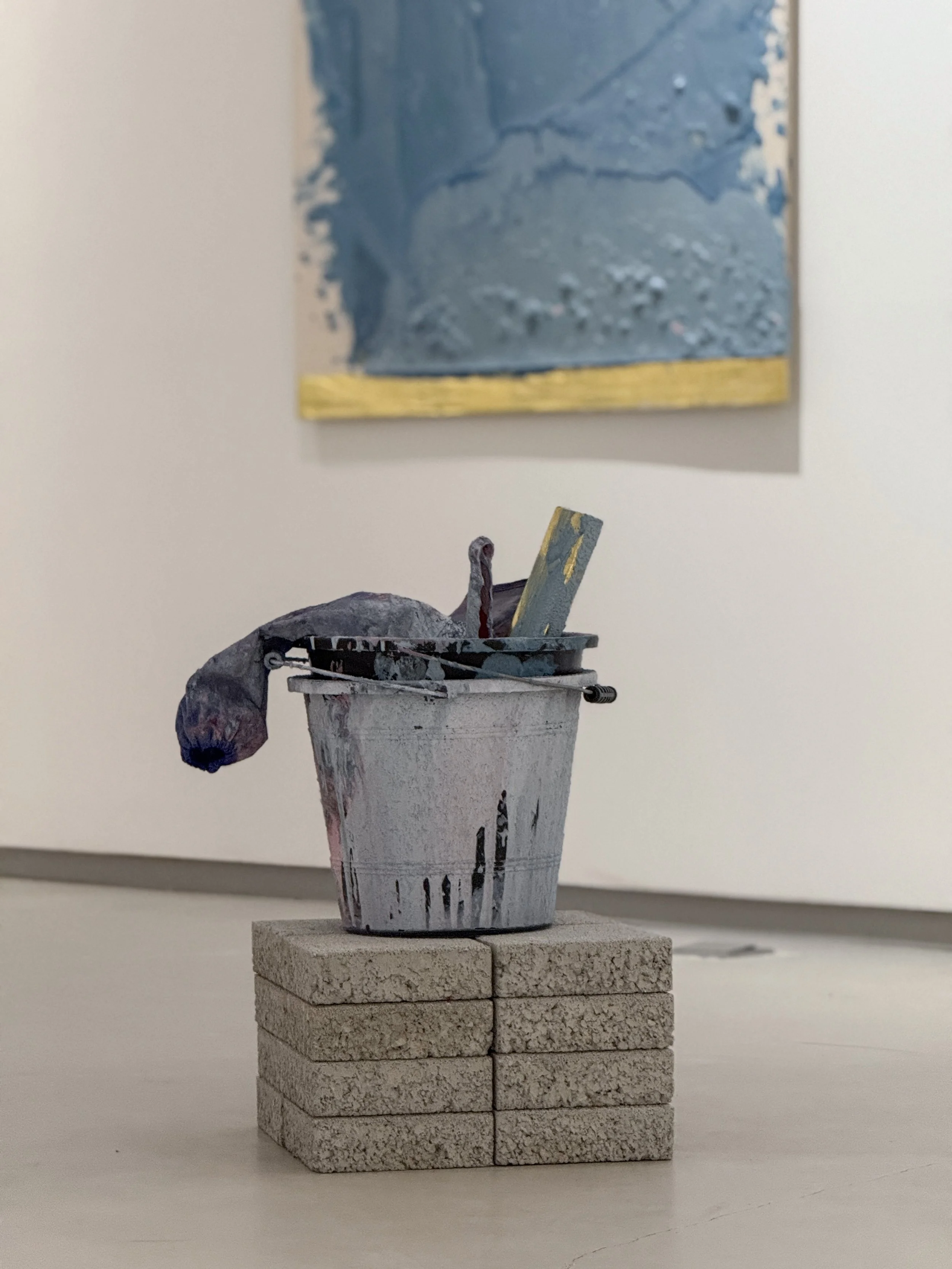
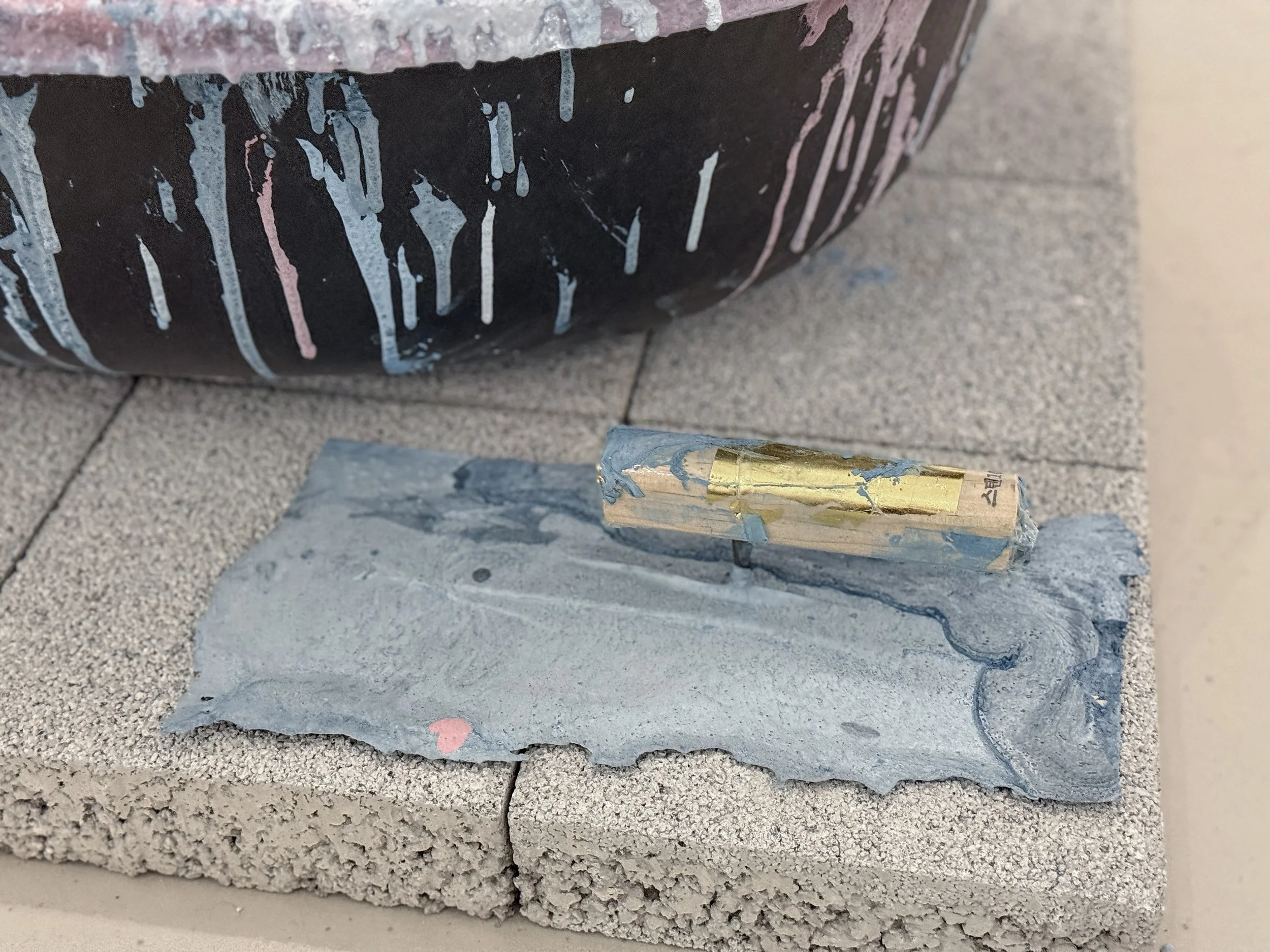
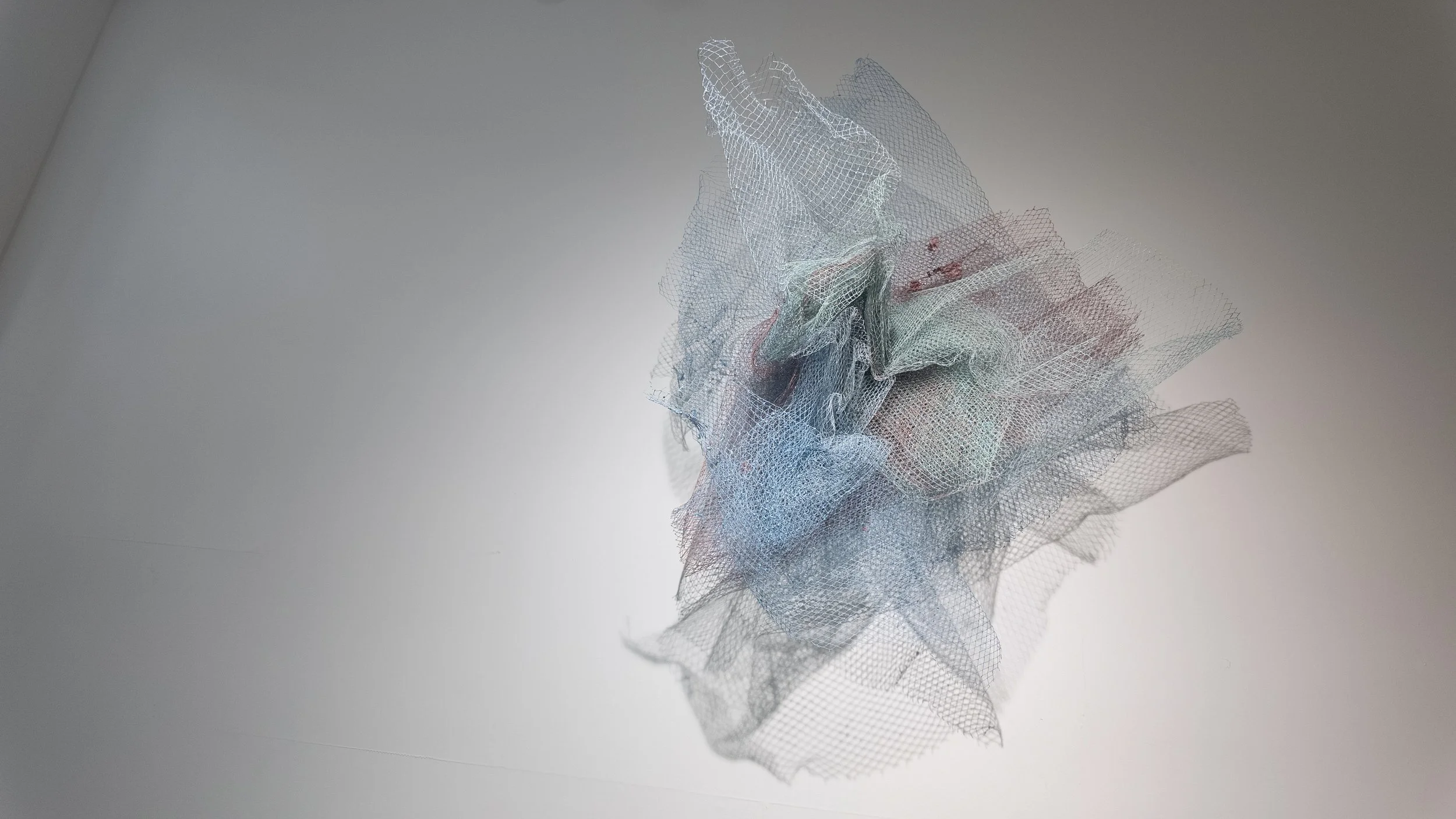
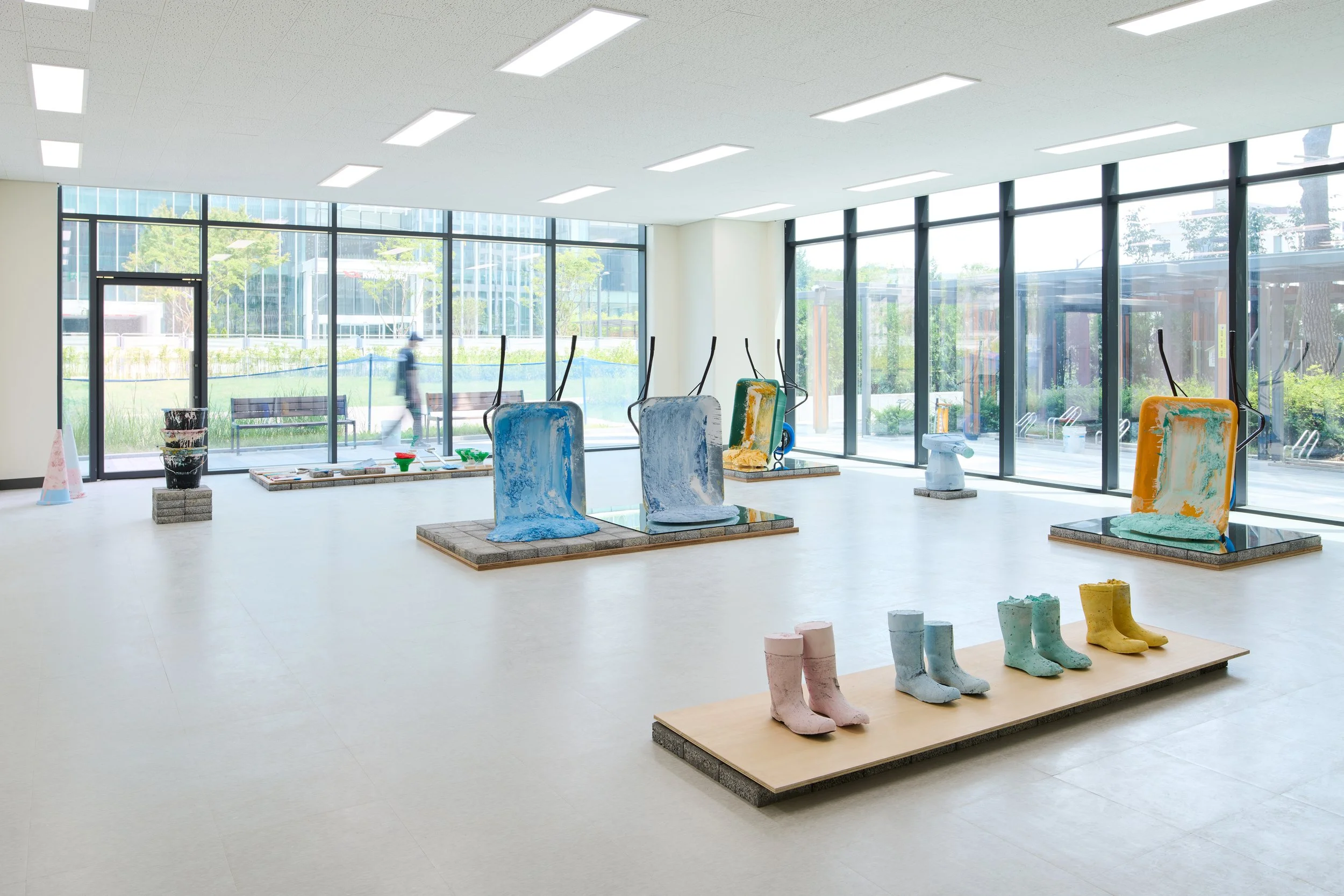
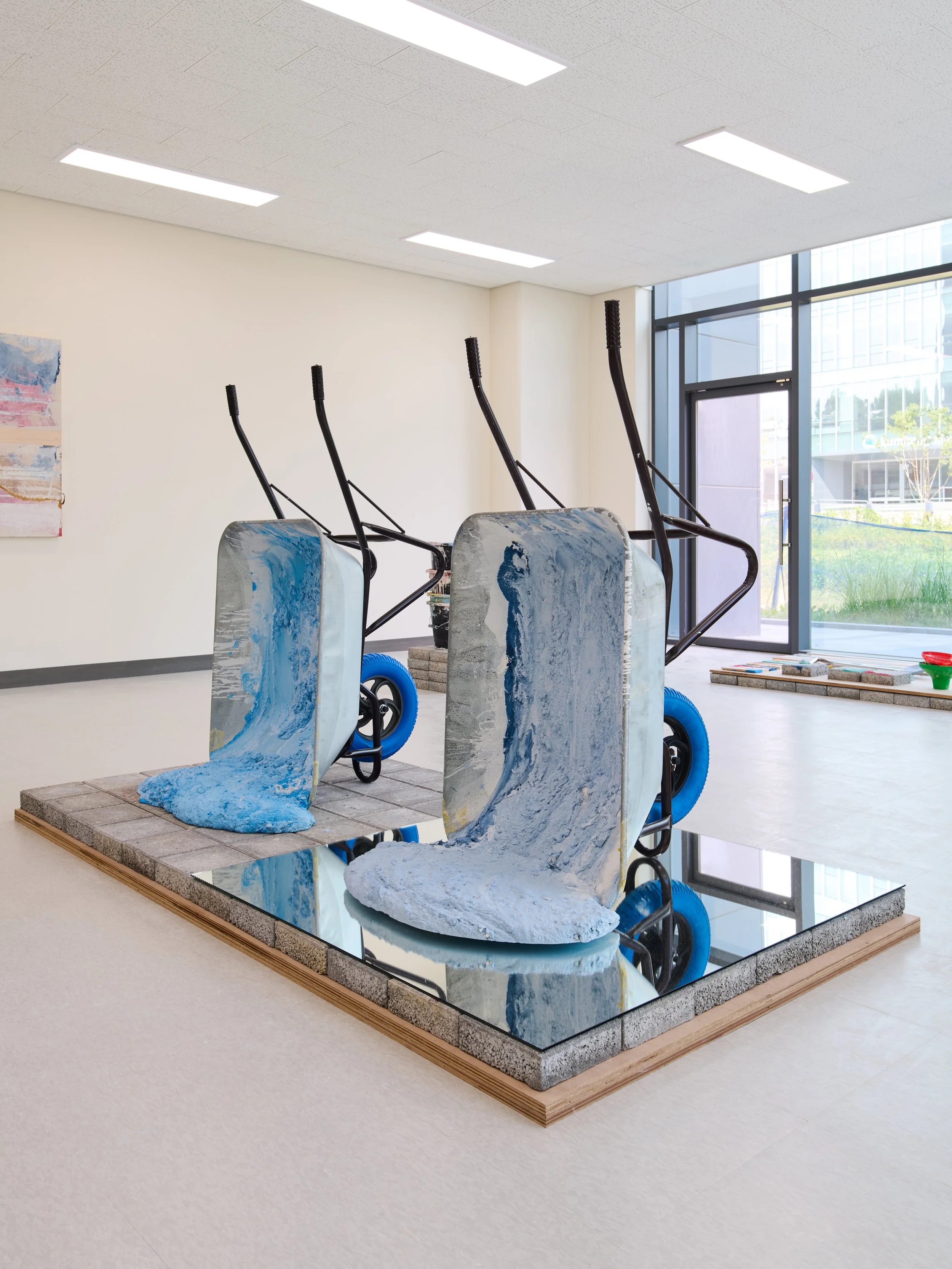
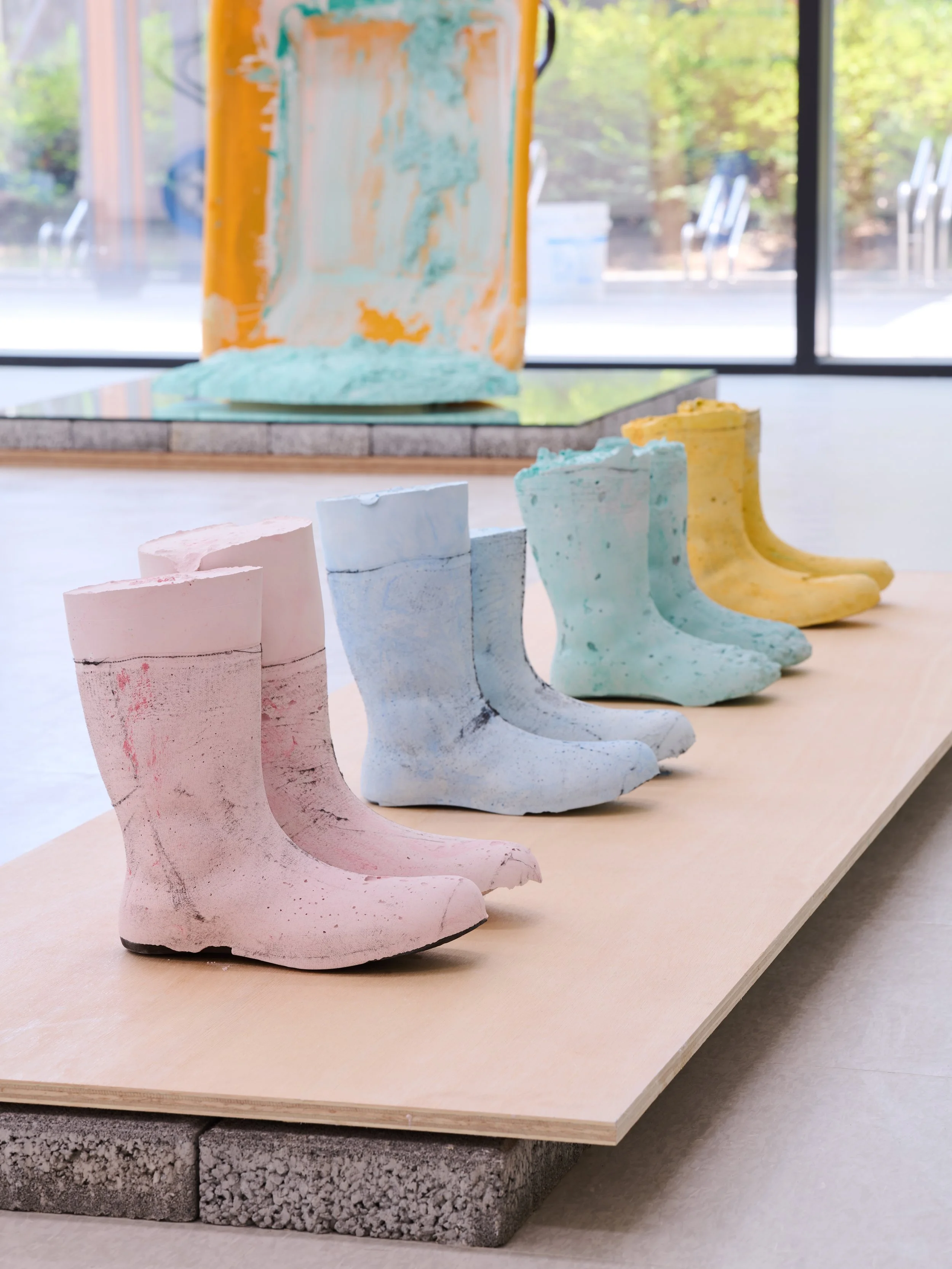
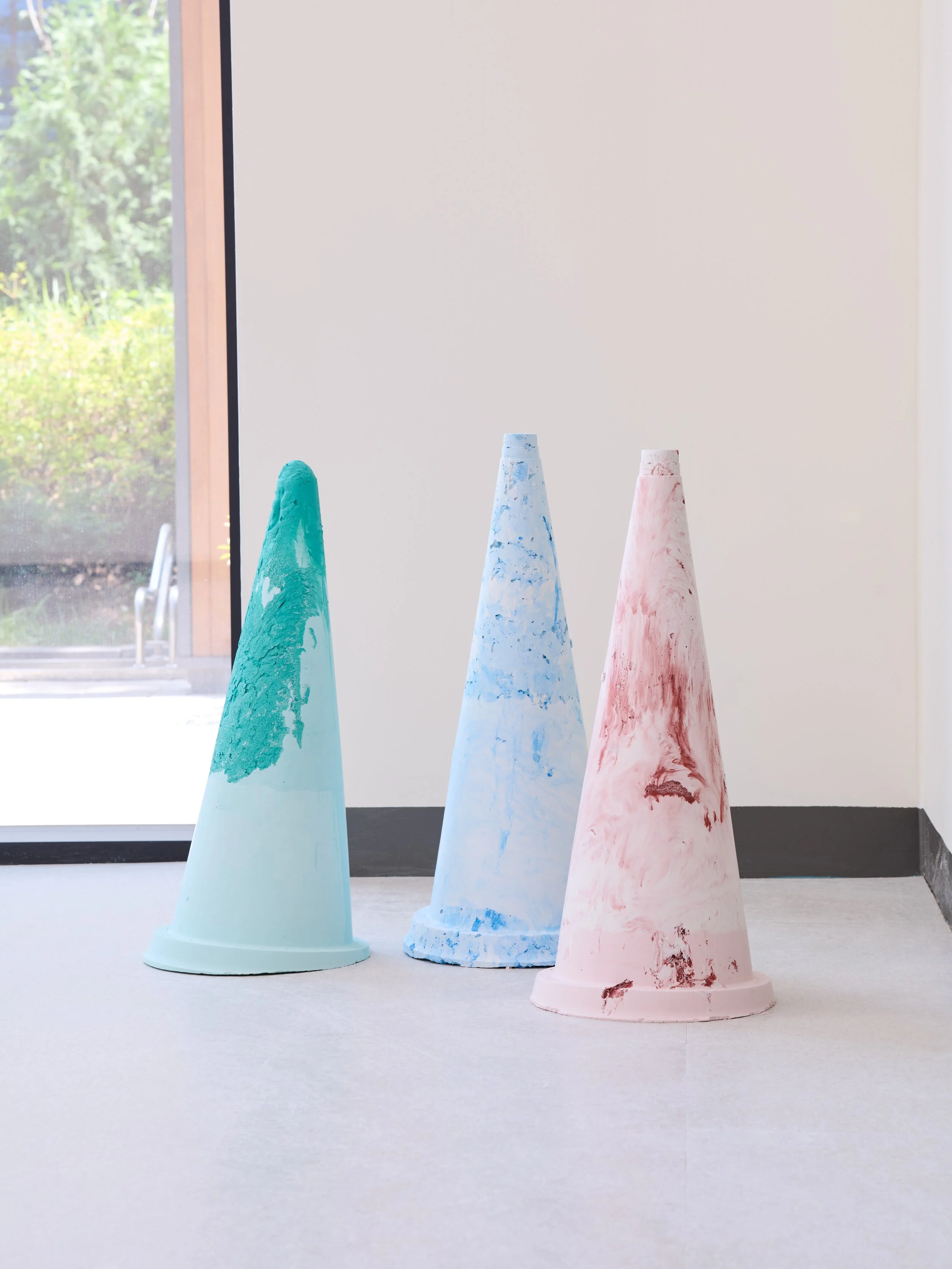
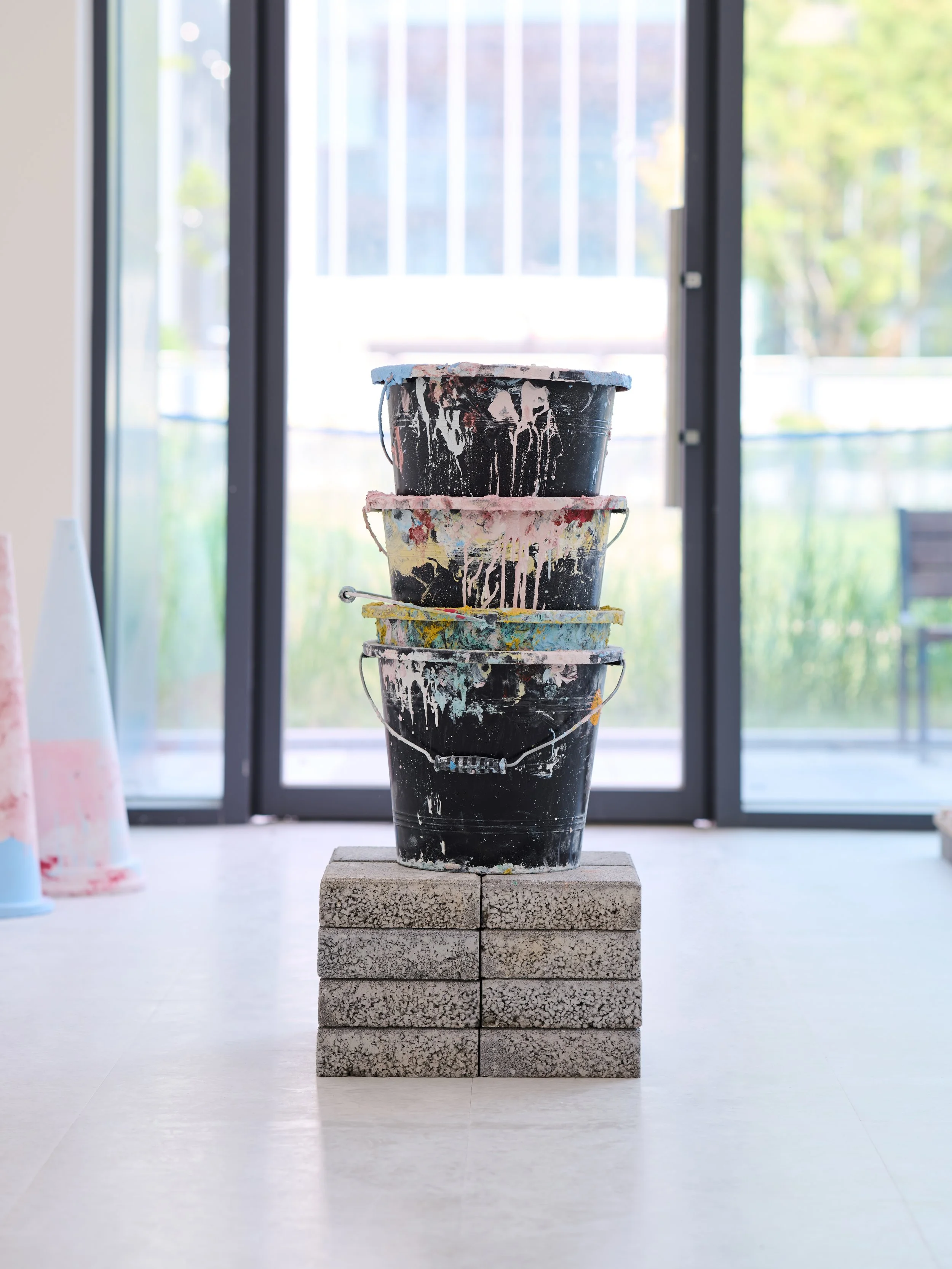
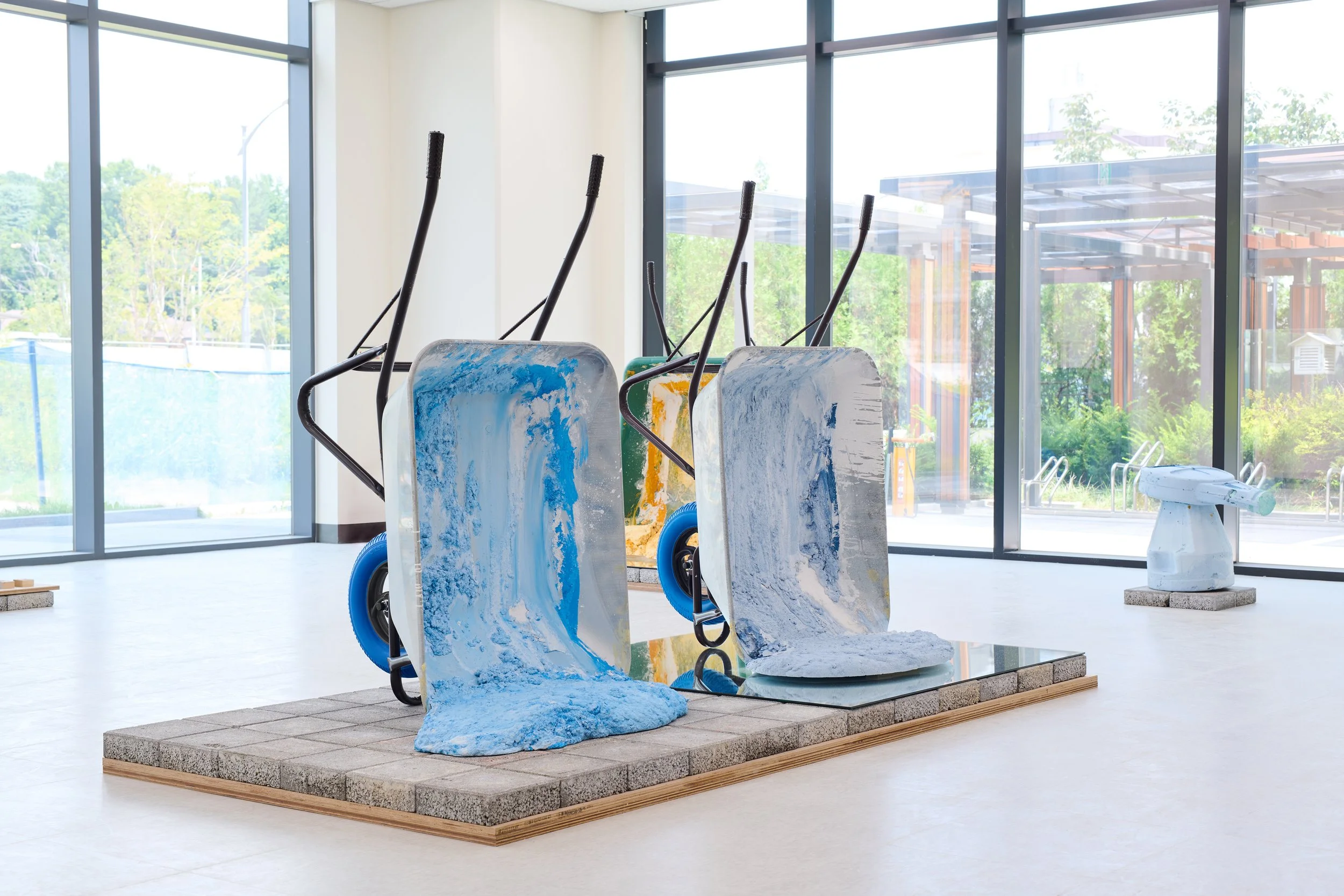
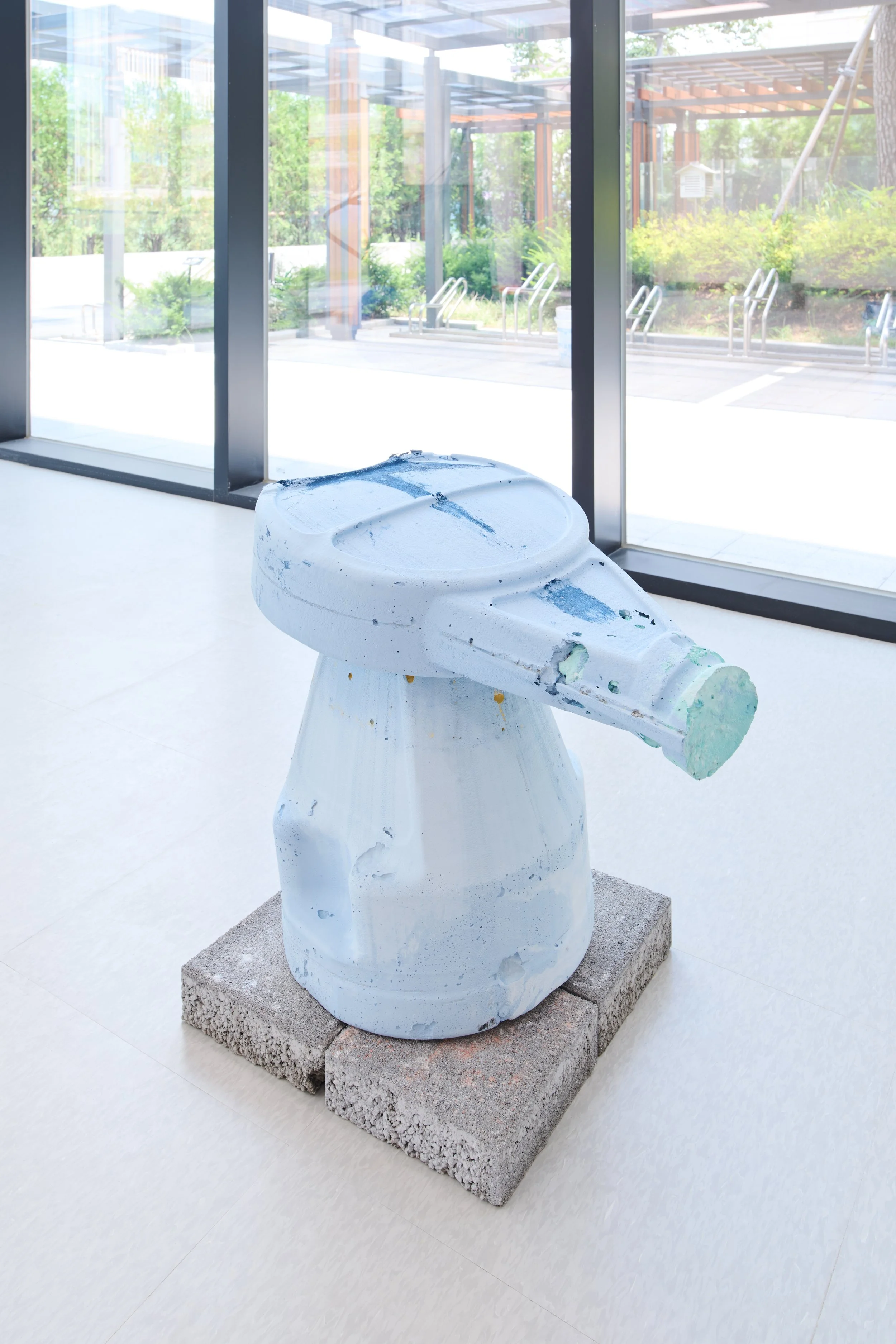
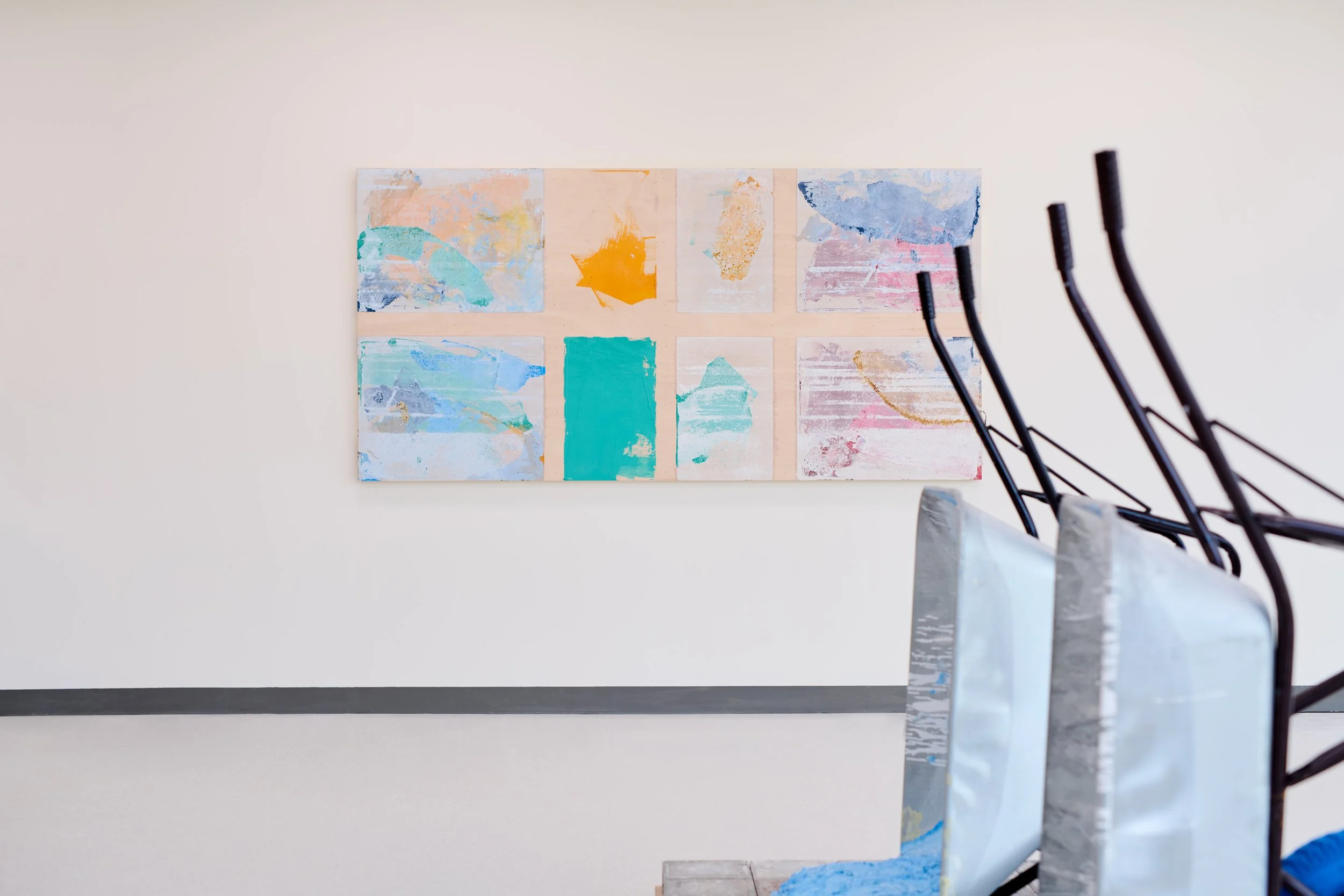
Measured Resolve developed through an exchange between sculpture, painting, and the architecture of UM Gallery. The exhibition began with two familiar forms—a ladder and a wheelbarrow—objects that have long moved between tool and sculpture within Nesbit’s work. In Seoul, those forms became subjects of a painting for the first time. Produced horizontally on the gallery floor within timber formwork and later raised vertically, the painting emerged from the sculptures, the room, and the conditions of its making.
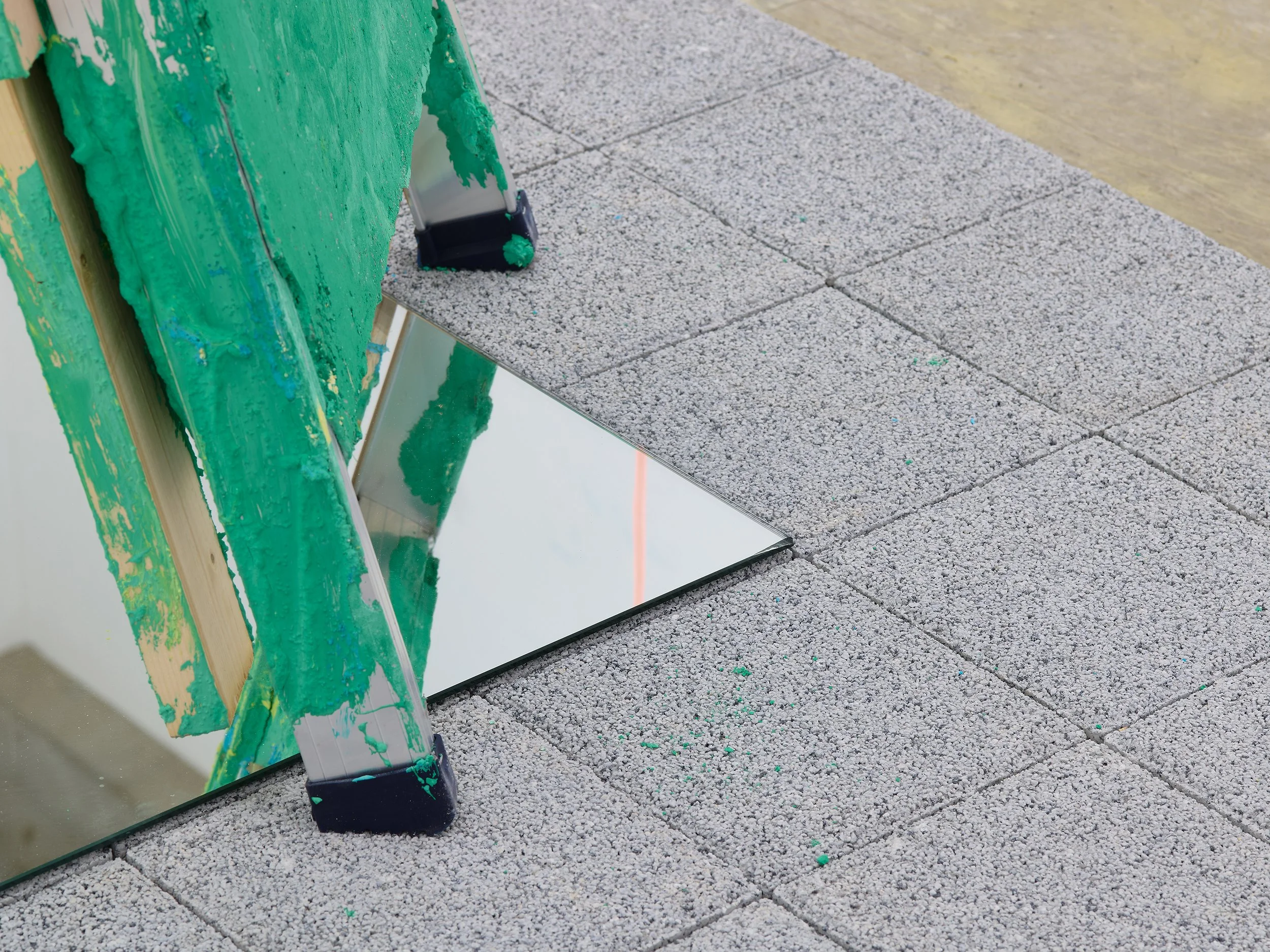
The gallery itself became part of the work. A measured section of the floor was opened with the intention of exposing the concrete beneath it. Instead, an earlier tile surface appeared. The excavation stopped there. What had been concealed became active, and the decision not to continue became as consequential as the cut itself. Material residue, markings, mirrors, and exposed layers remained visible, allowing the site to register the process that produced the exhibition.
“Measured” refers to dimension, proportion, material, and sequence. “Resolve” describes the judgment required when those plans encounter actual conditions. The work is not approached as a set of discrete objects placed within a neutral gallery, but as a spatial condition shaped through presence, material, and response. The cut remains specific—enough to reveal something without resolving everything.
Across the exhibition, sculpture, painting, and architecture continually redirect one another. Rather than arriving at a fixed outcome, Measured Resolve remains open to discovery and to the conditions left behind.
Jeju, Korea
2026
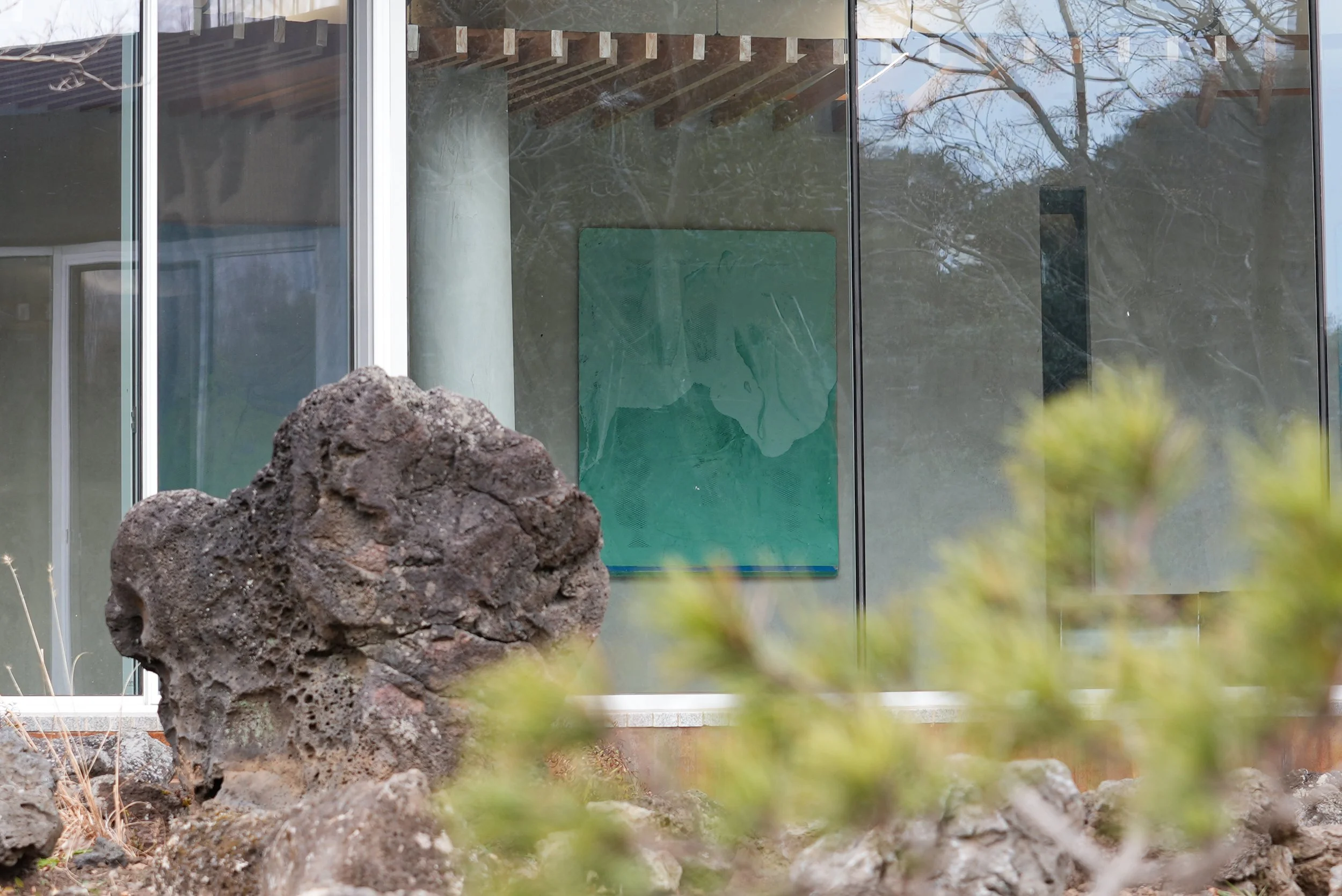
Concrete arrives with a reputation—structural, permanent, resolved.
Here, it is approached in another state: before it settles, while it is still receptive, still recording.
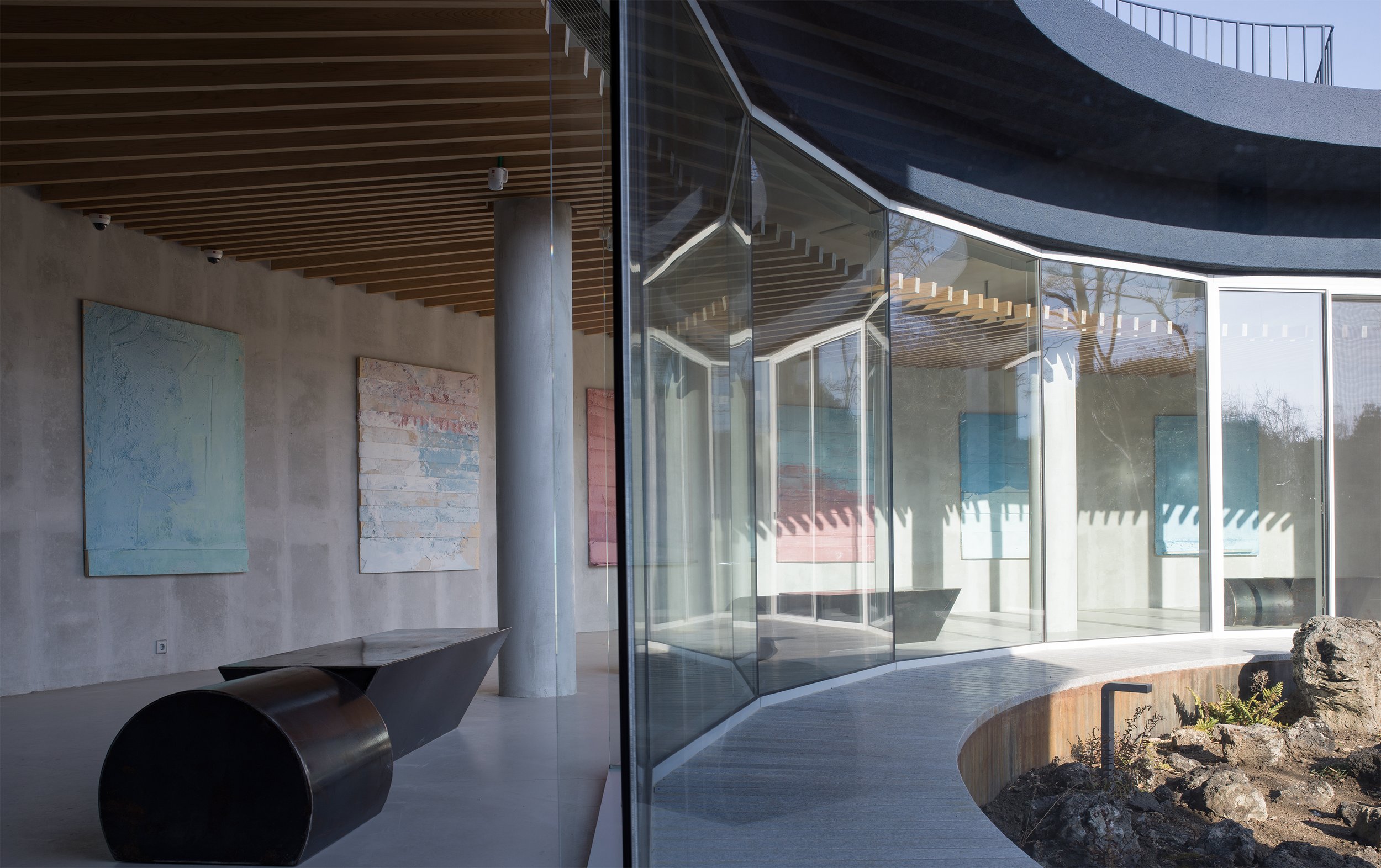
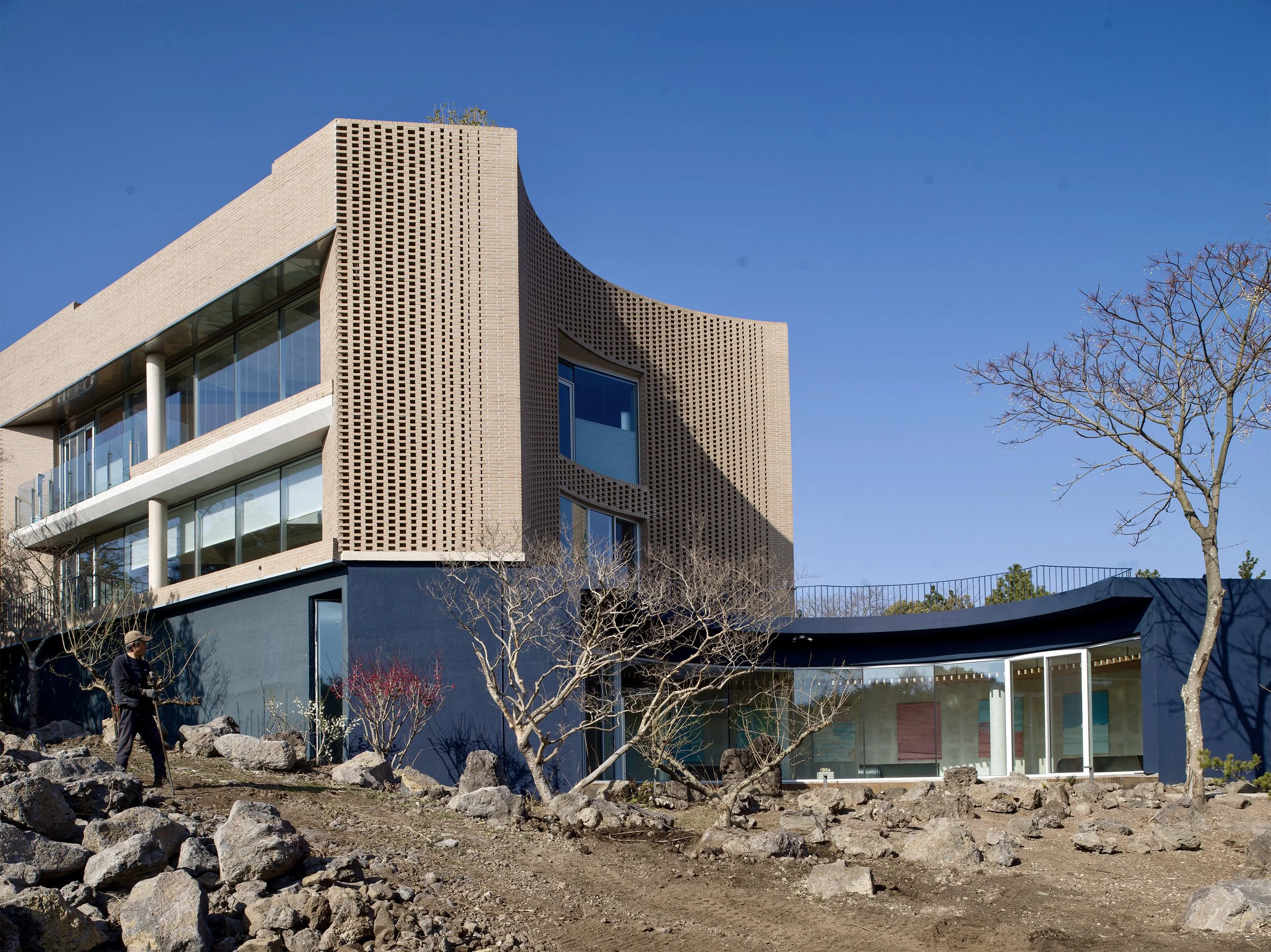
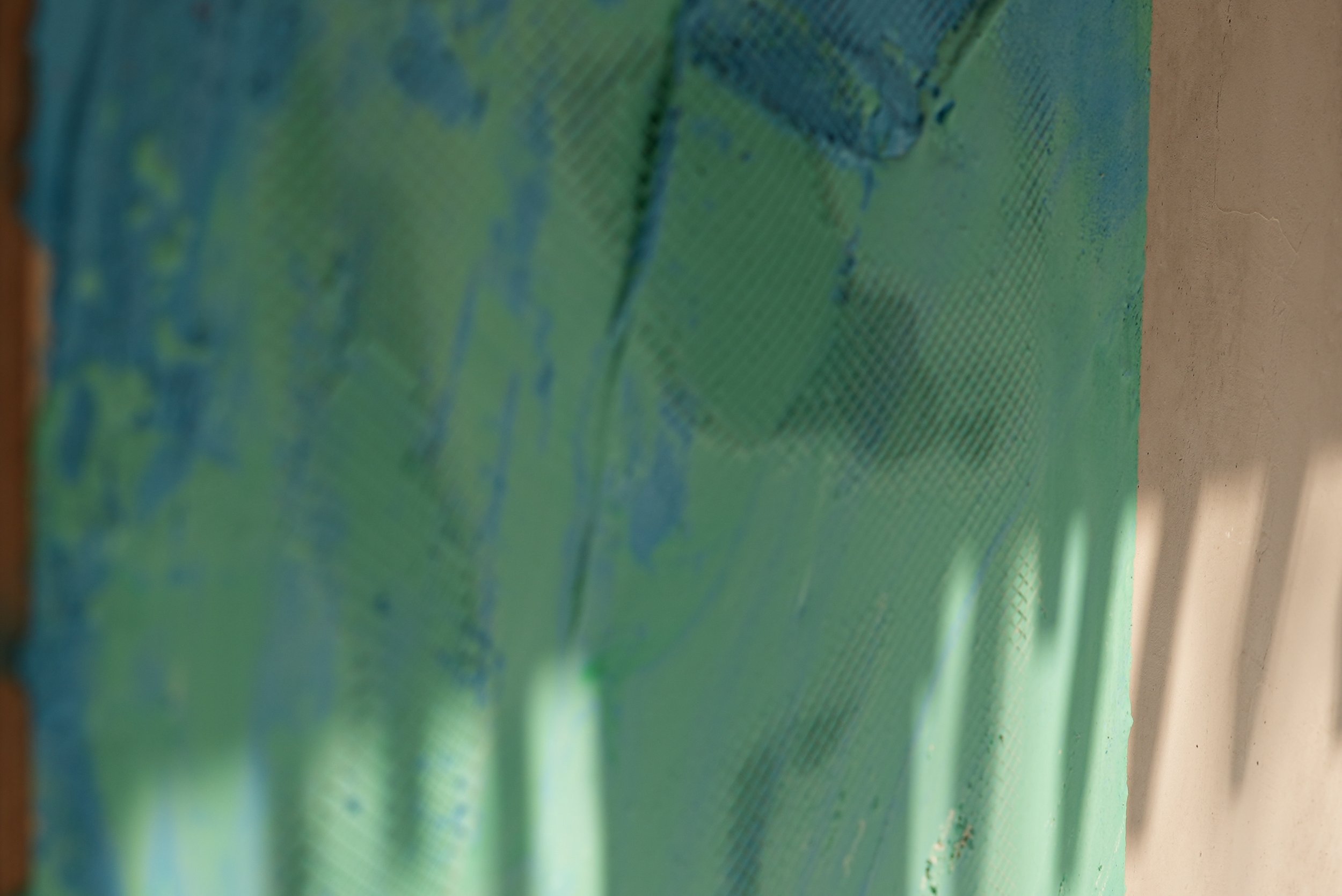
At Seobo Art Space in Jeju, the work unfolds as a system rather than a set of discrete objects. Panels, tools, and residues are held in proximity, each carrying equal weight. What is built and what remains from building are not separate conditions, but part of the same continuum.
Concrete is treated not as a neutral support, but as a surface that registers time—absorbing shifts in pressure, environment, and touch. It cracks, stains, reflects, and holds. What appears fixed begins to soften; what appears complete remains in motion.
Built Like Us considers material as something formed through use—never fixed, always in relation.
Seoul, Korea
2025
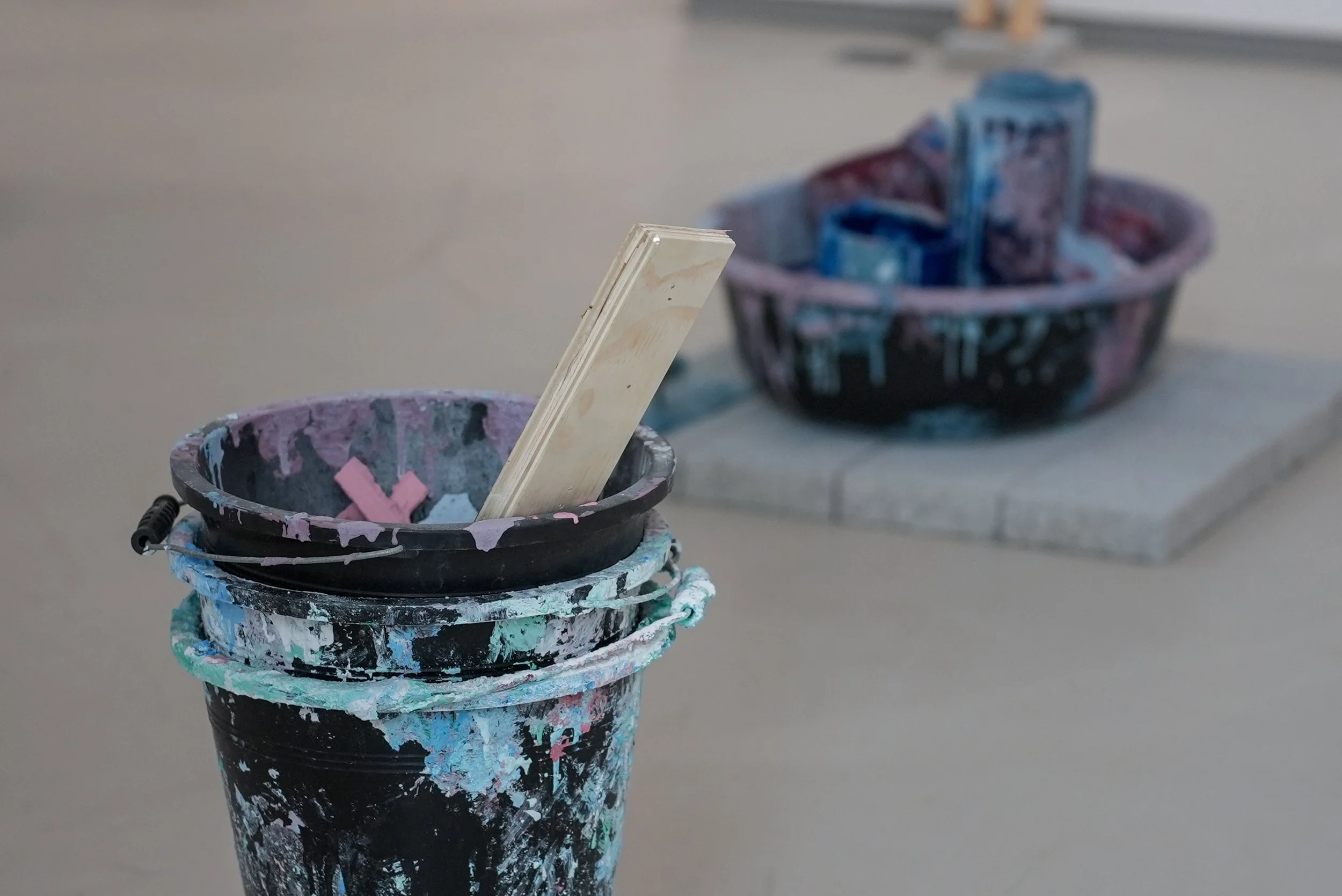
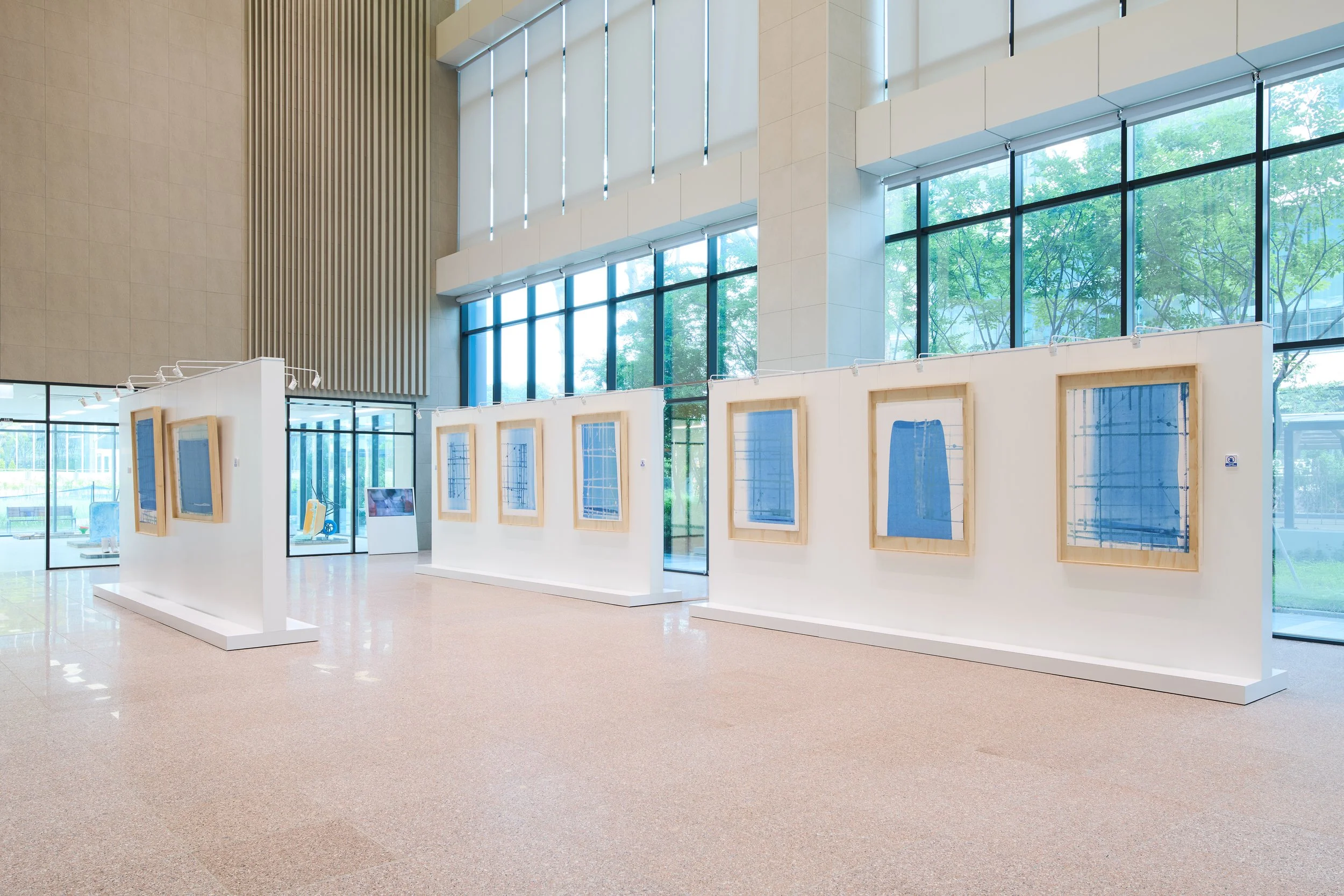
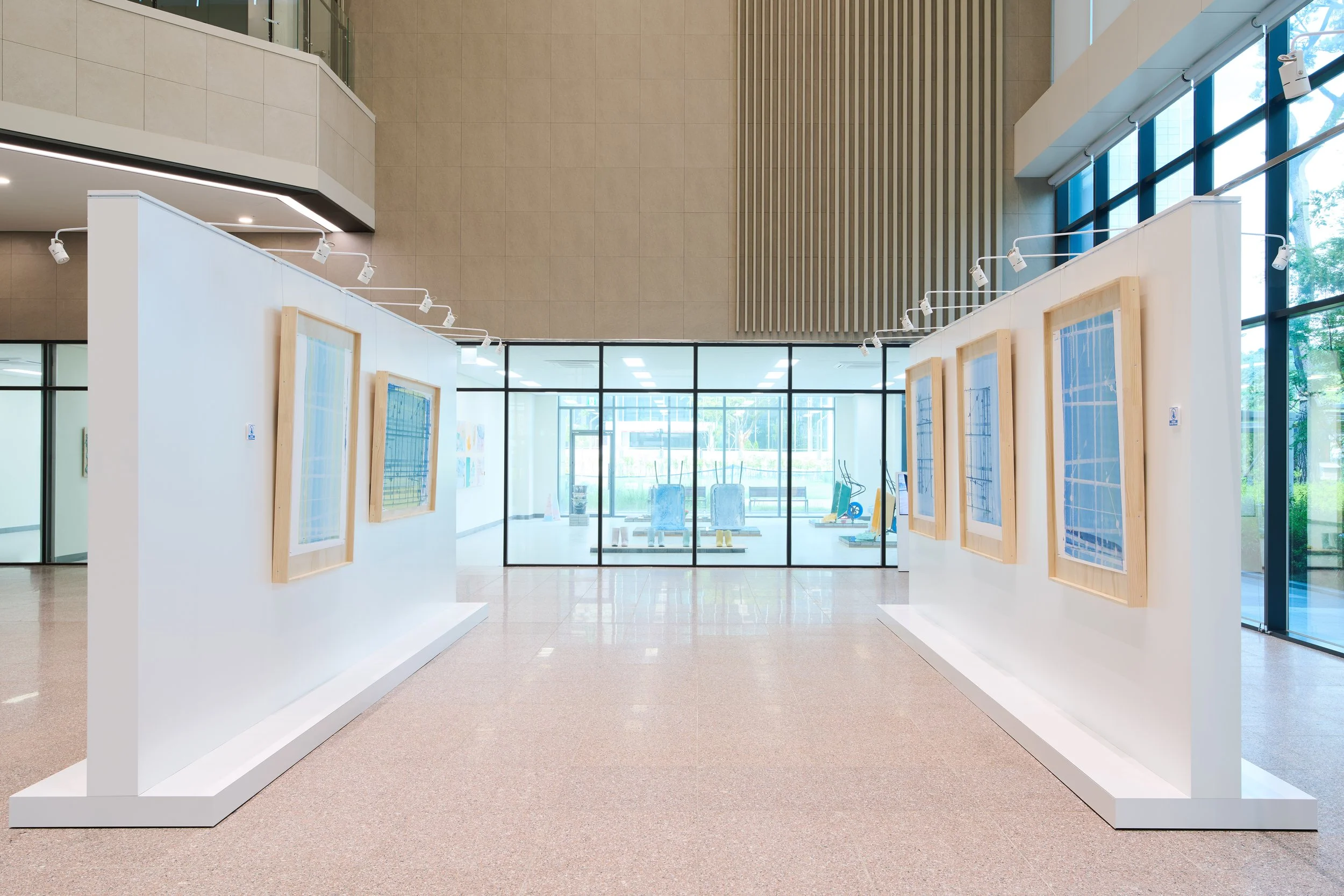
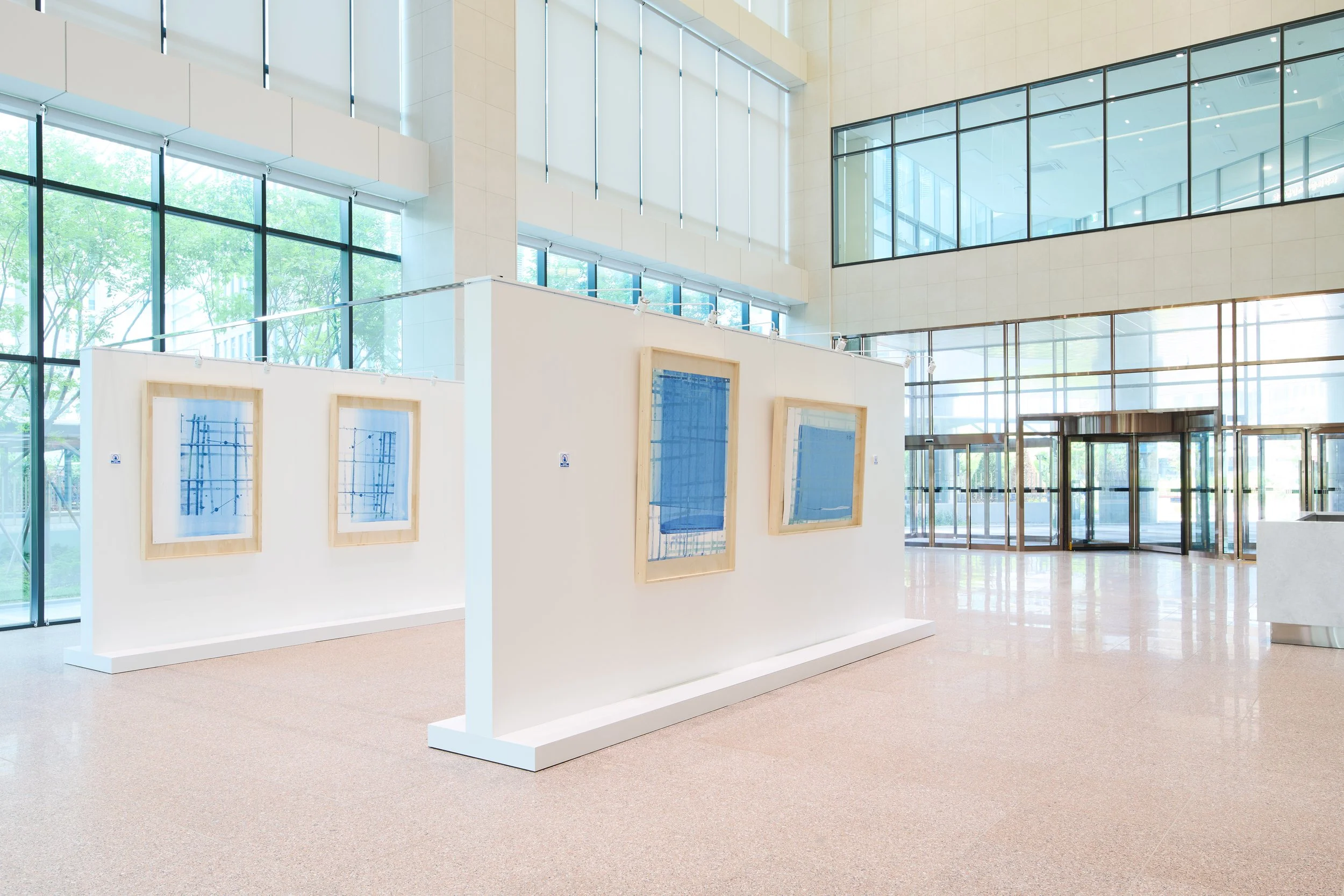
Formwork transforms the logic of building into painting and sculpture. The work positions process as exhibition, and exhibition as process.
The work begins with formwork—temporary structures used to shape poured concrete. On site, these elements circulate as secondary tools, used and reused without emphasis or permanence; here, they are repositioned with intention, serving as both the means of producing the paintings and as objects held in relation to them.
Concrete, typically marking a final moment of transformation, may never arrive. In this condition, the formwork remains—revealing what is usually concealed or discarded.
The work operates between painting, sculpture, and architecture, where process, anticipation, and labor define the work.
Concrete, steel, soil, tree
10 ft × 6 ft × 4–5 ft
Approx. 30,000 lbs
Los Angeles
2025
A monumental concrete vessel where sculpture, infrastructure, and landscape converge.
The Planter began as an exploration of scale, construction, and growth. Cast in concrete and weighing nearly thirty tons, the sculpture functions simultaneously as architectural object, landscape container, and sculptural form.
The work was fabricated using a custom formwork system and poured in two separate concrete mixtures, creating distinct color fields within the structure. Once cured, the massive vessel was transported and installed using cranes and rigging typically reserved for infrastructure projects.
Designed to hold soil, irrigation, and a living tree, the sculpture introduces a temporal dimension to the work. Over time the planted elements grow and change, allowing the landscape to gradually transform the object.
Rather than presenting a fixed monument, The Planter operates as a living structure—where concrete, soil, water, and vegetation coexist within a single form. In this way the work extends Nesbit’s ongoing interest in construction as both process and metaphor, where built form becomes a framework for growth.
Pacific Design Center, Los Angeles
2026
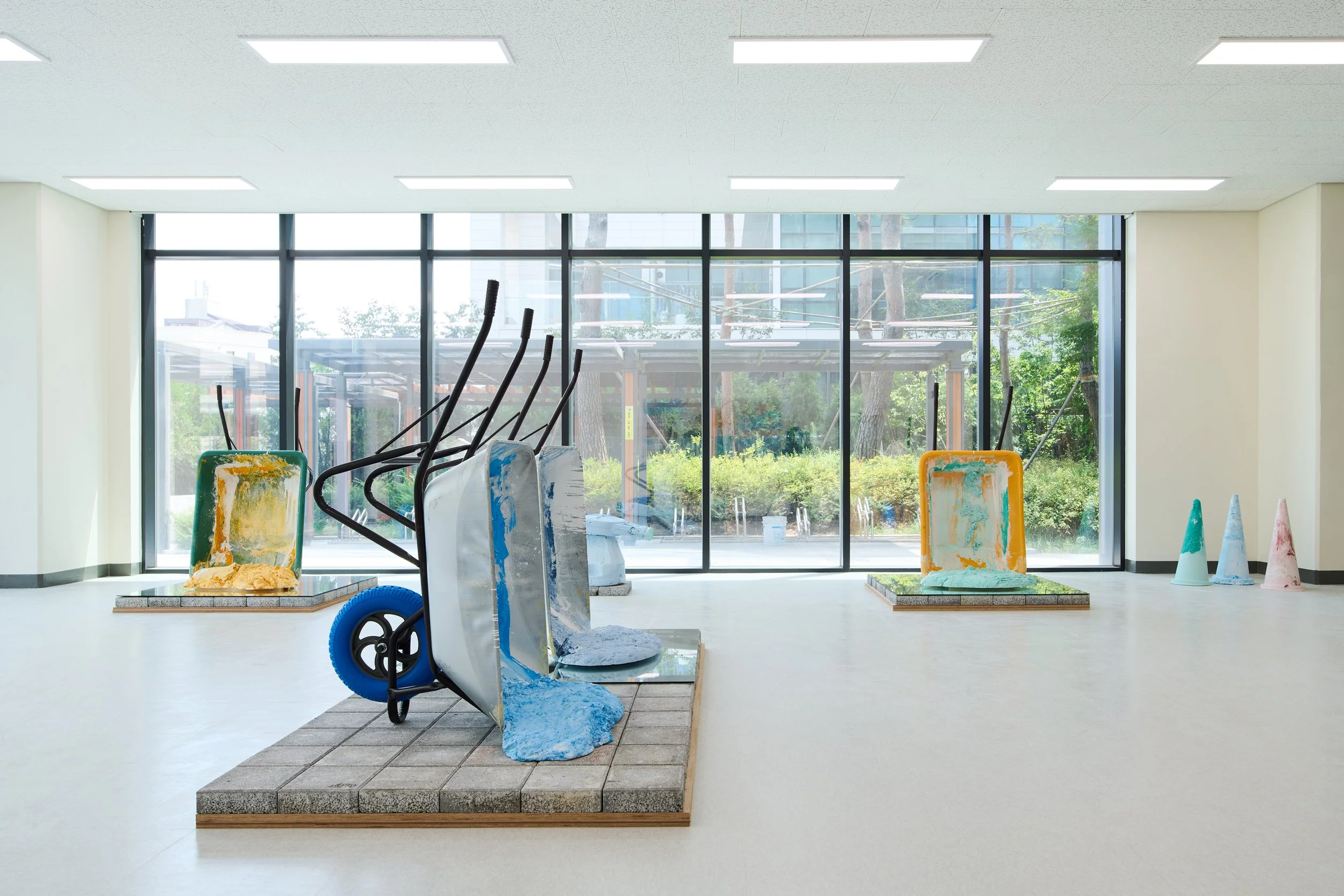
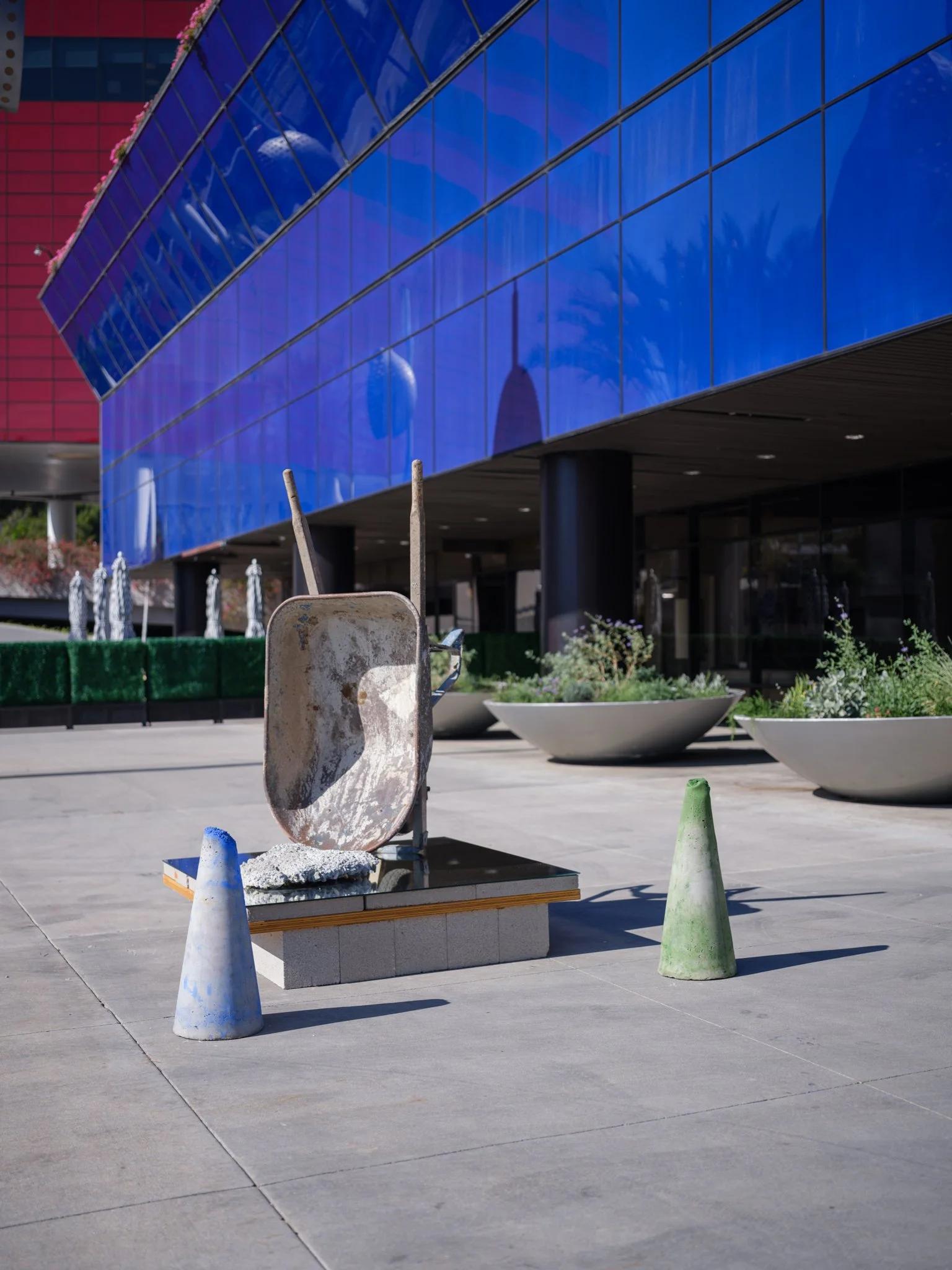
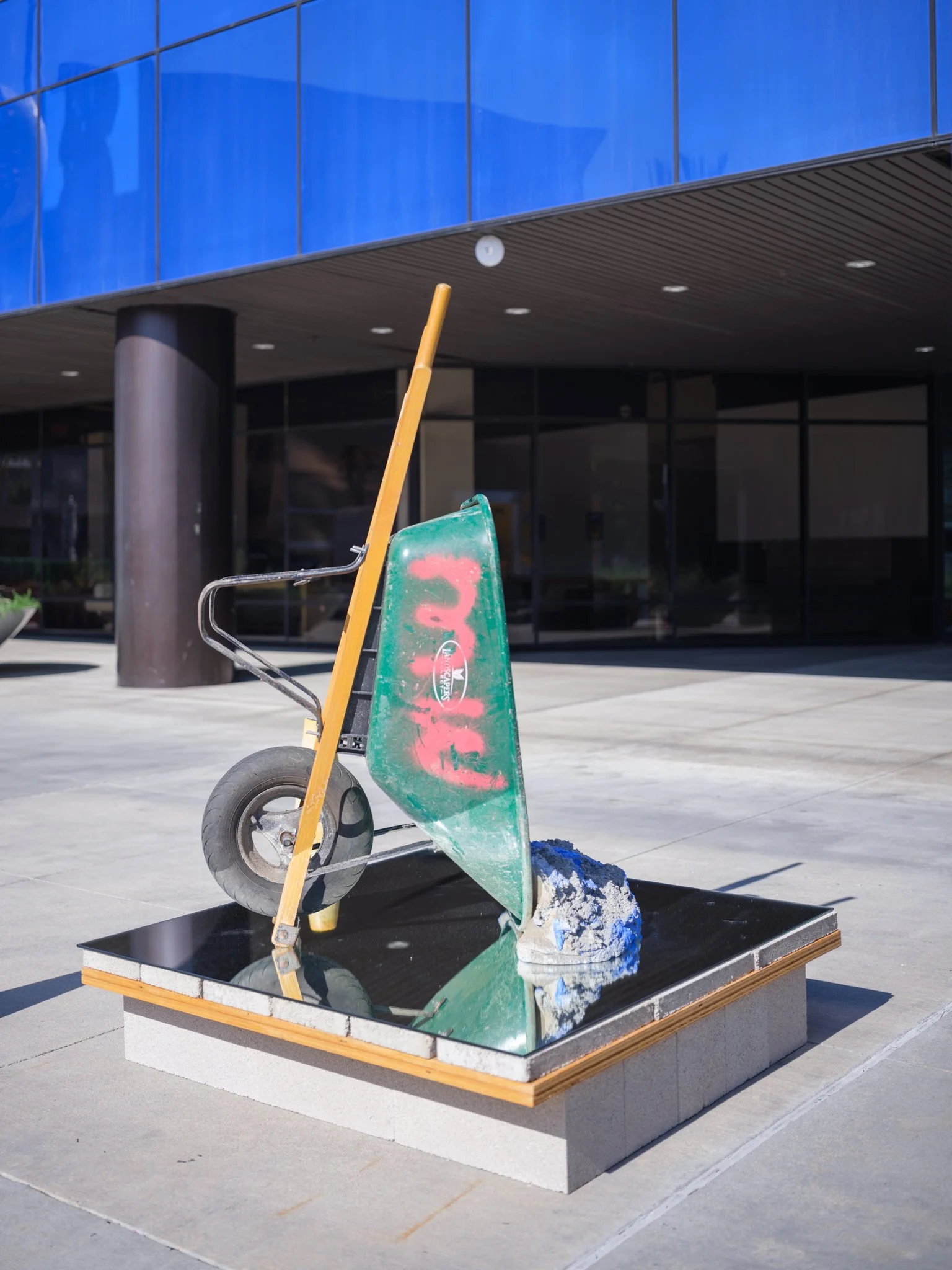
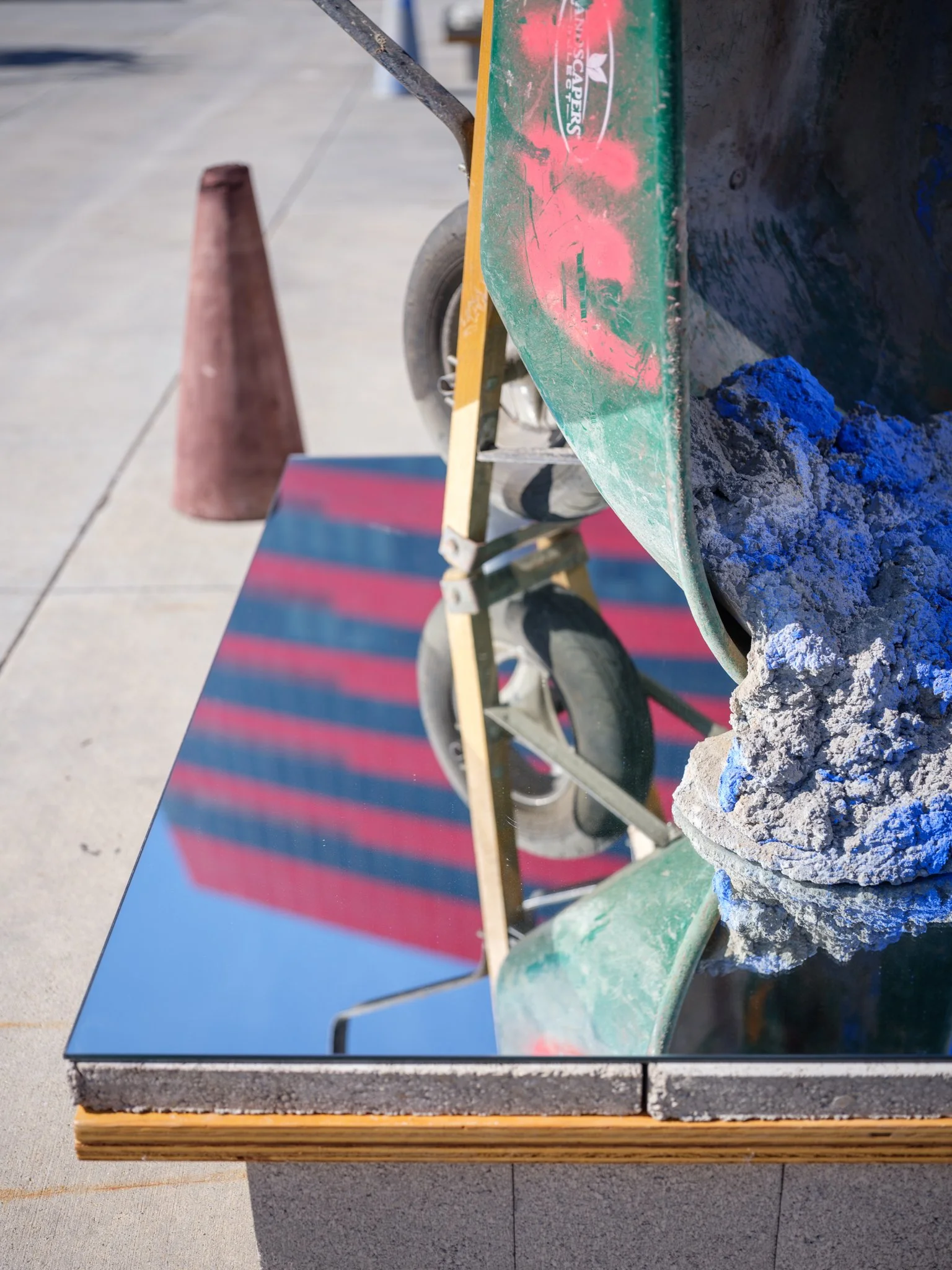
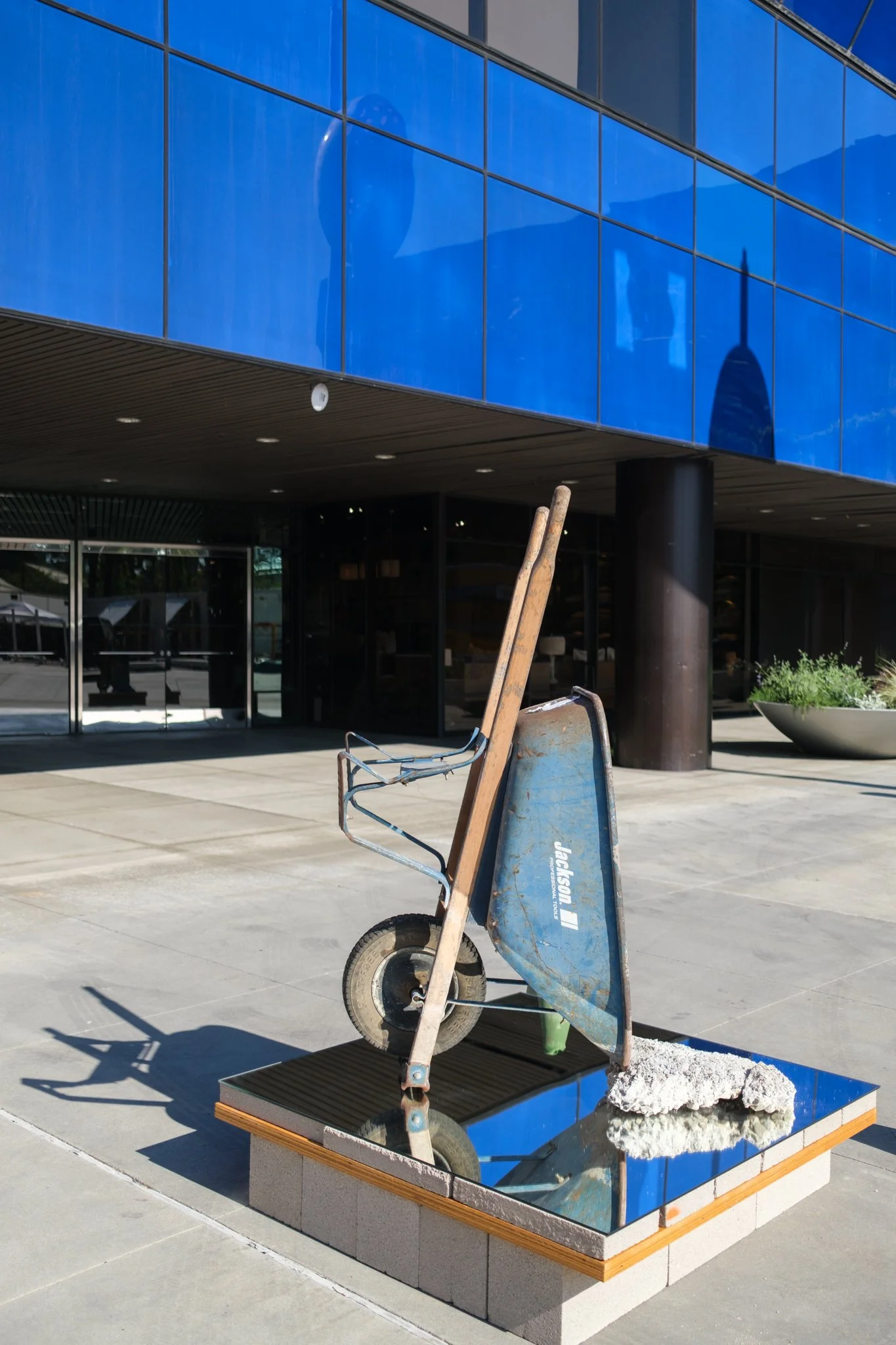
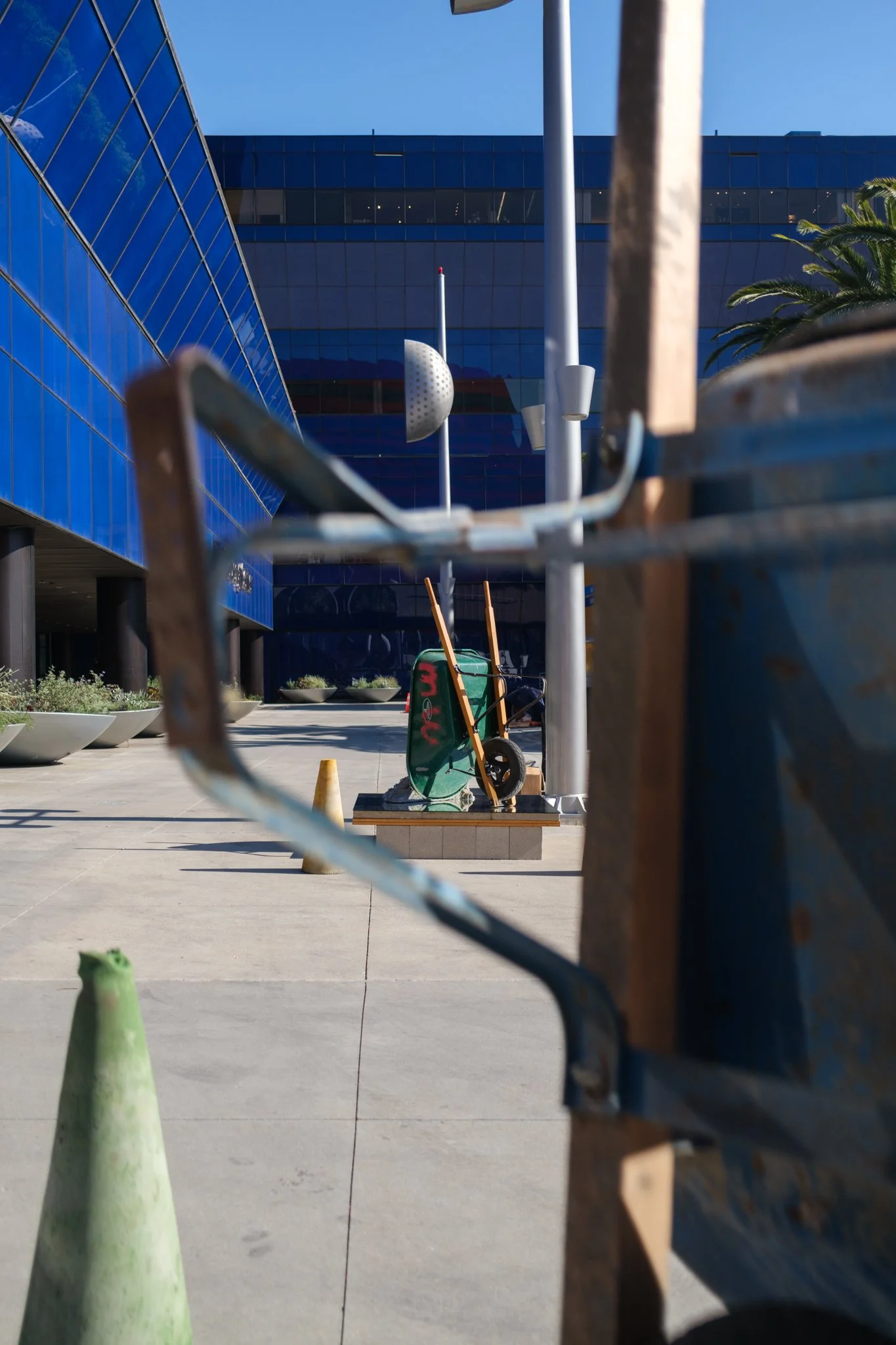
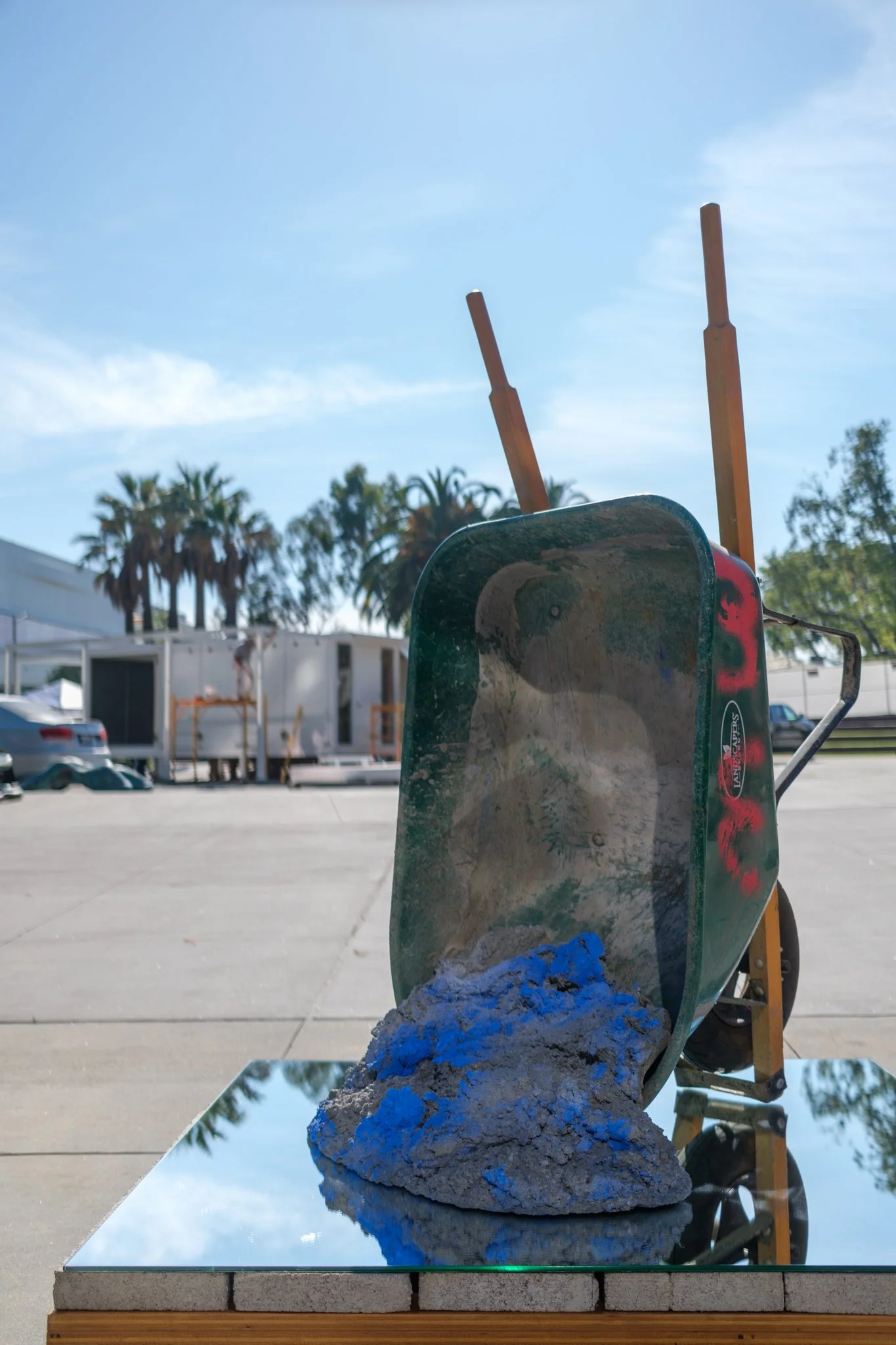
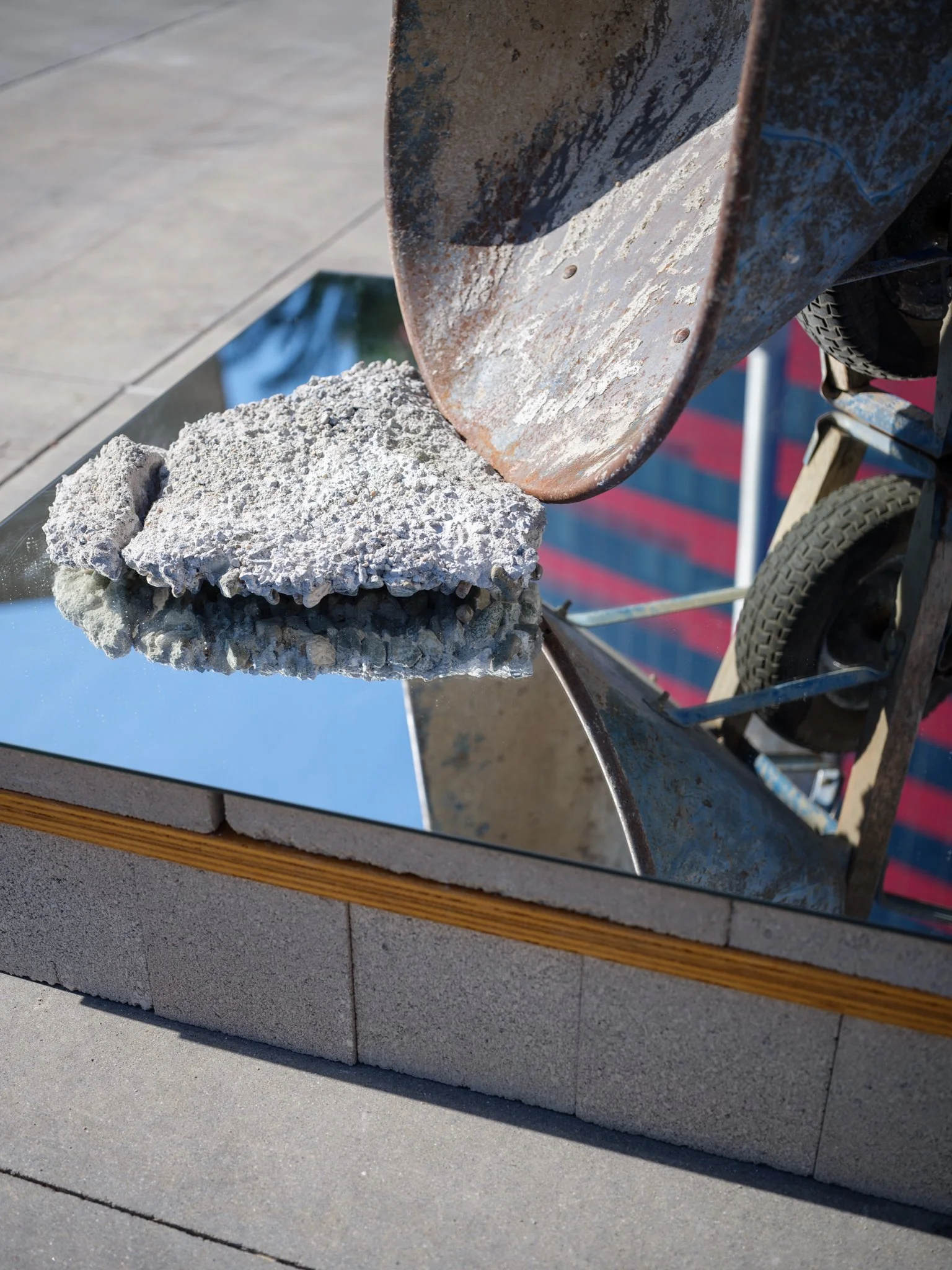
Sculptural elements developed across previous sites are reassembled at the Pacific Design Center. Wheelbarrows are repositioned as both object and process, holding concrete in states of transition between form and residue.
As the work moves through increasingly defined architectural contexts, it evolves from found material into a deliberate means and method. No longer discovered, the wheelbarrow is used to produce the work itself—becoming both the act of making and the sculpture.
Set against the reflective facade, the work extends through repetition, surface, and displacement, where color, reflection, and material converge.
Gregory Ain House, Los Angeles
2024
The Meier St Series began with a wall. A former exterior stucco surface—later enclosed—was revealed through demolition, exposing layers of green stucco, plywood, and weather. Positioned between interior and exterior, this surface became the starting point for the work.
Fragments of the house—walls, windows, circulation, and light—are translated into layered drawings and paintings. Marks accumulate across the surface through tape, pigment, and line, suggesting both construction and erasure.
While the series began with wall-based works, sculptural elements emerged alongside them. Structure, balance, and material presence extend the same language into space.
Architecture is approached as both structure and field—holding the logic of building alongside the openness of painterly abstraction.
60 in x 96 in x 4 in
Cobalt and White Concrete
Los Angeles
2025
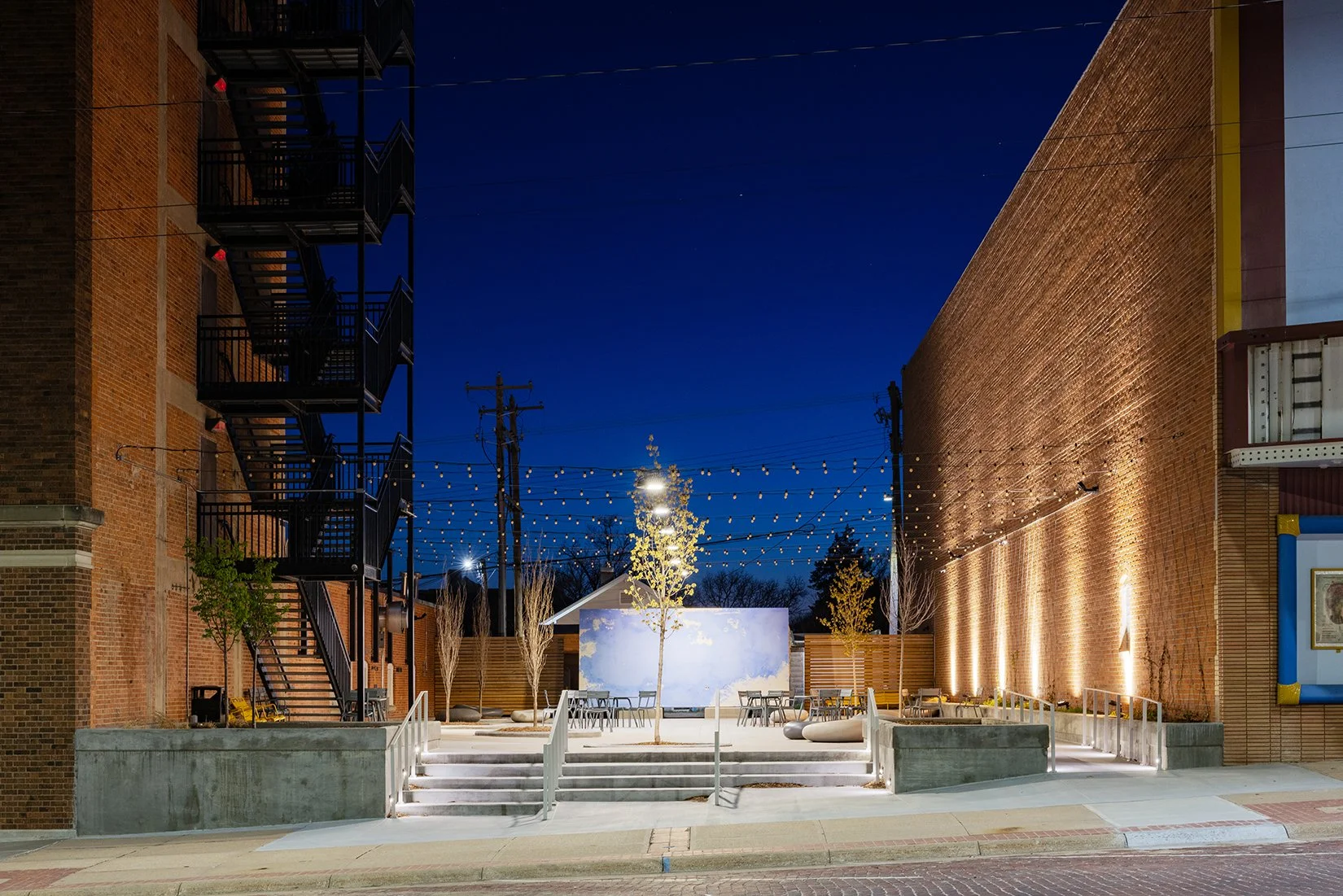
A sky poured into concrete and set against the hillside of Mt. Washington.
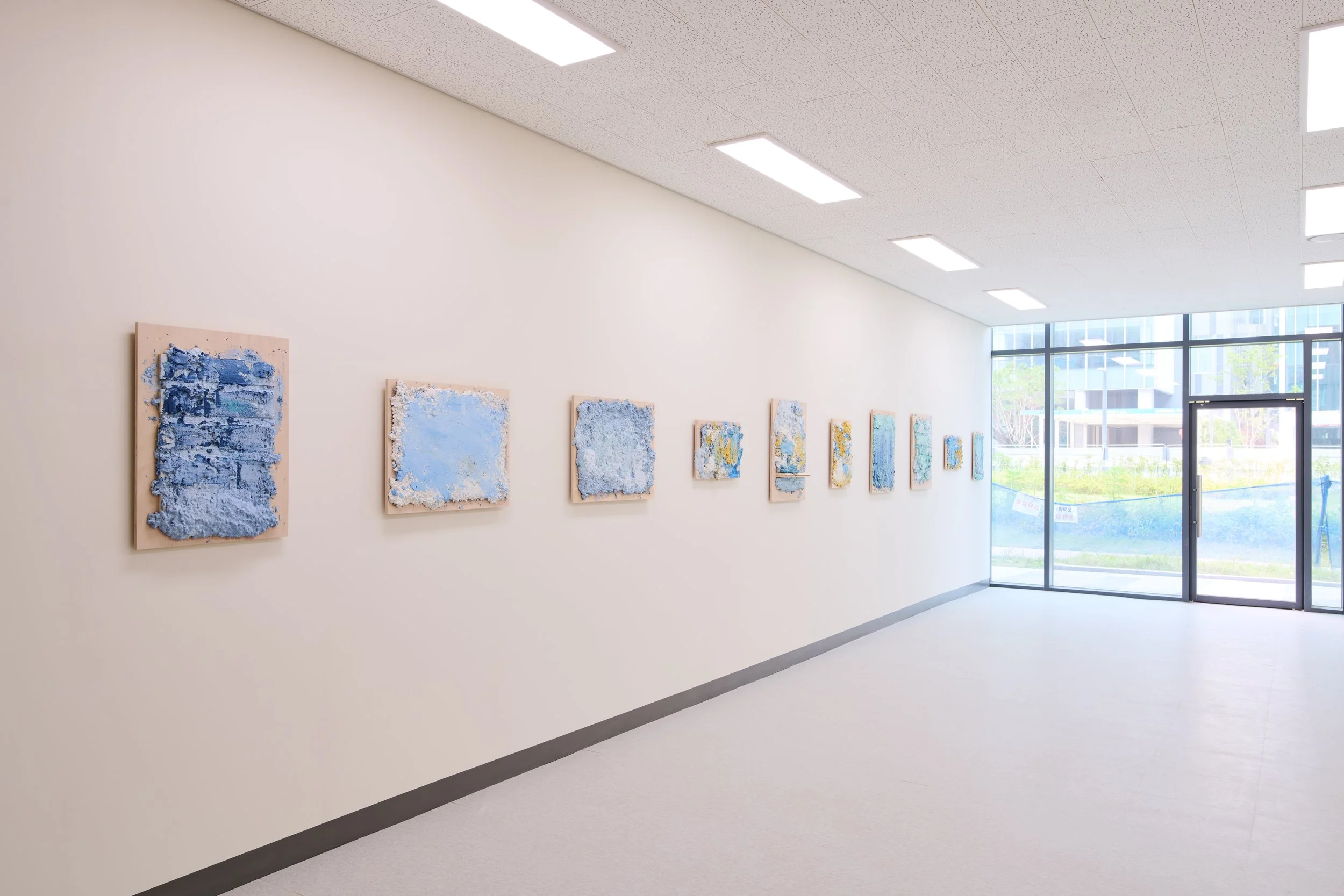
Highland Blues began as a horizontal pour within temporary formwork constructed inside a courtyard in Los Angeles. Blue pigment was introduced directly into the concrete mixture, allowing color to emerge from within the material rather than sit on its surface.
Cut foam forms created a field of voids that guided the movement of the pour. As the mixture settled, gravity, sediment, and manual intervention shaped the composition. What began as a construction process gradually revealed itself as a painting.
After curing, the slab was lifted and mounted vertically on a retaining wall that supports the hillside above. The work now occupies a threshold between earth and sky—its blue surface recalling atmosphere while its concrete mass remains anchored to the ground.
The upright form also echoes the presence of a khachkar, the carved Armenian stone monuments traditionally placed in the landscape as markers of memory and protection.
Concrete
McCook, NE
2021
McCook Blues translates the expansive sky of the American Midwest into a monumental concrete plane.
Developed in Nebraska, blue pigment was introduced directly into the concrete mixture, allowing color to emerge from within the material rather than rest on its surface. During casting, subtle variations in pigment, sediment, and air produced atmospheric shifts across the slab, recalling clouds moving slowly across the open plains.
After curing, the massive slab was lifted by crane and transported across the surrounding landscape before arriving in downtown McCook, where it now occupies a public plaza. Elevated slightly above the ground on two concrete supports, the work introduces a horizontal field of sky into the architectural fabric of the city.
Positioned between painting and monument, McCook Blues brings a fragment of the Midwestern sky into the civic space of the city
Concrete
Ames, IA
2018
Concrete paintings of the Midwestern sky placed within the landscape they represent.
The Blues began as a series of concrete paintings produced in Omaha, Nebraska, and later installed within the remains of a dormant seed drying facility in Ames, Iowa. The site—an abandoned structure built in 1979—sits within the open agricultural landscape of the American Midwest, where sky and horizon stretch across vast distances.
Blue pigment was introduced directly into the concrete mixture, allowing color to emerge from within the material rather than rest on its surface. Variations in pigment, sediment, and air produced atmospheric shifts across the slabs, recalling clouds moving across the plains.
After curing, the works were transported across the Nebraska landscape and installed among the existing foundations in Ames. Rather than cranes, farm machinery from the surrounding fields was used to lift the slabs into place.
Installed within the landscape they depict, The Blues proposes a simple gesture: paintings of the Midwestern sky made for the landscape itself.
Concrete and Waterproofing
Clarinda, IA
2024
Concrete paintings returned to the landscape, where sky, ground, and time complete the work.
Following the sale of the Standard Oil Building in Omaha, the works from Flood were acquired by collectors Karen Duncan and Robert Duncan for the collection of the Clarinda Carnegie Art Museum.
Originally conceived within the interior architecture of an unfinished industrial building, the paintings entered a period of transition before a new site was identified. A landscape adjacent to the Clarinda Regional Health Center was eventually selected, where the works could be installed as part of a larger public environment designed for reflection and access.
Placed among walking paths, open lawns, and long views across the surrounding landscape, the paintings now form the central elements of a quiet sanctuary used by patients, doctors, hospital staff, and visitors. Their placement considers views, the movement of people through the site, and the changing orientation of sunlight across the day.
Constructed from concrete and foundation waterproofing, the works possess a material durability that allows them to weather slowly alongside the landscape itself. What began as an interior installation ultimately found its most natural context outdoors—where the paintings could fully engage the horizon, the sky, and the passage of time.
Concrete and Waterproofing
Omaha, NE
2017
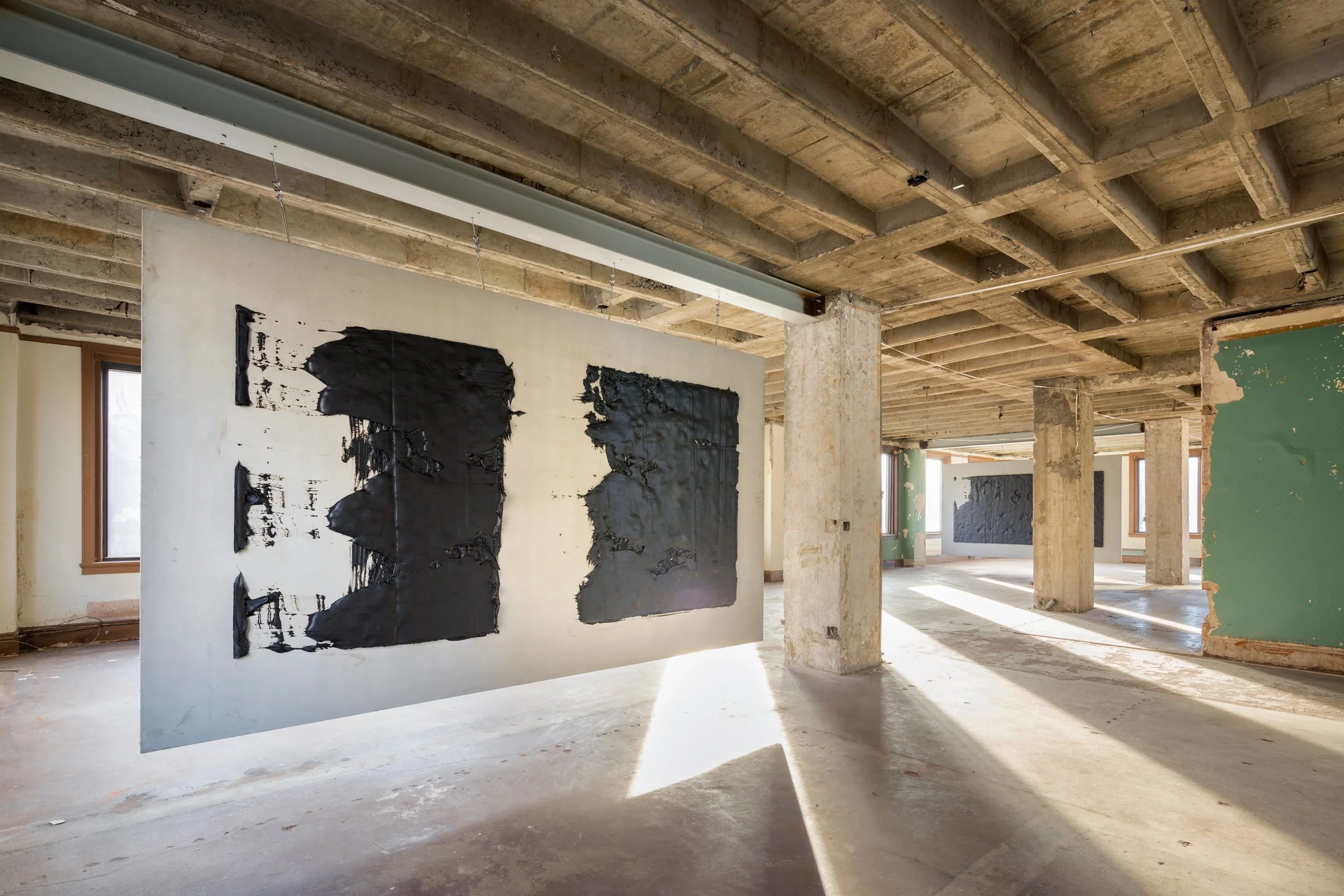
Monumental concrete paintings suspended within an unfinished building, where the composition extends beyond the canvas into the architecture itself.
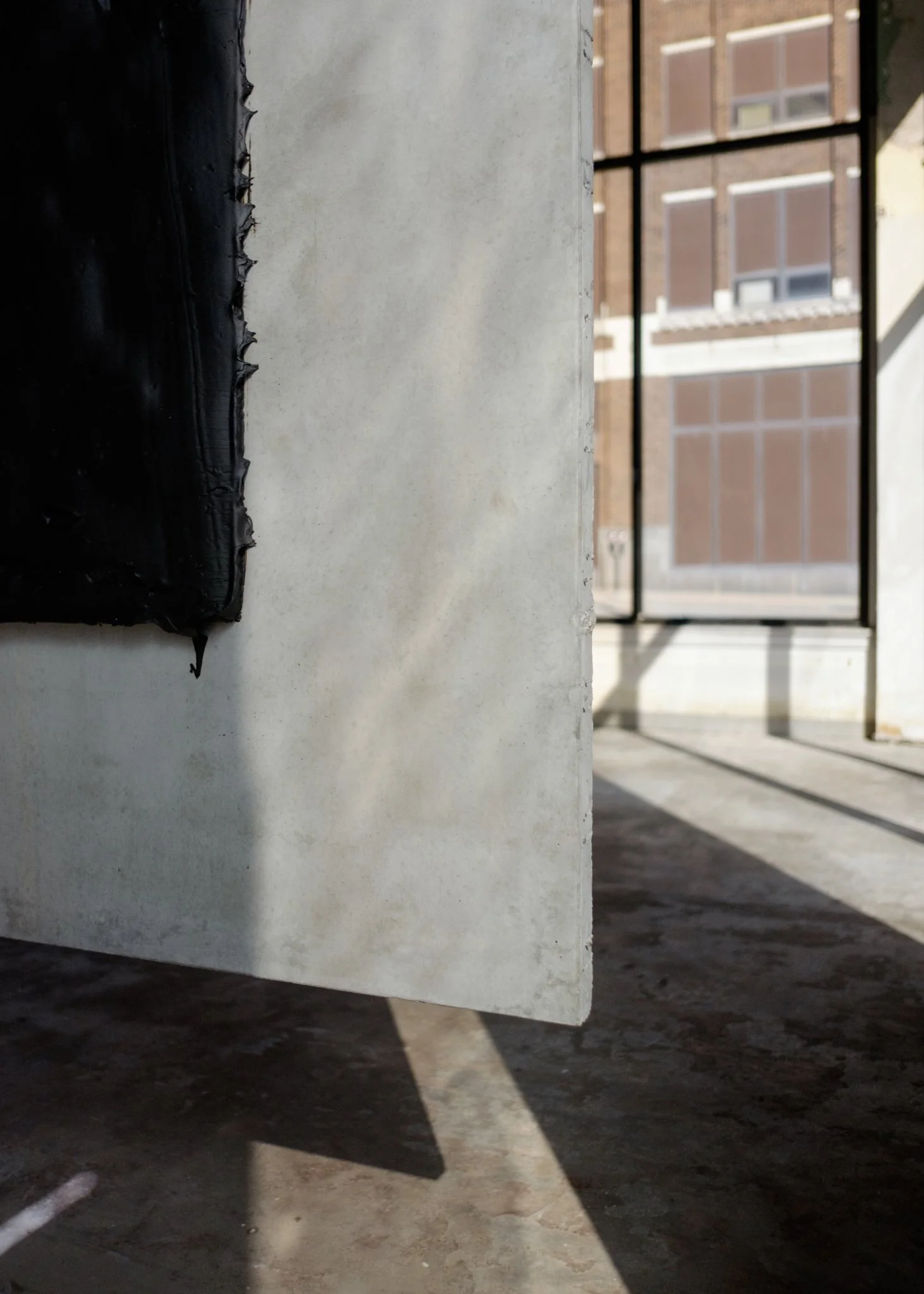
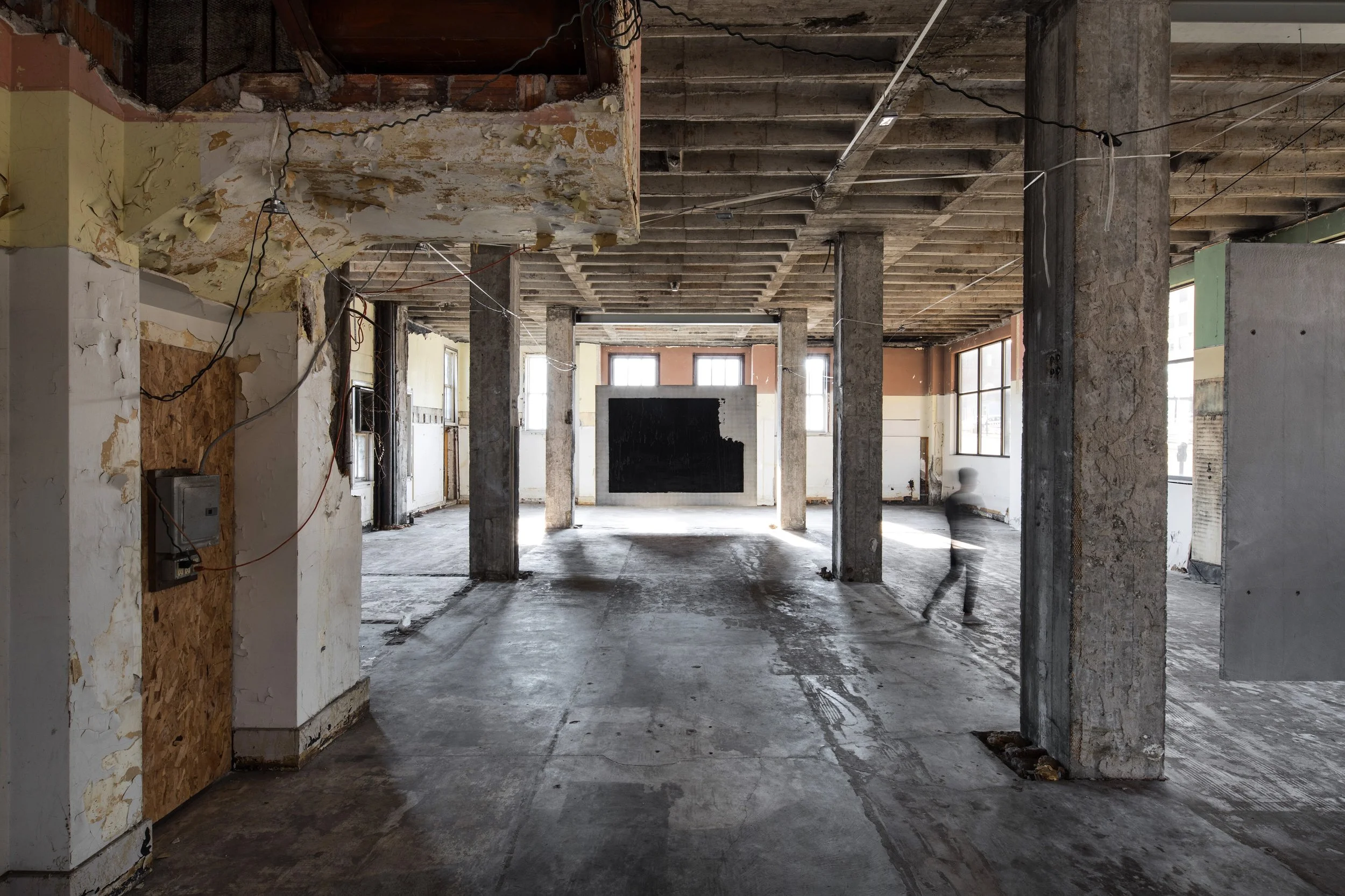
Flood marked Nesbit’s first exhibition in the American Midwest and introduced a process that would later inform works such as The Blues. Ultra-thin precast concrete panels were fabricated at a local Omaha facility and transported into the historic Standard Oil Building in downtown Omaha.
Inside the building, the slabs were laid flat across the floor like oversized canvases. Rather than paint, approximately five hundred gallons of Tremco foundation waterproofing were poured across the concrete surfaces. The dense black material spread slowly across the panels—pushed, dragged, and guided by gravity—forming thick fields that recorded movement, pressure, and the subtle irregularities of the concrete beneath.
Once cured, the works were lifted and suspended between the building’s concrete columns, allowing viewers to move freely around them and experience both sides of the surface. Set within the quiet openness of the building—its light, columns, and unfinished surfaces shaped slowly by time—the paintings become part of a larger spatial composition.
The result is not a singular painting but an environment in which painting, architecture, construction, and process converge into one continuous act of making.
Concrete
Omaha, NE
2021
A concrete painting cast into the earth and completed by the seasons of the American Midwest.
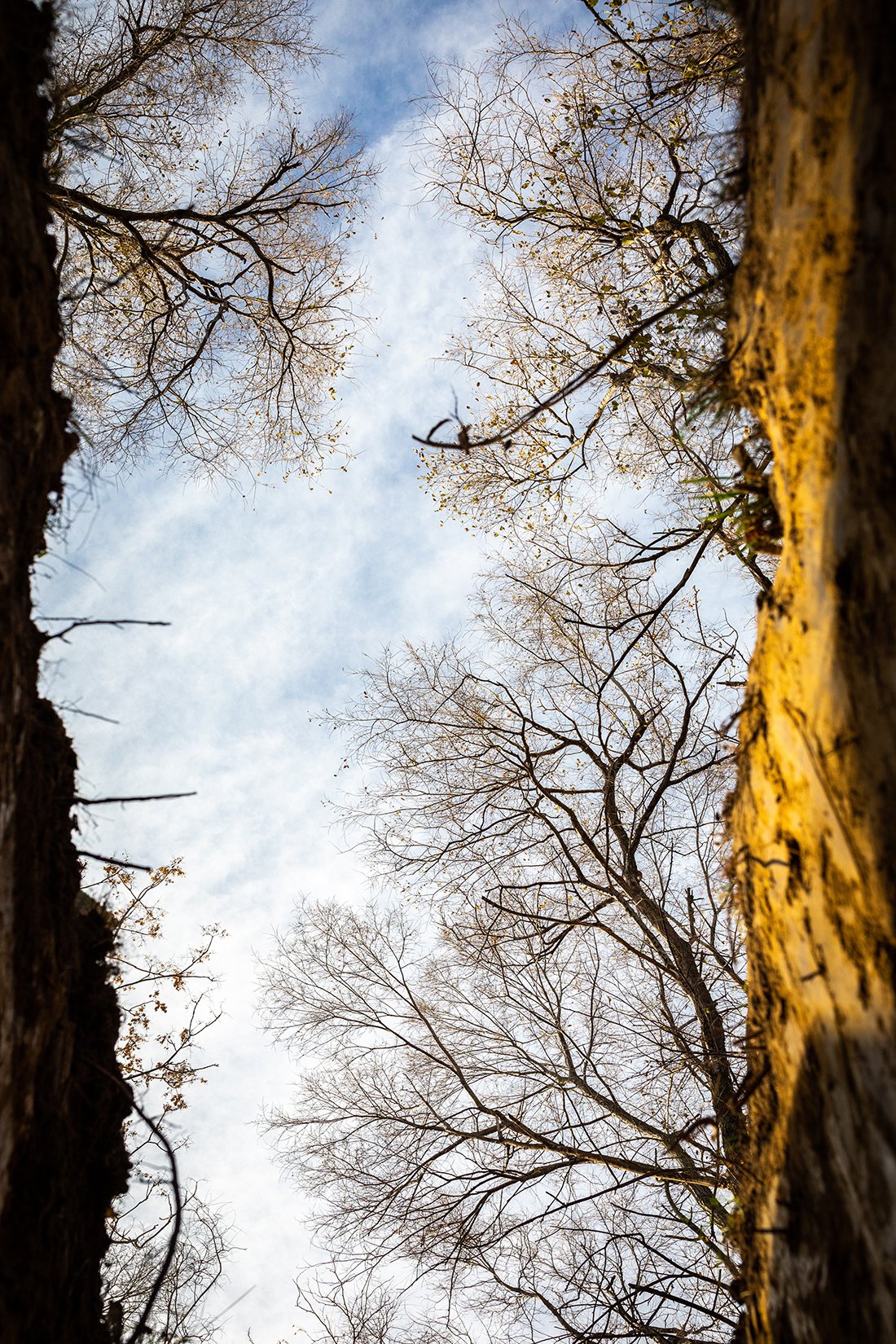
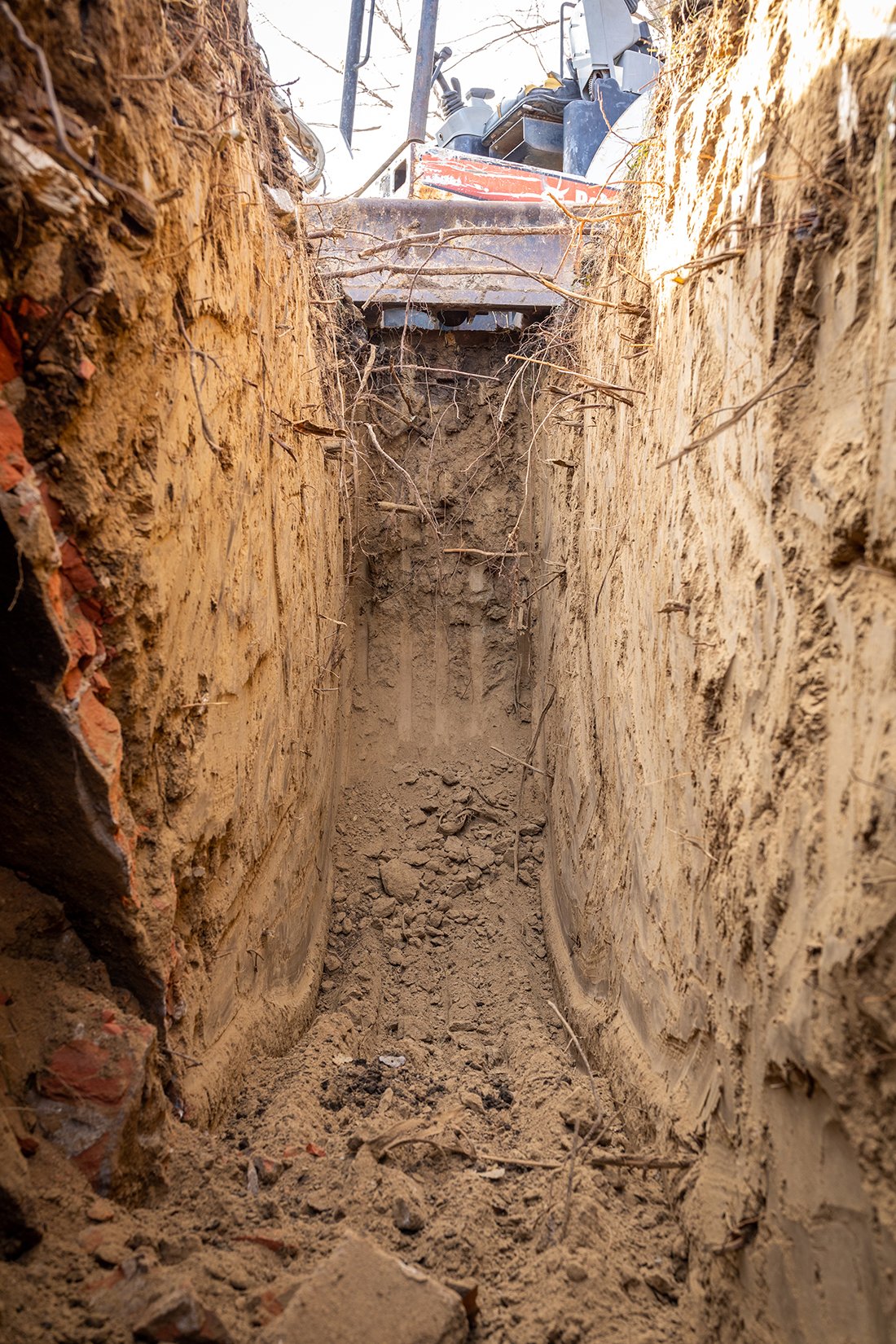
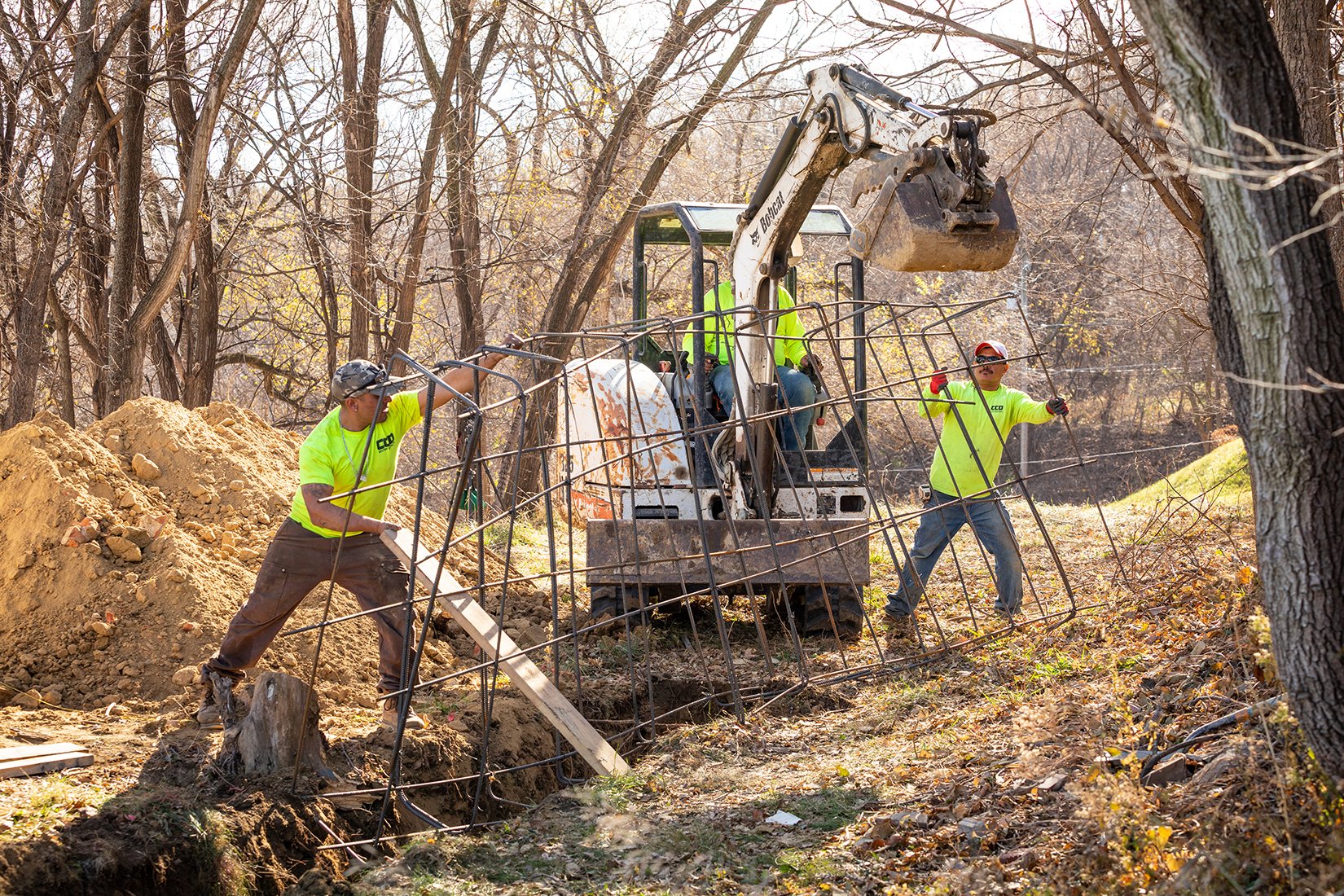
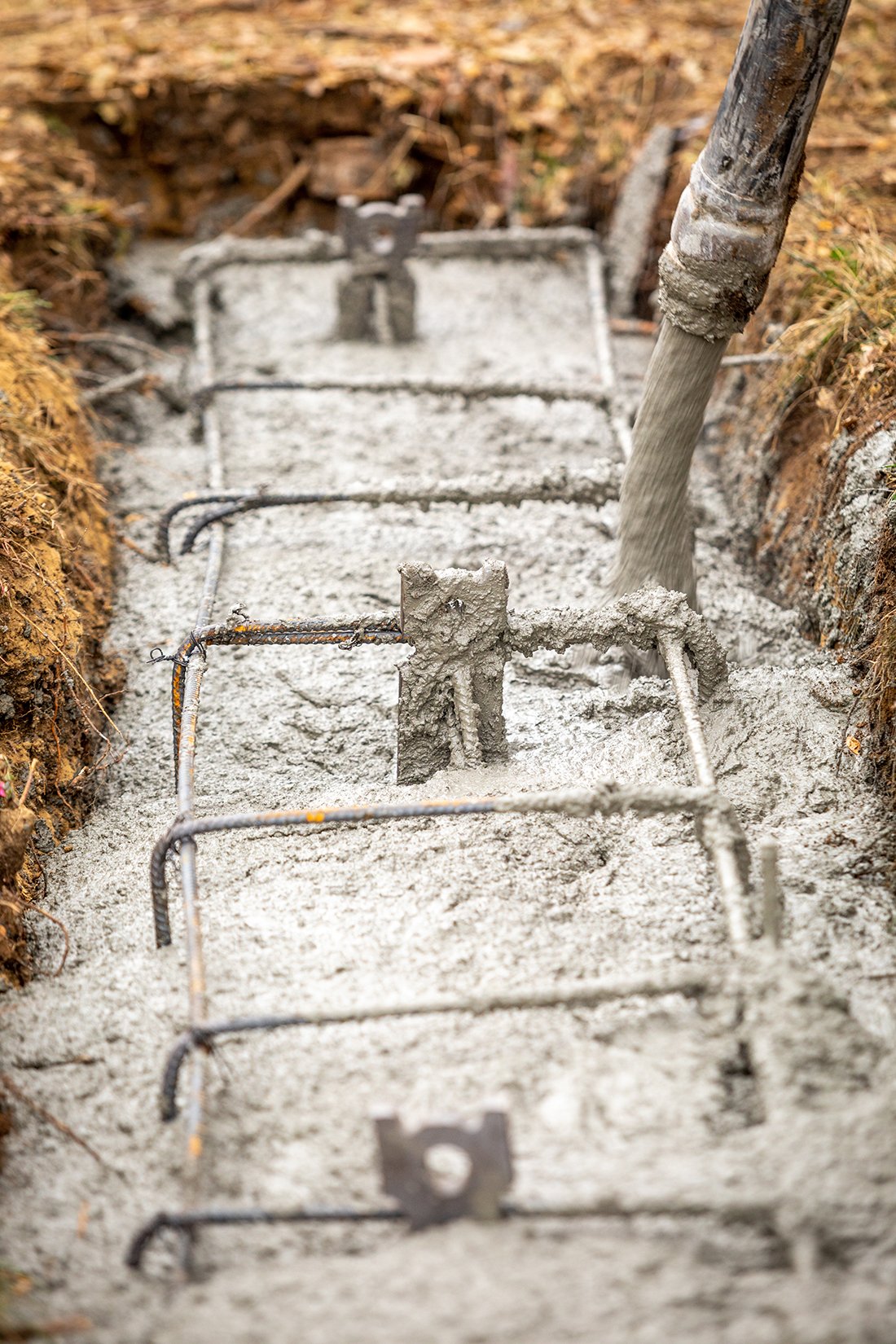
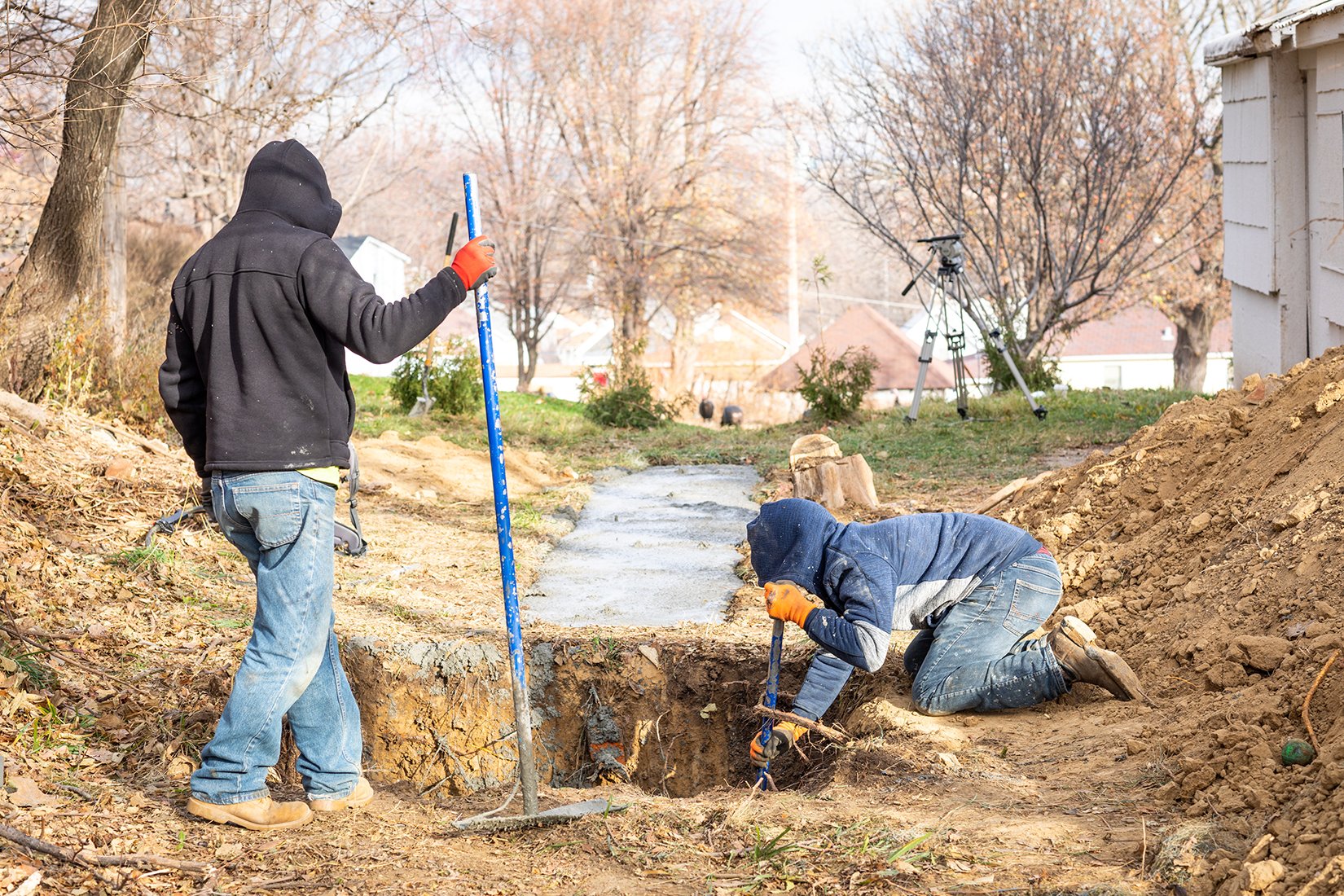
Dig was produced in the landscape of the American Midwest using construction techniques typically reserved for foundations and structural beams. A trench measuring roughly two feet wide, six feet deep, and twenty feet long was excavated directly into the ground—the width determined by the bucket of the excavator that carved the site.
A rebar cage was placed within the trench and filled with concrete, forming a long, narrow slab embedded entirely within the earth. Rather than being immediately revealed, the work was left to rest underground for nine months, allowing the full cycle of Midwestern seasons—summer rain, autumn soil, winter freeze, and spring thaw—to interact with the material. During this time the surrounding landscape slowly entered the surface, staining and shaping the concrete.
After this period of dormancy, the twenty-ton painting was excavated and gently lifted from the ground. Rather than being relocated, the slab was tilted slightly from its resting place, allowing it to emerge from the earth while maintaining its connection to the site.
Oriented east to west, the work invites viewers to walk across its surface and look outward toward the Missouri River beyond. Positioned between sculpture, landscape, and painting, Dig proposes a simple gesture: a painting made within the land itself, where the landscape becomes both subject and collaborator.
Found Shed Cut and Sprayed with Marble Dust and Acrylic
Omaha, NE
2019
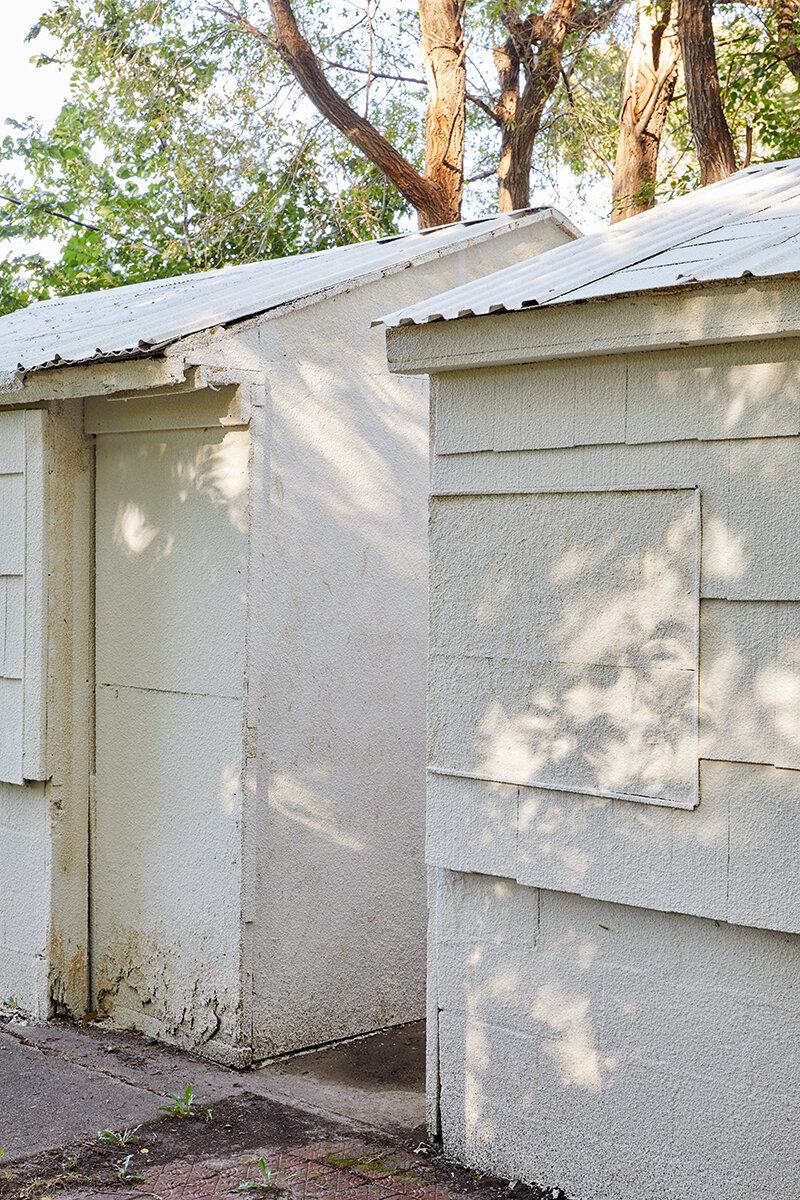
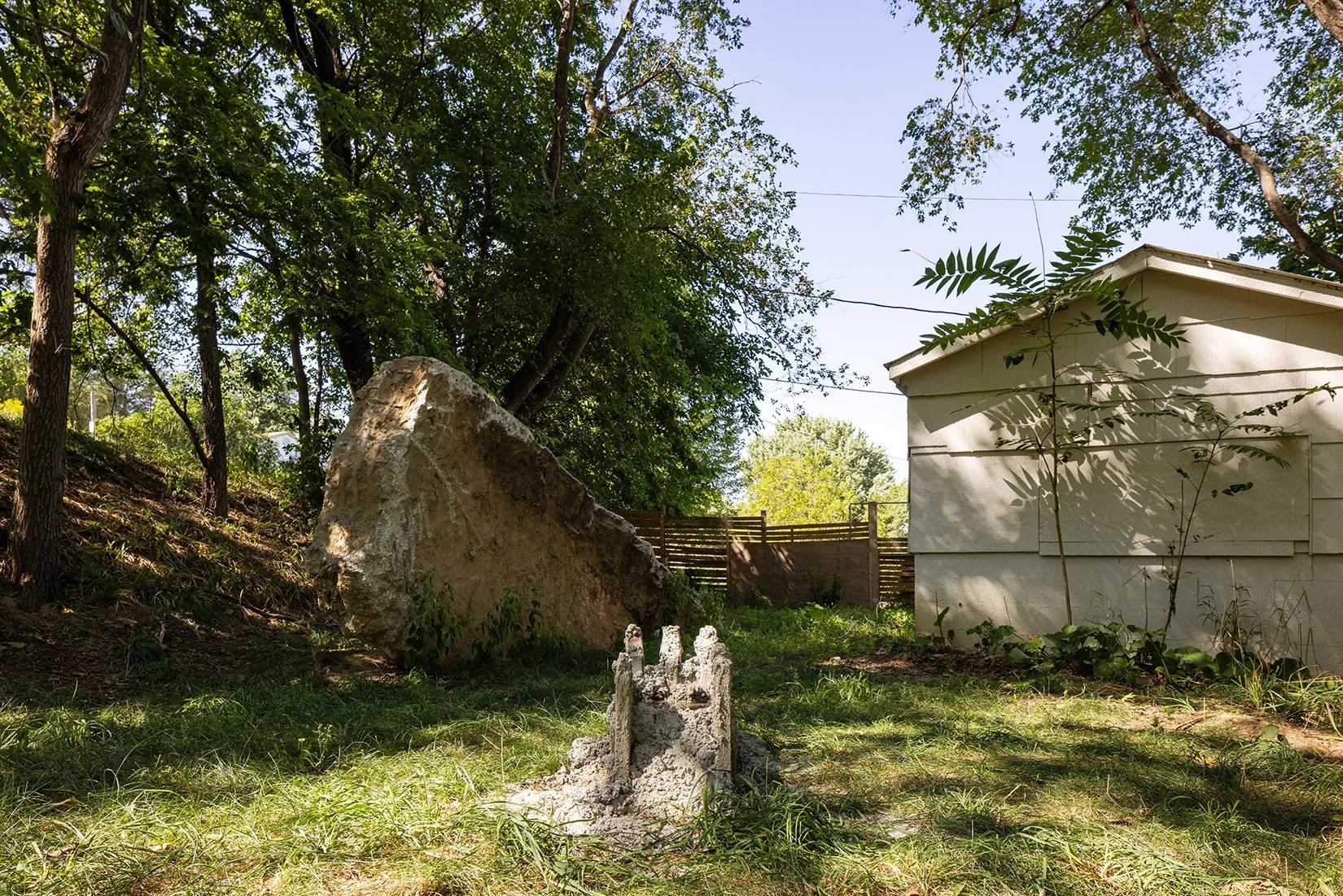
A forgotten tool shed transformed from utilitarian architecture into a landscape sculpture.
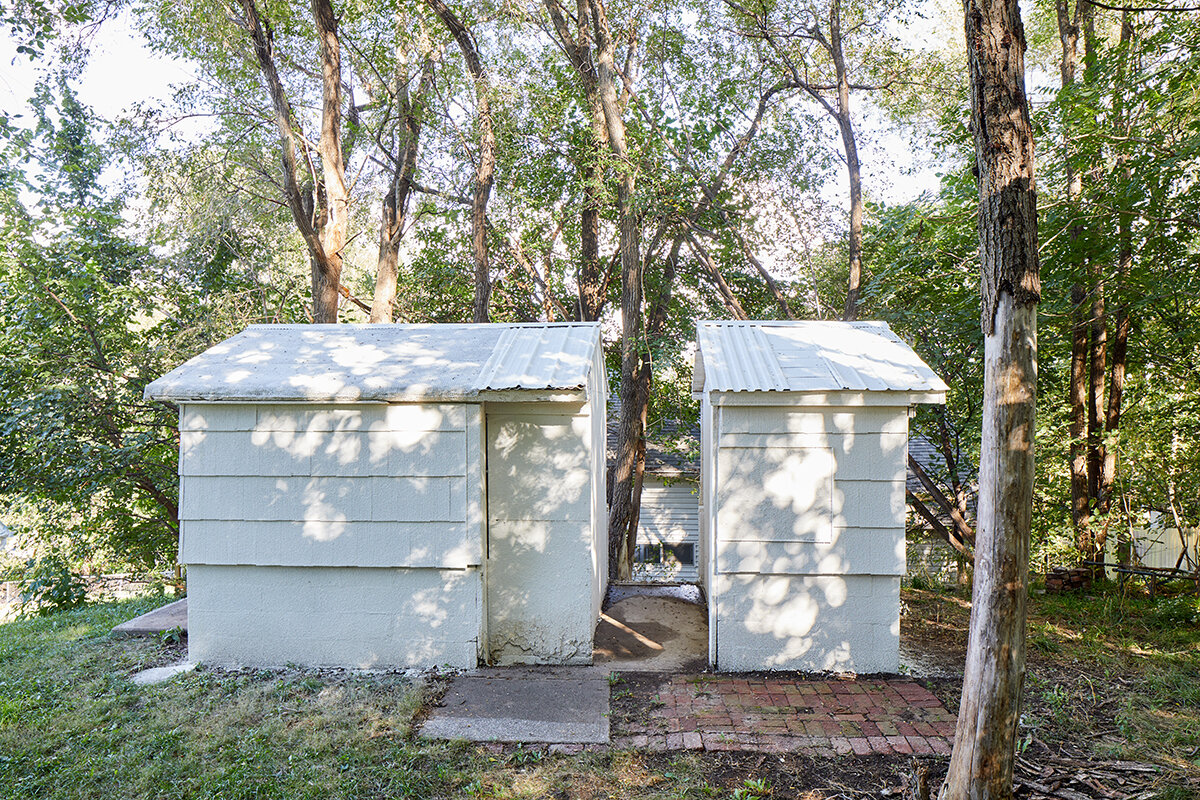
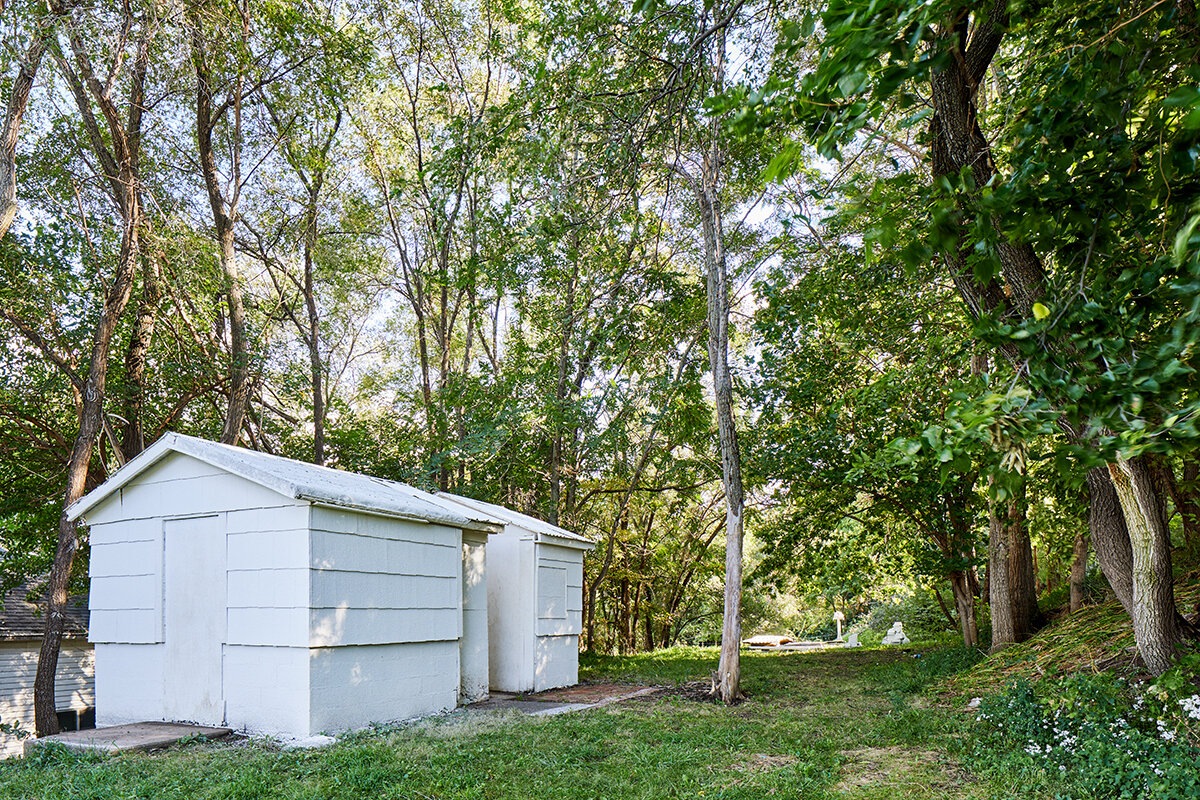
Shed began with a small agricultural outbuilding located in the Little Italy neighborhood of Omaha, Nebraska. Likely built nearly a century ago, the structure had long since lost its original purpose. Once used for storing tools and equipment, it had gradually become absorbed into the surrounding landscape—an overlooked remnant of another time.
The project began with a single cut made through the structure, opening the shed directly to the landscape and allowing light, horizon, and ground to enter the interior. This incision emphasized the building’s relationship to its surroundings, shifting attention from its former function toward its presence within the site.
Following the cut, all openings were sealed to remove any remaining utilitarian use. The entire structure—roof and walls—was then sprayed with EIFS, a construction material common throughout the American Midwest composed of acrylic and marble dust.
Through this transformation the shed moves from practical architecture toward something more elemental. Set within the neighborhood landscape, the structure begins to read less as a building and more as a quiet temple-like form, where landscape, architecture, and sculpture converge.
Found Steel Excavator Bucket and Concrete
Omaha, NE
2023
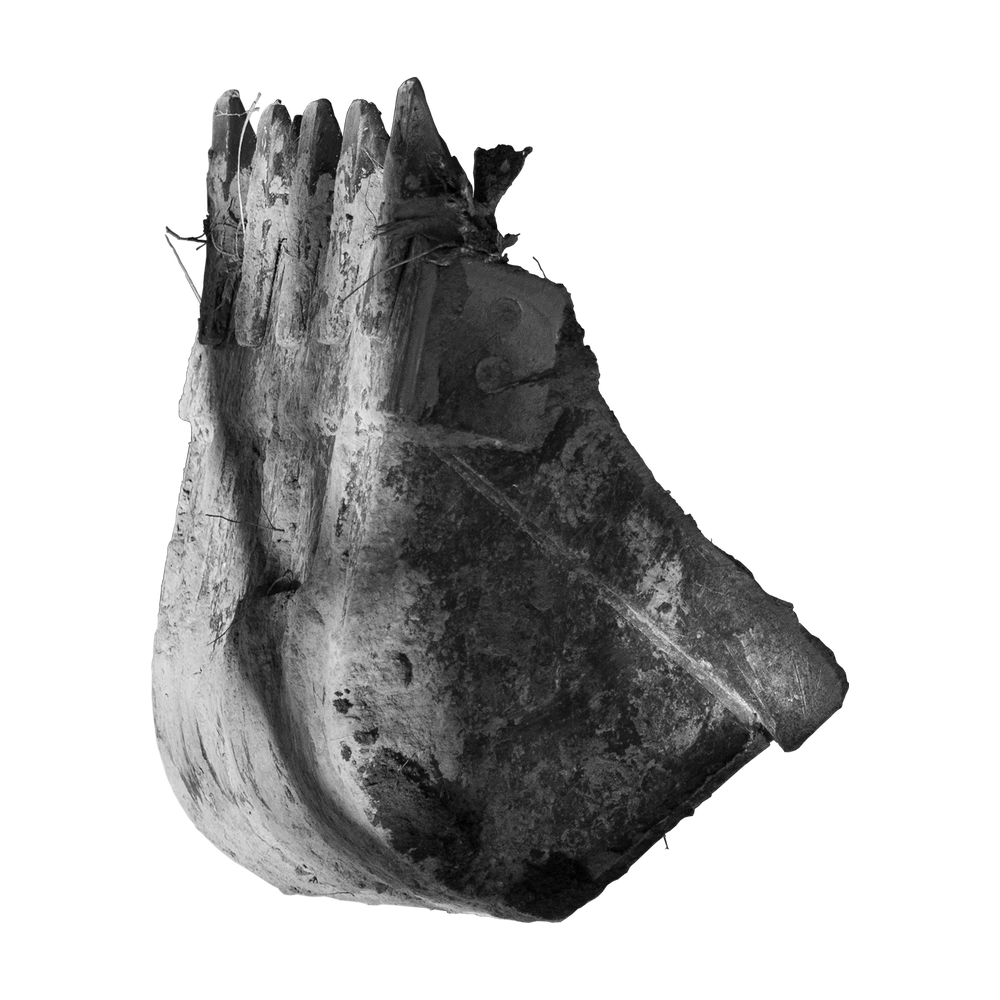
An excavator bucket painted with concrete and inverted to return water to the landscape.
Bucket was developed as the final work in a sequence of projects produced in the Little Italy neighborhood of Omaha, Nebraska, following Shed and Dig.
During the months when Dig rested underground, the recessed lifting points of the buried concrete slab gradually filled with rainwater. Over time these small basins became an unexpected watering hole for deer, wild turkeys, and feral cats moving through the site. When the sculpture was eventually excavated and tilted into its final position, the water disappeared and the temporary habitat vanished with it.
Bucket emerged as a response to that moment. An excavator bucket—removed from the machine that originally carved the trench for Dig—was painted with wet concrete, applied by hand using a shovel as a brush. Once coated, the bucket was inverted and installed nearby to form a permanent basin.
Installed within the landscape, the object now functions as a simple fountain and water source. If Shed considers an object placed within the landscape, and Dig a work formed from the land itself, Bucket becomes a gesture of return—giving something back to the landscape while quietly reflecting it in
Concrete, Steel, and Acrylic
Los Angeles
2014
Large concrete paintings suspended within dormant urban infrastructure, where canvas, architecture, and color intersect.
Swipe marked Nesbit’s first exhibition of large-scale works and took place within an unused street-level colonnade in Los Angeles’ Chinatown neighborhood. The project utilized the existing architectural structure as both studio and exhibition space.
Concrete panels were fabricated on site using a formwork assembly consisting of a plywood backing, paper waterproofing membrane, steel mesh reinforcement, and a perimeter steel angle. Once cured, the slabs were treated as canvases, with fields of color applied using fluorescent silkscreen ink. In this early body of work, concrete functioned primarily as a painting surface—where color was applied onto the material rather than integrated within it.
The panels were suspended within the existing colonnade, allowing them to hover slightly above the ground. This positioning created a visual tension between the physical weight of the concrete and the apparent lightness of the floating paintings.
Produced entirely within the building at a scale too large to remove intact, the works were intentionally temporary. Their eventual destruction was understood from the outset, emphasizing the exhibition as an experience shaped by site, architecture, and process rather than the preservation of individual objects.
Los Angeles
2020
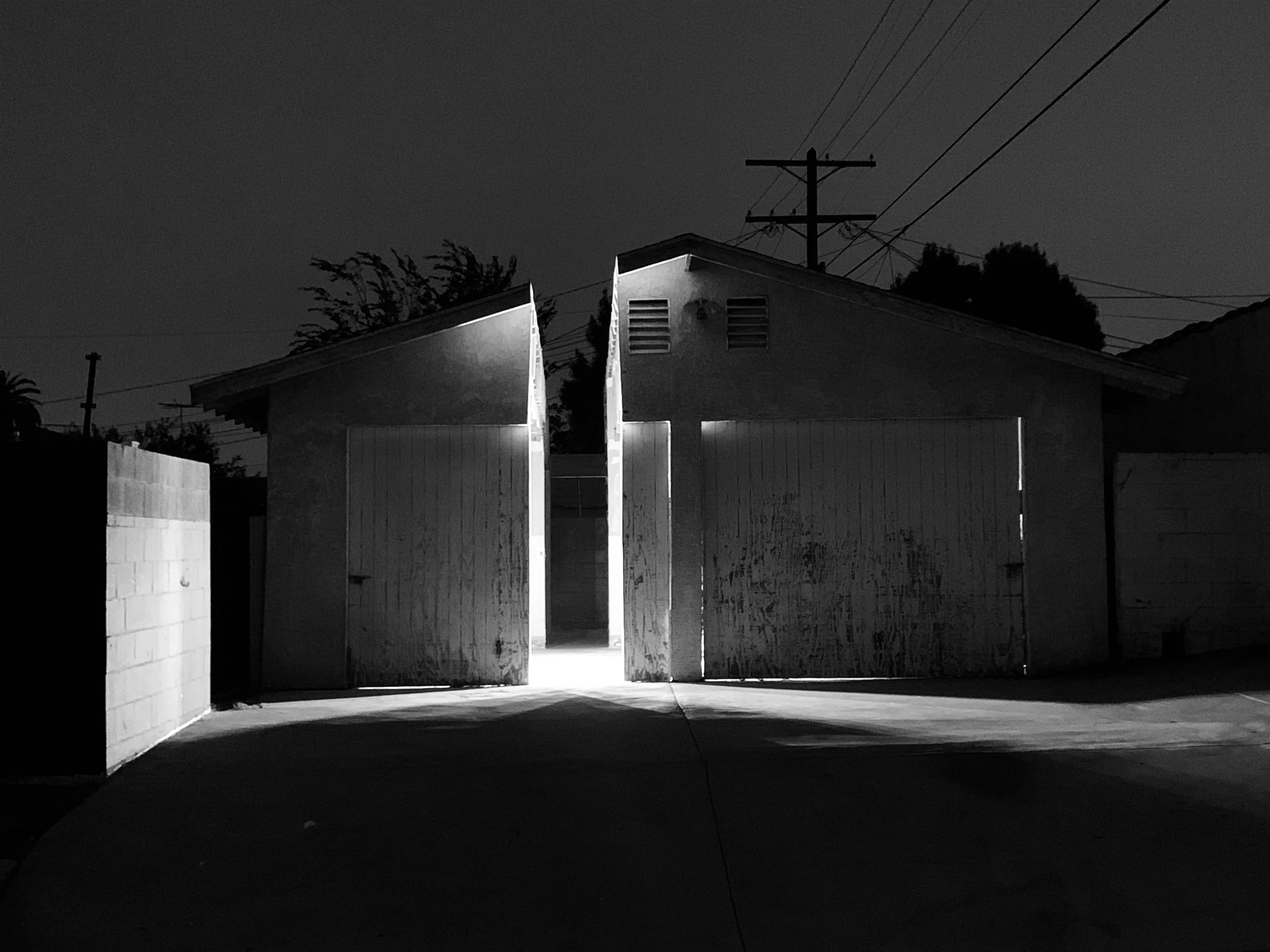
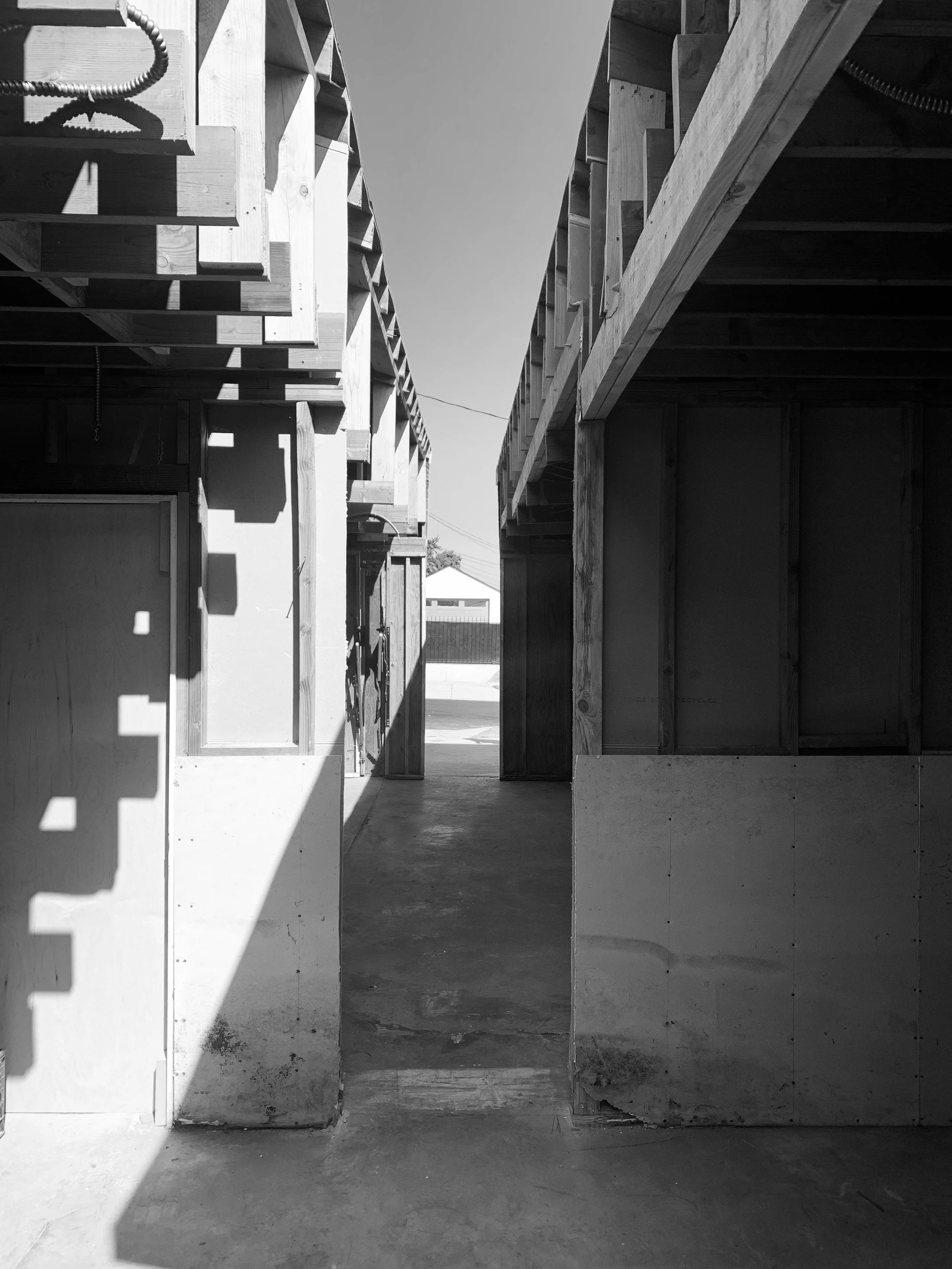
A utilitarian garage cut open to reveal demolition as a precise and sculptural act.
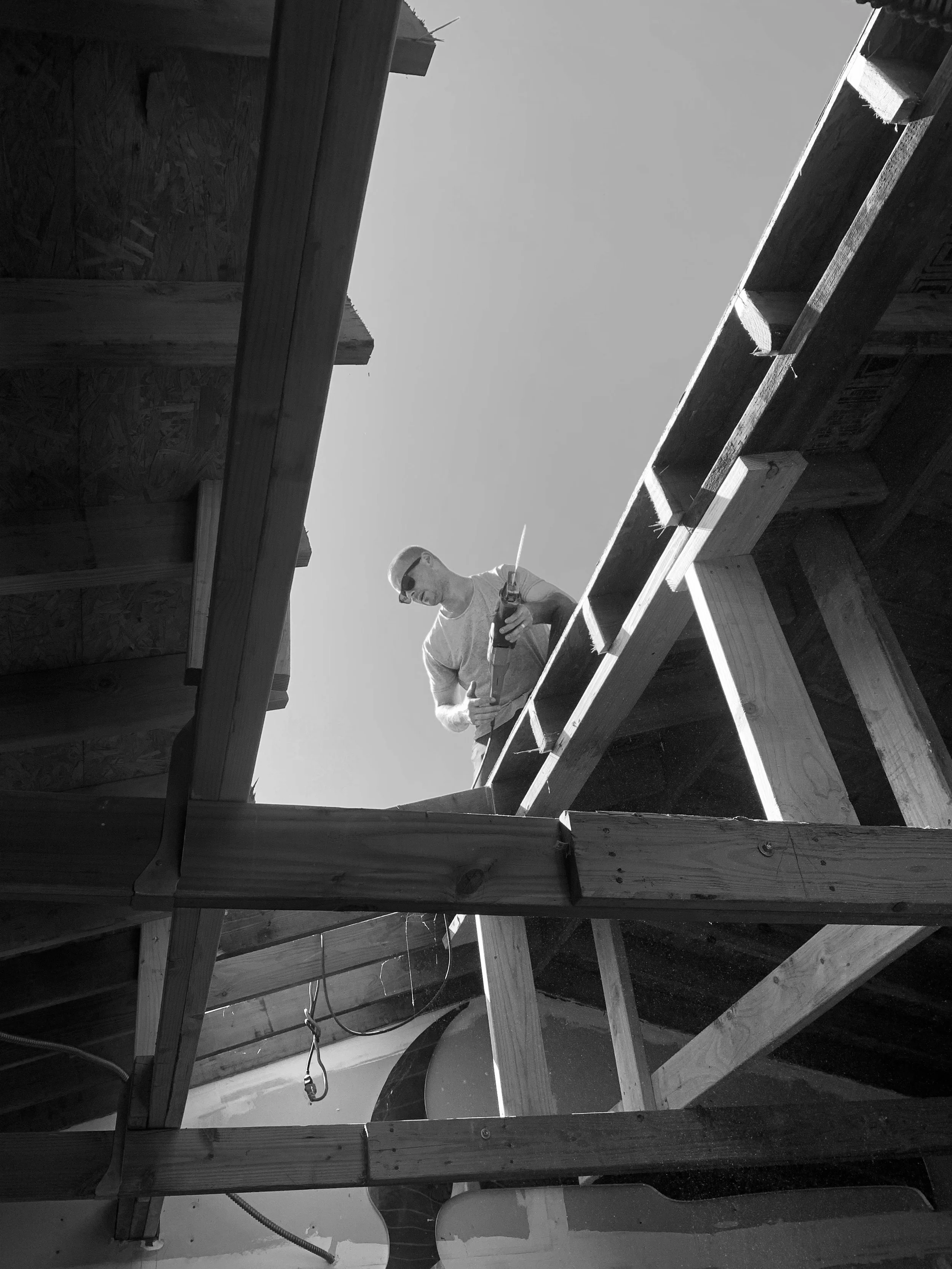
12:38 was produced in South Los Angeles using a small detached garage—an architectural form often overlooked for its purely utilitarian purpose. The structure was scheduled for demolition to make way for a new accessory dwelling unit, presenting an opportunity to approach the inevitable act of removal as a sculptural process.
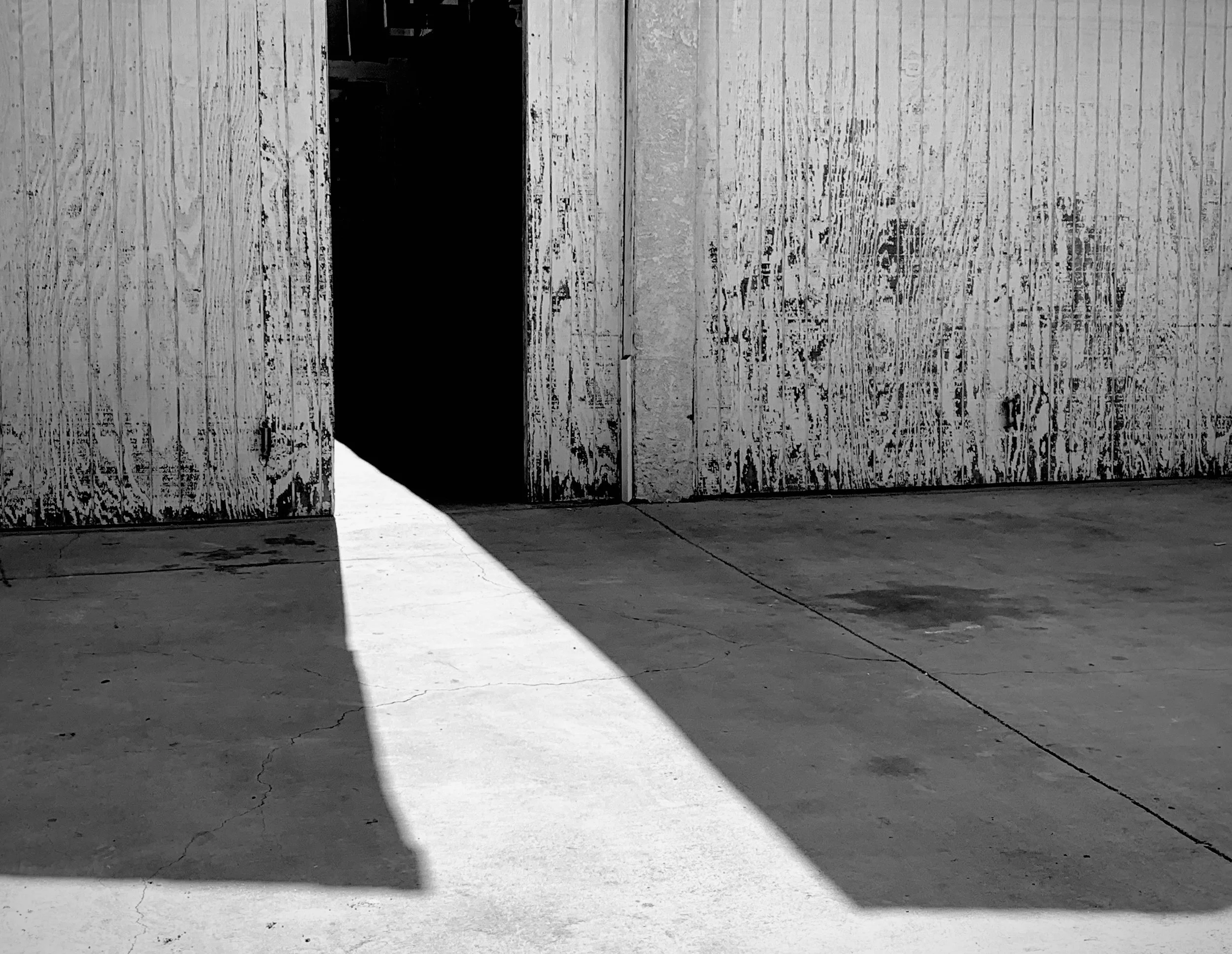
Before the building was dismantled, a precise cut was made through the structure, opening a void that allowed light and landscape to enter the interior. In this gesture, demolition becomes a deliberate and controlled action rather than a purely destructive one. The cut transforms the building from functional enclosure into spatial object.
The title 12:38 refers to a specific moment of daylight when light enters the void and the shifting shadow of the structure becomes fully visible. At this moment, the negative space created by demolition becomes the primary subject of the work.
Through this intervention, the ordinary garage shifts from utilitarian architecture toward sculpture—where void, light, and time become the defining materials.
Los Angeles
2021
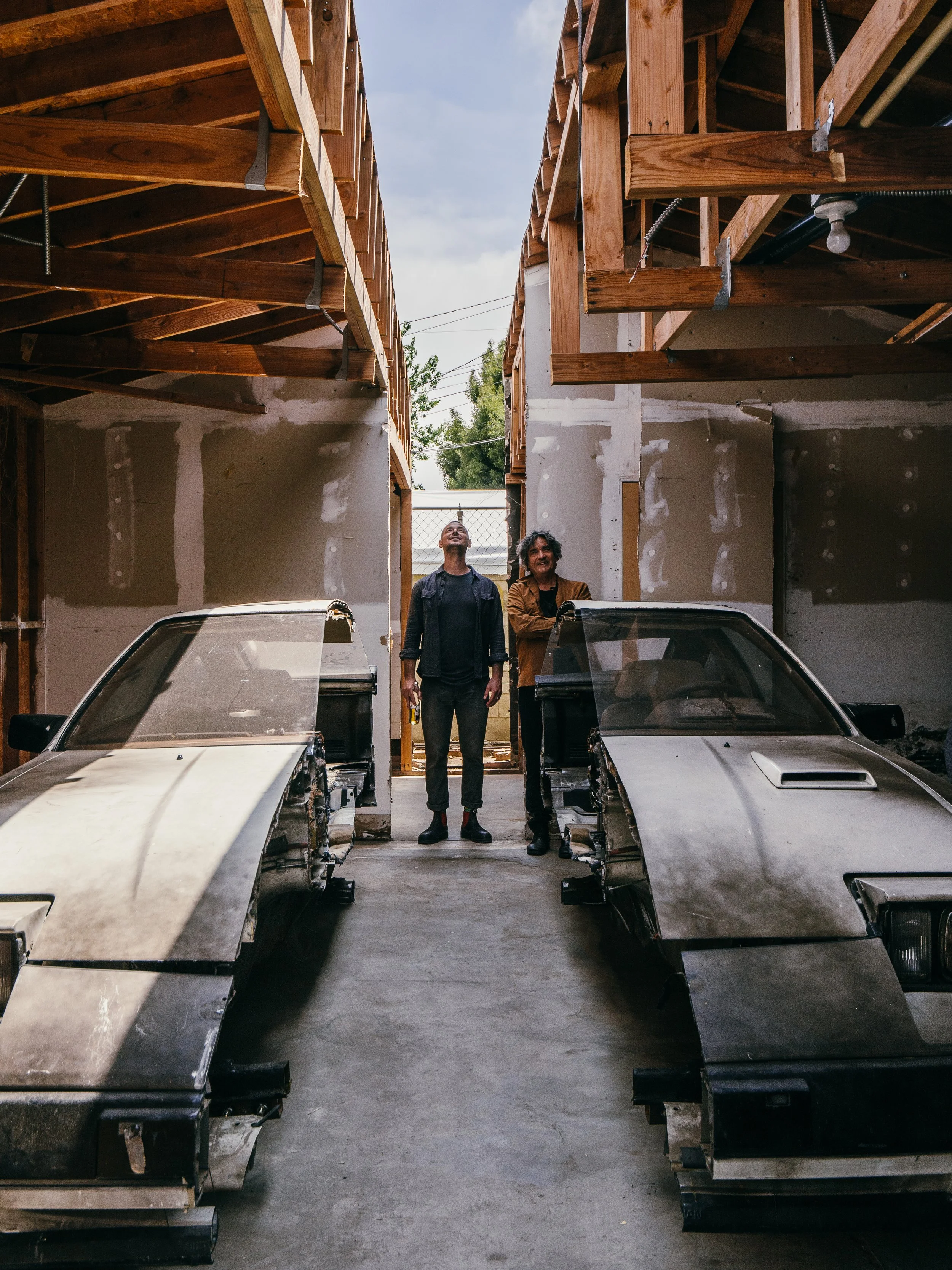
A sports car suspended within a demolished garage, freezing a moment between motion and stillness.
Cruise Control developed directly from the intervention made in 12:38. After the garage in South Los Angeles was cut open in preparation for demolition, a Nissan 300ZX was introduced into the structure, occupying the void created by the earlier incision.
The vehicle was positioned within the building as if caught mid-movement, suspended within the architecture at the moment the structure was being dismantled. In this setting the car—an object designed for speed and motion—becomes fixed in place, transforming into a sculptural element within the space.
The work continues the investigation of demolition as a deliberate and spatial act. The cut structure frames the vehicle while light enters through the opening, emphasizing the contrast between the static object and the implied motion suggested by the car itself.
Through this intervention the garage shifts once again from utilitarian architecture toward sculpture, where vehicle, structure, and void operate together as a temporary composition suspended in time.